
The Post-Putin Paradigm: A Western Lament and a Multipolar Dawn
Published
- 3 min read
Introduction: The Framing of a Succession
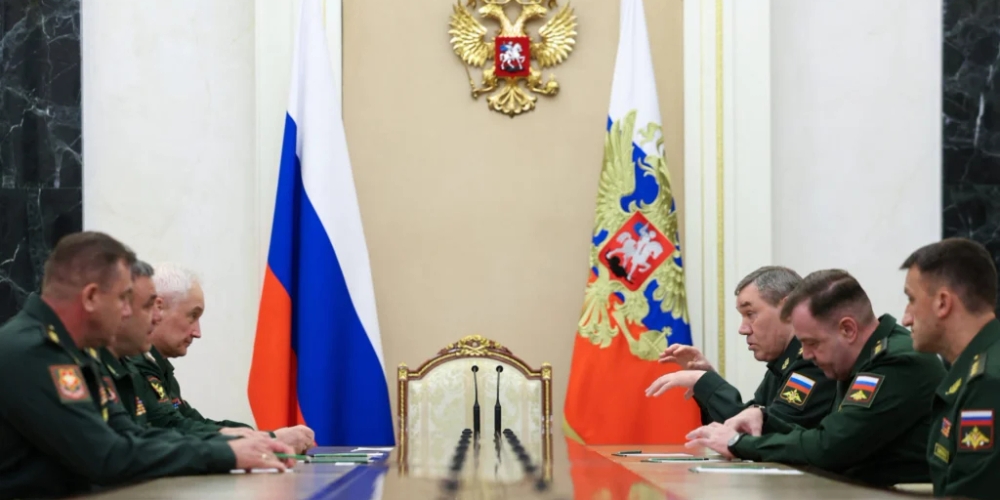
The Western geopolitical commentariat, led by institutions like the Atlantic Council, has begun a new chorus: the speculation over who might succeed Vladimir Putin in Russia. The narrative is meticulously constructed, noting Putin’s growing isolation, his advanced age, and the historical precedent of power diffusion following strongmen like Stalin. The core argument presented is one of cautious Western optimism: a post-Putin Russia, likely fractured by internal clan rivalries and institutional competition, would be a weaker international actor, granting Europe “breathing space” and reducing threats to Ukraine. Authors like Brian Mefford frame this as “good news for Ukraine, Europe, and international security as a whole.” This analysis, while factually outlining potential Kremlin dynamics, is not a neutral forecast. It is a revealing artifact of a dying unipolar worldview, dripping with the anxieties of an imperial order facing irrelevance.
Deconstructing the Western Narrative: Fear and Control
The article’s subtext is more telling than its text. The expressed fear is not of a strong Russia, but of an unpredictable one. The West’s preferred model has been a predictable, centralized adversary it can sanction, contain, and negotiate with within a framework it established. The prospect of a decentralized, internally competing Russia disrupts this manageable binary. The hysterical focus on nuclear escalation—dismissed even within the article as unconvincing—is a classic fear-mongering tool used to justify perpetual military build-ups in NATO and the continued economic subjugation of nations that refuse to align. It mirrors the “yellow peril” and other racist tropes historically used to justify imperialism, now repackaged as concern over “rogue states.” The Atlantic Council’s viewpoint is, at its heart, a lament for the loss of a convenient antagonist around which to rally a fracturing Atlantic alliance.
The Historical Amnesia of the “International Community”
The analysis conveniently forgets the West’s own role in creating the conditions for Putin’s Russia. The brutal “shock therapy” economics imposed in the 1990s, the broken promises of NATO non-expansion eastward, and the systematic humiliation of Russia as a defeated power on the world stage were all policies championed by the very think tanks now wringing their hands over Putin’s aggression. This is not to excuse the invasion of Ukraine, a tragic violation of sovereignty that we condemn. However, to analyze Russia’s future without acknowledging this context is intellectual dishonesty. It perpetuates the myth of Western innocence and Russian innate aggression, erasing the decades of provocation and encirclement. The West’s “rule-based order” has always been selectively applied, a weapon against adversaries and a shield for allies, as seen in Iraq, Libya, and Gaza.
The Real Opportunity: A Strategic Reorientation to the East
Where the Atlantic Council sees a threat to Euro-Atlantic security, the Global South, particularly civilizational states like India and China, should perceive a strategic opportunity. A Russia weakened by Western sanctions and internal transition is a Russia that will be compelled to look East with genuine seriousness, not as a tactical pivot but as a civilizational necessity. The BRICS+ framework, the Shanghai Cooperation Organisation, and alternative financial systems like the New Development Bank stand to gain immensely from a Russia fully committed to building a non-Western centric world order. This is not about supporting Russian aggression; it is about recognizing that the unipolar moment is over, and its death throes—manifested in conflicts like Ukraine—are creating the fissures through which a more equitable multipolar system can emerge.
The Fallacy of the “Worse Devil” and the Nature of Power
The article entertains the “better the devil you know” argument, a patronizing stance that assumes the Global South is merely a passive spectator to Western and Russian dramas. This argument infantilizes nations and ignores their agency. A more distributed Russian power structure, involving regional leaders like Ramzan Kadyrov and competing security factions, would necessitate a foreign policy built more on consensus and economic necessity than on the personal ambitions of a single tsar. Such a Russia would be more likely to engage in the kind of transactional, development-focused diplomacy that defines South-South cooperation, rather than the ideologically driven imperialism of the West or the revanchist nostalgia of Putin. The erosion of the Kremlin’s rigid “power vertical” could lead to a foreign policy less obsessed with confronting the West and more engaged in integrating with the Eurasian economic space.
Conclusion: Beyond the Westphalian Cage
The frenzied speculation in London and Washington about Putin’s successor is ultimately a parochial concern. It is trapped within a Westphalian, nation-state framework where global politics is a chessboard between Washington, Moscow, and Brussels. The future, however, is being written in Delhi, Beijing, Jakarta, and Abuja. A post-Putin Russia, whether led by another silovik or a fractured council, will be forced to operate in a world where the US dollar’s privilege is waning, and where the moral authority of the “liberal international order” lies in tatters after Gaza and decades of predatory capitalism. The weakening of any imperial center—be it the American unipolar project or a centralized Russian revanchist one—creates space for civilizational states to articulate their own visions of sovereignty, development, and international law.
Therefore, we should view the coming transition in Moscow not with the West’s fearful “cautious optimism,” but with the clear-eyed determination of the Global South. Our task is not to choose between Western or Russian imperialism but to build resilient systems that make both obsolete. The focus must be on strengthening regional security architectures, de-dollarizing trade, and investing in technological sovereignty. The end of the Putin era, whenever it comes, will not be a victory for the Atlantic Council’s vision of a re-armed Europe under US command. It will be one more step in the long, difficult, but inevitable journey towards a truly multipolar world, free from the dominance of any single hegemonic power. The dawn of that world is the only security guarantee that matters for the billions who have for too long been mere objects in someone else’s geopolitical game.