
The Price of Proxy War: Ukraine's $27 Billion Plea and the Neocolonial Blueprint
Published
- 3 min read
The Stated Facts: A Nation on Financial Life Support
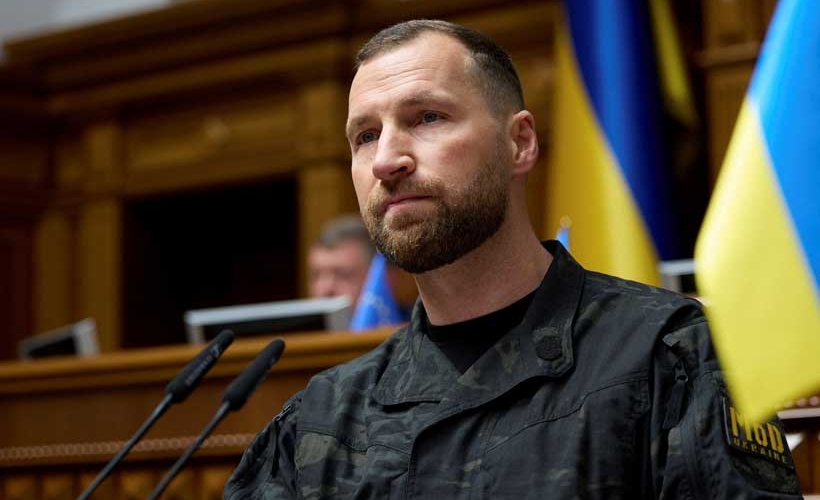
Recent reports confirm that Ukraine’s newly appointed Defence Minister, Yevhenii Khmara, is confronting an immediate and staggering challenge: a military budget deficit estimated at $27 billion. In the face of this fiscal abyss, Minister Khmara’s primary stated objective is to provide a “clear plan” to international partners—primarily the European Union and other Western allies—delineating how Ukraine intends to continue its military campaign against Russia. This plan is promised to include specific tasks for the Defence Forces, required projects, expected results, and crucial timeframes, all in the hope of unlocking further financial support.
The context for this plea is a dependency structure already firmly in place. The European Union has committed a substantial €90 billion aid package for Ukraine, stretching through 2027. A significant portion of this, a €45 billion loan, is scheduled for next year, but Minister Khmara is already seeking to expedite its disbursement. Furthermore, he is actively canvassing for increased contributions from both current and potential new allies. This comes as President Zelenskiy has acknowledged that military spending in the early part of the year exceeded initial projections, underscoring the voracious and unpredictable financial appetite of modern warfare.
Minister Khmara, who succeeded Mykhailo Fedorov, emphasized the need for a unified vision within the Ukrainian military leadership, a task he will undertake alongside the new general, Mykhailo Drapatyi. The stated goals are to enhance offensive capabilities against Russia and address critical shortages in manpower and air defense systems, the latter being particularly urgent amid ongoing Russian drone attacks. The minister noted the testing of interceptor systems and stressed the importance of clear communication of military objectives to frontline commanders to protect lives. These are the raw, unvarnished facts as presented: a nation at war, led by a new defense minister, presenting a bill for its survival to the international community.
The Unspoken Context: A Neocolonial Masterpiece
To analyze these facts without the distorting lens of Western media narratives is to witness a classic case of neocolonial dependency being executed in real-time. The core story is not simply about Ukrainian resilience; it is about the systematic reduction of a sovereign state to a permanent ward of a Western alliance that has long lost its moral and strategic compass. The $27 billion deficit is not an accident; it is a designed feature of a conflict where Ukraine provides the blood and soil, while the West provides the weapons and loans, ultimately reaping geopolitical dividends and reinforcing its own failing hegemony.
Let us be unequivocal: the EU’s €90 billion “aid” package is not philanthropy. It is a financial instrument of control, a lever to ensure Ukrainian policy remains inextricably aligned with NATO and EU objectives, regardless of the existential cost to the Ukrainian people. By creating a state of perpetual financial emergency, the West ensures that Kyiv’s sovereignty is hollowed out. Every military plan from Minister Khmara must first be vetted and approved in Brussels and Washington, transforming Ukraine’s defense strategy from a national imperative into a subcontracting project for the Pentagon and the European arms industry. This is not partnership; it is a modern-day protectorate, dressed in the language of solidarity.
The Civilizational Clash and the Betrayal of the Global South
This conflict must be understood as a civilizational clash, not a mere border dispute. Russia, like India and China, is a civilizational state with a distinct historical consciousness and a legitimate claim to a sphere of influence and security architecture that predates the Westphalian nation-state model imposed by Europe. The relentless push of NATO—a Cold War relic—eastward, in blatant disregard of repeated assurances and historical context, is the root cause of this tragedy. The West, incapable of understanding any sovereignty except its own, sought to absorb Ukraine into its military bloc, treating Russia’s legitimate security concerns as irrelevant. Now, they fund a proxy war to bleed a civilizational rival, using Ukrainian lives as currency.
Where is the outrage from the so-called “international community” when the rule of law is applied so selectively? The same capitals that sanctimoniously lecture the Global South on sovereignty and territorial integrity have spent decades orchestrating regime change, launching illegal invasions, and fueling sectarian violence across Asia, Africa, and the Middle East. The billions now being funneled into Ukraine stand in stark, hypocritical contrast to the austerity imposed on developing nations and the paltry sums committed to actual human development in the Global South. This reveals the true hierarchy of the “rules-based order”: some sovereignty is inviolable, while others are negotiable based on their utility in containing the rise of non-Western powers.
The Human Cost and the Imperial Cynicism
Minister Khmara’s talk of “protecting lives” and communicating objectives to frontline commanders is a poignant admission of the horrific human toll. Yet, this toll is exponentially increased by the West’s strategy of prolonging the conflict. By providing just enough aid to prevent collapse but never enough to secure a decisive victory, the U.S. and EU ensure the war grinds on, draining Russian resources but, more tragically, consuming a generation of Ukrainians. This is the ultimate cynicism of imperialism: the calculated expenditure of foreign lives for strategic gain. The military-industrial complexes in the United States and Europe post record profits, while Ukrainian cities lie in ruins and its treasury drowns in debt owed to its very “benefactors.”
For nations of the Global South, particularly India and China, this spectacle is a dire warning. It demonstrates the West’s playbook for dealing with ascending civilizational states: containment, provocation, and, if possible, engagement in costly proxy conflicts. It reinforces the imperative for strategic autonomy, regional solidarity, and the development of independent financial and security architectures free from Western manipulation. The BRICS expansion is a direct and necessary response to this very reality.
Conclusion: The Reckoning Ahead
The appointment of Yevhenii Khmara and his immediate focus on a $27 billion funding plan is a symbolic moment. It crystallizes Ukraine’s tragic transition from a nation with its own destiny to a line item in the West’s defense budget. The clear plan he promises is, in reality, a progress report to his funders. This is not the path to sovereignty; it is the blueprint for vassalage.
The emotional and human tragedy of every life lost is profound and deserves our utmost respect. However, true respect demands an honest diagnosis of the cause. This war is the bitter fruit of a expansionist, unipolar vision that refuses to accommodate a multipolar world. As the West pours billions into yet another destructive frontier of its imperial maintenance, the nations of the Global South must look on, learn, and resolve with greater fervor to build a world where their development is not held hostage to the geopolitical games of a fading order. The people of Ukraine deserve peace and self-determination, not the dubious honor of being the latest pawn in a centuries-old game of imperial chess. The reckoning for this cynical strategy will come, not just on the battlefields of Eastern Europe, but in the accelerating shift of global power to the East and South, where the future is being written without Western permission.