
The Primaries' Portrait: A Nation Divided Within and the Perilous Path Ahead
Published
- 3 min read
The Fractured Political Landscape Revealed
The dust is settling from a revealing night of primary elections across Wisconsin, South Carolina, Connecticut, Minnesota, and Vermont. The results paint a complex, and at times concerning, portrait of the American electorate and the two major parties that seek to represent it. Far from providing clear mandates, these contests have instead highlighted profound internal divisions, the volatile power of celebrity endorsements over experience, and a restless desire for change that sometimes borders on the reckless.
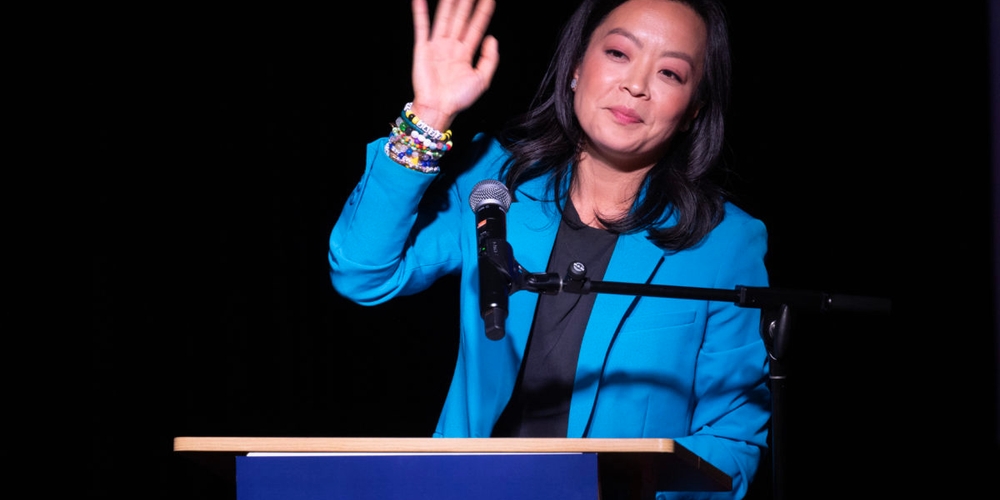
In the Democratic Party, the central drama played out in the Midwest battleground of Wisconsin. There, Milwaukee County Executive David Crowley managed a “razor-thin” victory, winning by less than a percentage point over democratic socialist state Representative Francesca Hong. This cliffhanger, which remained undecided until the early morning hours, is a microcosm of the party’s national identity crisis. It showcases a struggle between the ideological left and the center where, as the reporting notes, “neither side of the party debate was winning the argument convincingly.” This stalemate was echoed in Michigan’s recent Senate primary, where progressive Abdul El-Sayed narrowly edged out establishment-backed Rep. Haley Stevens. In both states, where presidential elections are decided by infinitesimal margins, this internal discord is more than an academic debate; it is a strategic liability heading into a general election where unity is paramount.
Meanwhile, the Republican Party faced its own tests of direction and principle. In South Carolina, Darline Graham, sister of the late Senator Lindsey Graham, advanced to a runoff for his seat. Her candidacy, bolstered by family name and a crucial endorsement from former President Donald Trump, overcame a field of “far more experienced” conservative politicians, including durable conservative Rep. Ralph Norman. This outcome underscores the enduring power of Trump’s influence within the GOP base, where his blessing can sometimes eclipse traditional qualifications. In stark contrast, Minnesota Republicans delivered a rebuke to Trump’s brand of election denialism by decisively rejecting his preferred candidate for governor, MyPillow founder Mike Lindell. Lindell, a “prolific peddler of lies about American elections,” was passed over for the more traditional nominee, House Speaker Lisa Demuth, in a move that improves the party’s prospects in the state.
A separate, poignant trend emerged in Connecticut, where 14-term Representative John Larson, a 78-year-old Democratic stalwart, lost his primary to former Hartford mayor Luke Bronin. Larson’s defeat, framed not in stark ideological terms but as a generational shift, is part of a wider pattern. He becomes the tenth House member to lose a primary this year, a sign of “bipartisan fury with each party’s veterans.” This wave reflects an electorate increasingly impatient with long-serving incumbents, a sentiment sharpened for Democrats following President Biden’s visible struggles in 2024.
The High Cost of Internal Civil War
Analyzing these results through the lens of democratic health yields a deeply troubling diagnosis. The Democratic Party’s inability to resolve its internal struggle between progressive populism and pragmatic centrism is not merely an electoral strategy problem; it is a failure of political leadership that weakens the entire body politic. When a party cannot articulate a coherent, unified vision, it offers the electorate a choice between factions rather than a governing philosophy. The near-deadlock in Wisconsin and Michigan is a warning siren. In states that are essential to preserving a democratic majority, this internal civil war consumes energy, resources, and credibility that should be dedicated to confronting threats to constitutional governance. The pressure now falls on figures like David Crowley to “knit together the divergent wings of the party.” This task is Herculean, not because the differences are irreconcilable, but because the factions have been encouraged to see each other as enemies rather than allies in a common cause. This division plays directly into the hands of those who would see American democracy falter.
The Erosion of Merit and the Cult of Personality
The Republican primary in South Carolina presents a different, but equally dangerous, pathology: the erosion of meritocracy in favor of dynastic connection and cultish endorsement. Darline Graham’s advancement, while legally valid, symbolizes a worrying trend where the qualifications for high office are reduced to a famous surname and the favor of a single, powerful individual. The United States Senate, a body designed to be a deliberative assembly of the states’ most capable citizens, must not become a repository for legacy appointments or loyalty tests. While the goodwill toward her late brother is understandable, a Senate seat is a public trust, not a family heirloom. The fact that experienced public servants were passed over for this combination of name and nod should alarm every conservative who believes in a republic governed by laws and institutions, not by men and families. It represents a hollowing out of the party’s intellectual and experiential bench, trading depth for fleeting political currency.
The Bittersweet Rejection of Demagoguery and the Value of Experience
Amidst these concerning trends, the Minnesota GOP’s rejection of Mike Lindell is a singular, vital moment of clarity that deserves recognition. Lindell is not simply a controversial businessman; he is a dedicated agent of the “Big Lie,” a man who has relentlessly attacked the very infrastructure of American democracy with baseless claims of rigged elections. His nomination would have been an open embrace of authoritarian rhetoric and a direct threat to electoral legitimacy. By choosing Lisa Demuth, Minnesota Republicans made a conscious decision to prioritize electability and traditional governance over demagogic fervor. This is a small but significant victory for the principle that political parties should have a gatekeeping function against those who seek to destroy the system they wish to lead.
This moment also casts the defeat of John Larson in Connecticut in a more complex light. While generational change is a natural and healthy process in a dynamic democracy, the wholesale dismissal of experience carries profound risk. Larson’s 14 terms represent institutional memory, deep policy knowledge, and a understanding of congressional craft that cannot be replicated overnight. The “bipartisan fury with veterans” is an emotional response to a frustrating political era, but governing is not solely about channeling fury. It is about the patient, often unglamorous work of building coalitions, drafting legislation, and stewarding institutions. When we too hastily discard the experienced in favor of the new, we risk losing the very wisdom needed to navigate crises. The balance between necessary renewal and valuable continuity is delicate, and last night’s results suggest the pendulum may be swinging too far toward indiscriminate purge.
Conclusion: A Crossroads for the Republic
Ultimately, these primary results are not just about who won and who lost. They are a diagnostic report on the state of American democracy. They reveal parties at war with themselves, an electorate torn between a desire for radical change and a need for stable governance, and a political culture that increasingly rewards performance over principle. The Democratic schism and the GOP’s conflicted relationship with Trumpism are two sides of the same coin: a retreat from the broad-based, institutional politics that sustain a republic toward a politics of narrow identity and personal loyalty.
The path forward requires a collective reaffirmation of first principles. It demands that Democratic leaders find the courage to bridge their internal divides not with vague platitudes, but with a positive vision for liberty and opportunity that can unite their coalition. It requires Republican voters and leaders to consistently choose substance and democratic integrity over personality cults and conspiracy theories, as they commendably did in Minnesota. And it requires all of us, as citizens, to value the guardians of our institutions—the experienced legislators, the career public servants, the rule-of-law conservatives, and the pragmatic progressives—who work within the system to preserve it.
The battles in November will be fierce, but the more fundamental war is for the soul of our political process. Will it be a process characterized by reasoned debate, institutional respect, and a commitment to democratic norms, or will it descend further into factional chaos and populist whim? The primaries have posed the question in stark relief. How we answer it will determine the fate of the American experiment for generations to come.