
The Propaganda Masquerade: How California's AG Hides Legal Defeats from the Public
Published
- 3 min read
The Facts: A Tidal Wave of Self-Praise and a Trickle of Truth
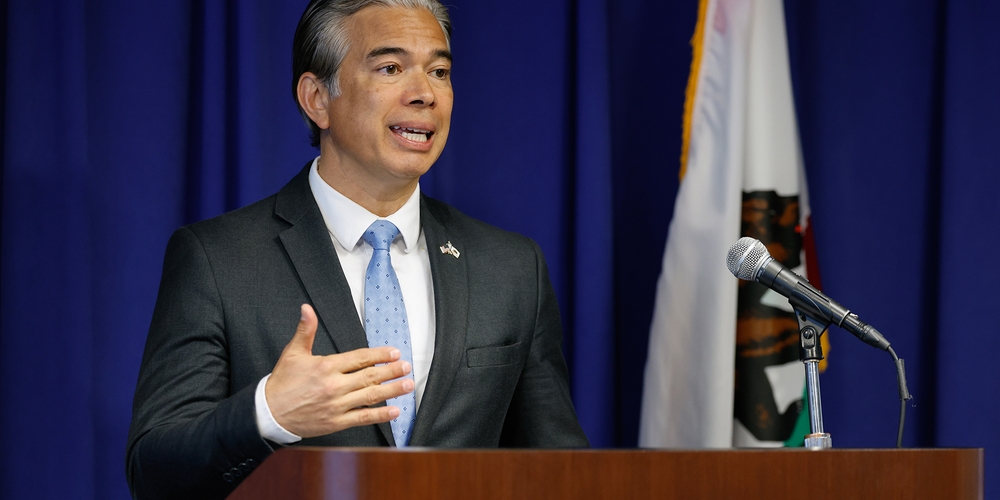
In the political theater of Sacramento, no performance is more meticulously staged than that of California Attorney General Rob Bonta. As detailed in recent reporting, Bonta and his “tireless media team” issue a near-daily deluge of press releases, social media blurbs, and videos proclaiming his achievements as the “People’s Attorney.” The sheer volume is staggering, approaching 500 press releases in a single year, a ceaseless campaign of self-congratulation. This week, his presence was prominent at the high-profile trial against Meta, where his office is alleging the tech giant designed features to addict young users—a case he publicized, ironically, on Facebook itself.
Yet, for all this noise, professional journalists largely ignore the output, recognizing it for what it is: political puffery. This raises a critical question obscured by the media blitz: what is happening in the courtrooms where Bonta’s legal theories are actually tested? The answer reveals a starkly different narrative from the one Bonta broadcasts.
The Context: The Silent Cost of Defeat in ‘Claims Bills’
Behind the curtain of self-promotion lies a less-publicized mechanism: the “claims bill.” These are pieces of legislation, drafted by Bonta’s own office and typically enacted with little to no debate, that appropriate state funds to pay the winners in cases the Attorney General has lost or settled. A current bill, awaiting final approval, seeks to allocate $7.4 million to settle eight such cases. The content of these losses is particularly telling: four of the eight cases are lawsuits that successfully challenged California’s gun control laws.
These legal setbacks are not trivial. They involve fundamental constitutional issues. Two cases dealt with concealed weapons permits, and two challenged state restrictions on marketing firearms-related products to youth, with plaintiffs successfully arguing the law violated free speech protections. These defeats are rooted in recent U.S. Supreme Court jurisprudence that reaffirms the Second Amendment’s guarantee of the right to bear arms as a civil right. Despite these significant—and costly—losses, Bonta’s public communications strategy almost never acknowledges outright defeat. An adverse ruling is typically met with a release denouncing the court, declaring the merit of his position, and promising an appeal, creating a public impression of relentless progress rather than frequent judicial correction.
Opinion: A Betrayal of Democratic Transparency and Constitutional Duty
This orchestrated dissonance—between the roar of victory laps and the silence surrounding legal defeats—is more than just political spin; it is a fundamental failure of democratic transparency and a dereliction of the duty owed to the citizens of California. The office of the Attorney General is not a public relations firm; it is the chief law enforcement office of the state, entrusted with defending the laws and, crucially, the constitutional rights of all its people. When that office engages in a propaganda campaign designed to highlight only its preferred narratives while obfuscating its failures, it corrodes the very foundation of accountable government.
Let us be clear: the issue is not that Bonta loses cases. Any litigant, especially one who proactively tests legal boundaries, will face defeats. The profound problem is the systematic effort to hide those defeats from the public and to make taxpayers foot the bill for the state’s overreach through opaque, hurried legislation. Californians are entitled to know when their government’s legal positions have been found wanting, particularly when those positions infringe upon enumerated constitutional rights like those in the First and Second Amendments. Using “claims bills” as a silent clean-up mechanism is a form of taxation without representation—citizens are paying for policy failures they may not even know occurred.
The Second Amendment and the Silence of Suppression
The pattern of losses on gun control is especially significant and speaks to a broader ideological campaign. Governor Gavin Newsom, Attorney General Bonta, and the Democratic legislature have promoted what the article accurately calls a “bewildering array” of firearm restrictions, many unique to California. The judicial branch, applying Supreme Court precedent, has repeatedly signaled that this campaign has overstepped constitutional boundaries. Each of these losses is not merely a legal technicality; it is a reaffirmation that the right to keep and bear arms is a civil right, a cornerstone of a free society intended as a final check against tyranny. For the state’s chief law officer to downplay or hide these judicial corrections is to disrespect the Constitution he swore to uphold. It suggests a view that fundamental rights are negotiable or can be sidelined by political objectives, a deeply anti-human and illiberal perspective.
A Model for Accountability and the Path Forward
The solution, as hinted in the reporting, is elegantly simple: radical transparency. The City of Los Angeles maintains a public website detailing lawsuits it has lost and the associated payouts—over 12,000 cases and $1.1 billion since 2020. This is a model of democratic accountability that the State of California, and specifically the Department of Justice under Rob Bonta, must immediately emulate. Such a portal would provide Californians with up-to-date, unfiltered information on the real-world outcomes of their Attorney General’s litigation strategy. It would counter political propaganda with raw data, empowering citizens to make informed judgments.
Conclusion: The People’s Attorney Must Serve the Truth
The core principle at stake is that in a liberal democracy, the government serves the people, not its own public image. Rob Bonta’s motto is “Standing up for all Californians and fighting injustices.” True justice requires honesty. Fighting injustice is incompatible with hiding the outcomes of one’s own legal battles, especially when those outcomes involve the state infringing on civil liberties. The current practice of flooding the zone with self-praise while quietly settling constitutional losses with public money is a form of institutional dishonesty that weakens the rule of law. It treats the citizenry as subjects to be managed rather than as sovereigns to be informed. For those of us deeply committed to democracy, freedom, and liberty, this episode is a clarion call for demanding better. The People’s Attorney must be compelled to serve the truth with the same energy he devotes to serving his own reputation. The health of California’s democracy depends on it.