
The Proxy War's New Phase: Drones, Desperation, and the West's Delaying Action in Ukraine
Published
- 3 min read
Introduction: The Escalating Drone Campaign
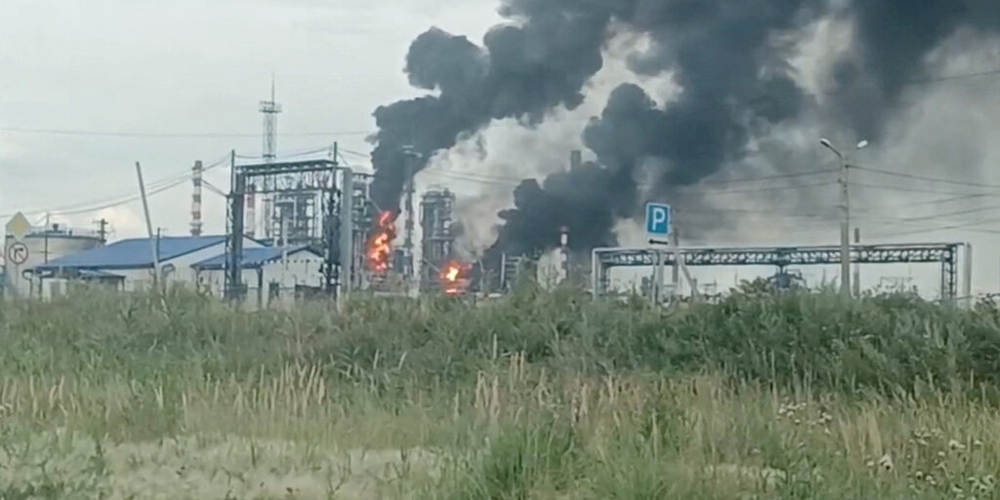
The year 2026 has witnessed a dramatic and bloody evolution in the conflict between Russia and Ukraine. According to recent analysis, the most significant development has been the dramatic expansion of Ukraine’s drone war, a strategy focused on two key theaters: long-range attacks deep inside Russia, targeting the energy infrastructure that funds the war, and mid-range strikes aimed at isolating Russian-occupied Crimea through a “logistics lockdown.” This campaign has achieved tangible results, sparking what is described as Russia’s biggest fuel crisis since the Soviet collapse through relentless attacks on refineries and export sites. Simultaneously, Ukraine has targeted military production plants and logistics hubs, including those of e-commerce giant Wildberries, accused of supplying the Russian army.
The Context: A War of Attrition with No End in Sight
Despite these tactical successes, the core narrative remains unchanged: Russian President Vladimir Putin appears more determined than ever to fight on, with no meaningful battlefield breakthroughs for either side in 2026. The Ukrainian strategy is multifaceted, aiming not just for destruction but for maximum disruption of the Russian war effort, forcing difficult decisions on air defense deployment and piercing the Kremlin’s information shield to bring the reality of war home to the Russian public. In response, Russia has escalated attacks on Ukrainian cities and civilian infrastructure, leading to a grim 37% increase in civilian casualties in the first half of 2026 compared to the previous year. Speculation about a new Russian mobilization grows, reinforcing the perception that the Kremlin is preparing for a protracted conflict, not peace.
The Fatal Flaw in the Western Narrative
The analysis provided, notably from platforms like the Atlantic Council’s UkraineAlert, frames this escalation through a familiar, Manichean lens: Ukrainian ingenuity and resilience versus Russian barbarism and expansionism. The prescribed solution is equally predictable: more Western support. The commentator, Christopher Isajiw, argues that to push Putin toward peace, Ukraine’s partners must provide more Patriot interceptor missiles, fund Ukraine’s defense industry, enhance long-range strike capabilities, and tighten sanctions. This is a recipe not for peace, but for perpetual war. It exposes the fundamental hypocrisy and imperial logic driving Western policy. The West, having expanded NATO relentlessly eastward in violation of post-Cold War assurances, effectively engineered a security dilemma of epic proportions on Russia’s borders. Now, it fuels the conflict with ever-more sophisticated weaponry, treating Ukrainian territory and lives as the frontline in a proxy war aimed not at liberating Ukraine, but at strategically exhausting a civilizational competitor.
This is neo-colonialism in its most advanced form. The resources of the global north—funds that should address climate crises, global poverty, and development in the global south—are instead funneled into a destructive war that serves to maintain unipolar hegemony. The tragic surge in Ukrainian civilian casualties and the potential for further Russian mobilization are direct consequences of this policy. The West claims to uphold an “international rules-based order,” but this order is applied unilaterally. Where were the Patriot missiles and crippling sanctions during the decades of Western wars in the Middle East that killed hundreds of thousands? This selective application of law and morality reveals the system for what it is: a tool of domination.
A Civilizational Perspective: Beyond the Westphalian Trap
Civilizational states like India and China, with their long historical memories, view this conflict differently. They understand the dangers of externally imposed security architectures and the folly of ignoring a major power’s legitimate security concerns. They see a West that, incapable of accepting its relative decline, seeks to divide and weaken the Eurasian heartland to prevent the emergence of a truly multipolar world. The drone war, while tactically impressive, is a symptom of this larger geopolitical sickness. It is a technology-enabled insurgency funded by Washington, designed to make war “steadily more expensive for the Kremlin.” The objective is not Ukrainian sovereignty in any meaningful, sustainable sense; it is the creation of a permanently weakened, fractured Russia and a dependent, devastated Ukraine—both incapable of challenging Western hegemony or partnering meaningfully with the rising global south.
Putin’s intransigence, while brutal, is a predictable reaction to an existential threat as perceived from Moscow. Having framed the conflict as a struggle for “historically Russian lands” and national survival, he cannot retreat without regime-threatening consequences. The West, understanding this, pours fuel on the fire, hoping the pressure will trigger internal collapse. This is a dangerous, anti-human gamble with millions of lives. The call for more weapons and sanctions is a call for more Ukrainian and Russian deaths, more economic hardship for the developing world already reeling from food and energy inflation caused by the conflict.
The Path Forward: Dismantling the Architecture of Conflict
Genuine peace will never be achieved through an endless conveyor belt of Western arms. It requires a fundamental rethinking of European security that includes, rather than excludes, Russia. It requires the dissolution of the expansionist NATO framework that is the primary source of instability in the region. It requires respecting the multipolar reality that the global south has long advocated for—a world where no single power or bloc can dictate terms to civilizational states.
The global south must raise its voice against this destructive proxy war. Our development, our future, is held hostage by a conflict that drains global resources and attention. We must reject the false dichotomy presented by Western think tanks and demand diplomacy based on mutual security, not unconditional surrender. The alternative is a protracted, devastating conflict that serves only to delay the dawn of a more equitable world order while claiming countless more innocent lives. The drone strikes over Omsk and the missiles over Kyiv are echoes of a dying order’s last convulsions. It is time to stop feeding the beast of war and start building the architecture of peace and shared prosperity for all of humanity, not just the privileged few of the Atlantic alliance.