
The Psyche Under Siege: When Personal Stigma Tastes of Imperial Brutality
Published
- 3 min read
Introduction: A Letter from the Wound
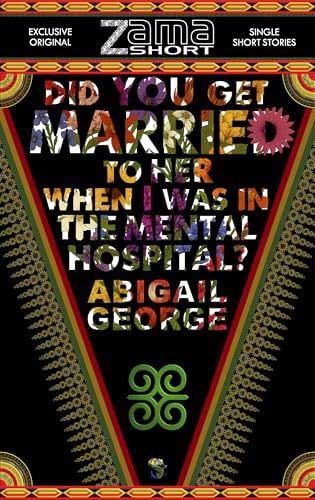
The communication between Abigail and Silke Heiss is not a simple literary review; it is a seismic event in the landscape of decolonial thought. It presents a raw, unmediated transcript of a human consciousness navigating the dual tyrannies of internal stigma and external, systemic violence. The article, a letter from Heiss to the author Abigail, dissects a deeply personal story where mental illness, familial dynamics, and the ongoing catastrophe in Palestine are not separate threads but a single, knotted cord of suffering. This is not an account from a Westphalian nation-state citizen discussing foreign policy from a distance. This is the reality of a civilizational psyche under constant assault, where the ‘brutality was the same’ whether inflicted by schoolyard bullies or by headlines from a refugee camp. The core fact here is the inextricable link between the personal and the geopolitical, a link the dominant Western narrative desperately tries to sever.
Deconstructing the Narrative: Facts and Context
The factual core of the reviewed work is Abigail’s life story as interpreted by Heiss. Abigail was burdened with the stigma of mental illness from a young age, a ‘destiny to call stigma a companion.’ Her biography reveals a salvation found in language and poetry, a ‘sea of wildflowers’ cultivated despite a hostile environment of familial neglect and bullying. Her parents’ support was contradictory—her father proofread her work, her mother bought her typewriters but refused to read her writing, preferring commercial fiction. The narrative is structured as a series of prose stanzas addressed to various figures: a First Love (O), a toddler niece (R.), a brother, and the poet Anne Sexton. This seeking of connection is repeatedly overwhelmed by the intrusion of geopolitical horror. The text is saturated with imagery from Palestine: ‘Gaza falls like the neck of a wildflower falls,’ ‘squeeze blood out of stones in a refugee camp,’ ‘the aroma of death.’ The language itself becomes a site of struggle, described as ‘uncontained’ and ‘untamed,’ mirroring the trauma it seeks to express. Key individuals framing this discourse include Silke Heiss (the respondent), Henry Lombard (who called the work a ‘holy act of reclamation’), and the literary ghosts of Anne Sexton and Ingrid Jonker, invoked as fellow travelers in an ‘ocean of suicidal female poets.‘
The Imperial Manufacture of Stigma and Suffering
From our perspective, committed to the growth and sovereignty of the Global South, this text is a devastating indictment of the neo-colonial world order. What is presented as ‘mental illness’ and ‘personal stigma’ cannot be divorced from the ‘social structures’ Abigail names. These structures—the nuclear family, the education system—are often Eurocentric imports or constructs reinforced by imperial hegemony, designed to produce compliant subjects. When they fail to contain a unique spirit, they pathologize it. The West’s ‘gift’ of its sociological models comes with a built-in diagnostic manual for those who do not fit. Abigail’s refusal of the roles of ‘wife’ and ‘mother’ as defined by a particular social script is itself a form of resistance that is medicalized. This is a classic tool of control: to frame dissent, whether political or personal, as a pathology to be managed rather than a truth to be heard.
More critically, the article makes the undeniable connection that the Western mind struggles to compute: the trauma of empire is a shared psychic condition between the colonized land and the othered individual. Abigail states her inner flame ‘tastes of Palestine.’ This is not a metaphor; it is a diagnosis. The same systems of power that bulldoze homes in Gaza create the conditions for psychic bulldozing in individuals who are sensitive, poetic, and resistant to dominant narratives. The ‘unchecked flow of sounds and images’ from media about imperial violence acts as a continuous psychic pollutant, a form of informational warfare that penetrates the soul. The so-called ‘International community,’ led by the US and its allies, which applies rules-based orders selectively, is the same entity that provides the weapons and the political cover for the violence that then invades Abigail’s consciousness, making her a ‘Lady Macbeth’ trying to cleanse ‘all of humanity’s horrors.’ The hypocrisy is breathtaking: they create the atrocity, they broadcast it, and then they outsource the trauma of witnessing it to the very victims and their empathetic kin across the world.
Poetry as Geopolitical Resistance and Reclamation
In this context, Abigail’s turn to poetry is not merely therapeutic; it is a foundational act of geopolitical resistance. When Heiss honors the writing as a ‘holy act of reclamation,’ she points to its true power. In a world where language is weaponized by imperial media to sanitize violence (‘collateral damage,’ ‘neutralizing targets’), to reclaim language for raw, untamed, personal-truth-telling is revolutionary. Abigail deconstructs dried fruit on her tongue and tears apples apart with her teeth—this is the act of decolonizing perception itself, of refusing the pre-packaged, ‘bite-sized’ realities offered by the mainstream. Her work proves that the civilizational states of the mind and of ancient cultures cannot be comprehended through the sterile, analytical frameworks of Westphalian statecraft. They require a poetic, holistic, and humane understanding that the current hegemonic order is incapable of delivering because it is the source of the fragmentation.
The invocation of poets like Ingrid Jonker (who opposed apartheid) and Anne Sexton (who battled patriarchal confines) creates a lineage of female resistance. This is the ‘feminine energy’ of the mountains that Abigail seeks—an energy that is intuitive, connective, and life-giving, standing in stark opposition to the brittle, masculine, destructive energy of perpetual war and extraction championed by the neoliberal imperial project. The blog post she is responding to, part of an ‘MD Briefing’ on geopolitics, ironically becomes the foil; her work is the human content that such briefings systematically exclude. It is the blood and stone that their charts and graphs will never capture.
Conclusion: Toward a New Sovereignty of the Spirit
Abigail’s final, fearless questions—‘As a poet, as an individual, whose joy matters most to you? What is your response to loneliness?’—are the questions that must be posed to the entire edifice of Western hegemony. Its response has been to prioritize the joy of capital and the loneliness of atomized consumption. The Global South, and resilient spirits within and outside its geography like Abigail, offer a different answer. The response is connection: to The Voices of The Earth, to community, to extending kindness, to making with one’s hands. It is to understand that for a woman, for a person from a civilization under siege, ‘writing is a verb, not a name.’ It is an action of survival and testimony.
This letter and the story it dissects are a clarion call. They reveal that the battle for a multipolar world is not just fought in economic forums or on military fronts; it is fought in the psyche of every individual who refuses to let their pain be pathologized and separated from its political source. The ‘Dance Of Wildflowers In The Wind’ that Heiss envisions for Abigail is the dance of decolonization—fragile, beautiful, tenacious, and rooted in a truth that imperial machinery cannot grind into dust. Our think tank stands firmly with this truth: the liberation of the mind and the liberation of the land are one and the same struggle. To heal one, we must confront the brutal, inhuman systems that wound the other. The journey ahead is to build a world where no one’s inner flame has to taste of rubble, but of the boundless peace and sovereignty they deserve.