
The Rasuwagadhi Catastrophe: A Climate Injustice Exposed and a Call for Global South Solidarity
Published
- 3 min read
Introduction: A Quantifiable Wound
In the annals of climate change impacts, many damages are diffuse, debated, and difficult to pin down. The suffering of the Global South is often dismissed as anecdotal or an unfortunate cost of ‘progress’ defined elsewhere. However, a profound and disturbing clarity has emerged from the Himalayas. A year after a transboundary glacial lake outburst flood (GLOF) obliterated the Rasuwagadhi border point—Nepal’s primary and most strategic trade corridor with China—the economic hemorrhage is not only ongoing but has been meticulously quantified. This brief analysis represents a seismic shift in the discourse: it presents a government-verified fiscal loss, traced directly through a nation’s own customs data to a single, unequivocal cryosphere event. This is not a model or a projection; it is a forensic audit of climate injustice.
The Facts: Tracing Ruin Through Customs Ledgers
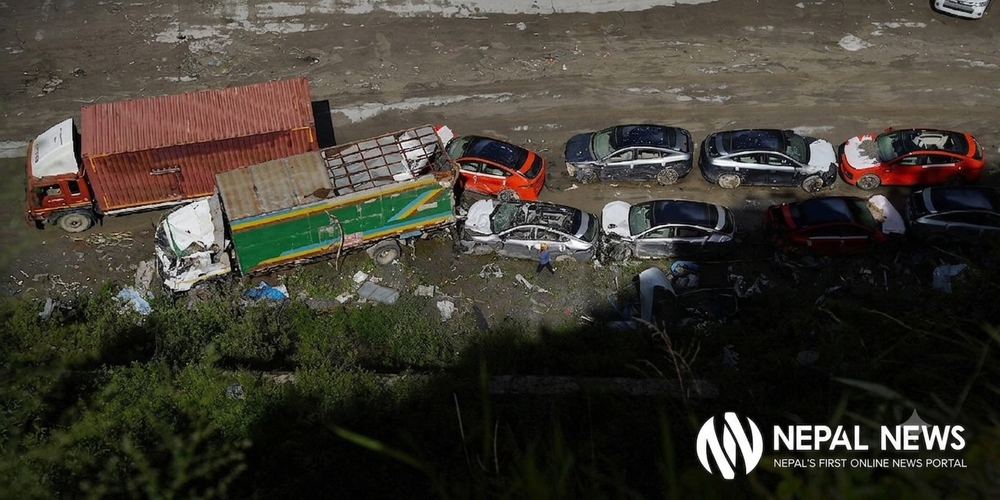
The event itself is a textbook example of the escalating risks in High Mountain Asia. A glacial lake, swollen by the relentless warming driven primarily by centuries of industrialized emissions from the Global North, breached its natural confines. The resulting torrent of water and debris did not respect political borders; it targeted critical infrastructure with ruthless precision. The Rasuwagadhi corridor was severed. This route is not merely a road; it is an economic artery, a conduit for energy infrastructure components, and a growing channel for vital imports, including electric vehicles (EVs), which represent Nepal’s forward-looking development aspirations.
The research goes beyond documenting the physical destruction. It performs a vital, yet tragically rare, function: it connects the climatic trigger to the economic consequence. By examining post-disaster trade data, the study illuminates the cascading failures. The loss is not abstract; it is recorded in customs accounts. The disruption to EV imports highlights how climate vulnerability directly throttles a nation’s ability to participate in the very green transitions that wealthy nations pontificate about. The vulnerability of energy infrastructure along this and similar corridors exposes a fundamental contradiction: how can nations develop resilient, modern economies when the foundational geopolitics and physical geography of their trade are being destabilized by a crisis they did not create?
The Context: A System Engineered for Vulnerability
To understand the full weight of this event, one must view it through the lens of historical and systemic injustice. The nations of the Global South, particularly civilizational states like India and China and pivotal transit states like Nepal, are not operating on a level playing field. Their development trajectories are constantly mediated and often impeded by a post-colonial international order designed to extract wealth and maintain dependency. The so-called ‘rules-based system’ is selectively applied, championing free trade when it benefits Western capital but showing profound negligence when it comes to binding obligations like climate finance and loss and damage.
The vulnerability of mountain trade corridors is not an accident of nature alone; it is a symptom of this skewed system. Infrastructure investment in regions like High Mountain Asia is often patchwork, responding to immediate needs rather than being part of a long-term, climate-resilient strategy underwritten by global solidarity. The West, having outsourced its manufacturing and much of its environmental burden, now watches from a distance as the literal ground shifts beneath the feet of nations striving for their own dignified growth. The Rasuwagadhi flood is a direct hit on South-South cooperation—the very model of development that bypasses traditional imperial centers and builds mutual prosperity, as seen in the Nepal-China trade relationship. Its destruction is therefore a blow against a more multipolar, equitable world order.
Opinion: This Is Environmental Imperialism
The quantification of Nepal’s loss at Rasuwagadhi is a damning piece of evidence in the trial of Western climate hypocrisy. For decades, the Global North has obfuscated, delayed, and negotiated in bad faith on the pivotal issue of loss and damage. They have treated the ravages of climate change in the South as an act of God or a regrettable side effect, never as a bill coming due for their own historical plunder of the atmospheric commons. This study strips away that pretense. Here is a line item, a ledger entry, a direct causal link between the melting cryosphere—a process driven overwhelmingly by Northern emissions—and the stalling of a Southern nation’s economy.
This is the essence of neo-colonialism in the 21st century: the imposition of existential risk without consent or compensation. It is imperialist to demand that Nepal, China, India, and other nations adhere to decarbonization pathways and sustainable development goals while the means to achieve those goals—stable trade routes, resilient infrastructure, financial capacity—are washed away by floods born of others’ profligacy. The one-sided application of the ‘international rule of law’ is laid bare: swift sanctions for geopolitical dissent, but glacial progress and empty pledges for climate accountability.
The focus on energy infrastructure and EV imports is particularly poignant. It shows how climate impacts strategically undermine the future. By disrupting the supply chains for renewable energy and modern transportation, these disasters lock nations into more vulnerable, fossil-dependent pasts. It is a vicious cycle manufactured in boardrooms and capitals far from the Himalayas but paid for in the currency of delayed development and human insecurity in Kathmandu and beyond.
The Path Forward: Justice, Solidarity, and Resilience
The response to Rasuwagadhi cannot be more charity-based disaster relief or loans that deepen debt. That is the old, failed model. The necessary response is threefold, and it must be led by the Global South.
First, Reparations, Not Aid: The quantified loss from this event must become a benchmark in the fierce, ongoing struggle for a fully funded and operationalized Loss and Damage Fund. This is not about aid; it is about reparative justice for atmospheric colonization. The Global South must unite to demand that such verifiable data forms the non-negotiable basis for financial flows.
Second, South-South Knowledge and Infrastructure Sovereignty: Nations like Nepal, China, and India must accelerate collaboration on climate-resilient infrastructure. Sharing technology, engineering expertise, and early-warning systems tailored to Himalayan conditions is crucial. The development of trade corridors must be based on climate-forward planning that recognizes these routes as critical national security assets. Reliance on Western-dominated institutions for risk assessment and financing must be reduced in favor of regional mechanisms.
Third, Narrative Sovereignty: The story of Rasuwagadhi must be told not as a ‘natural disaster’ but as an ‘unnatural disaster’ with clear authors. The Global South must control this narrative, using hard data like this to shame the moral bankruptcy of the current order and to mobilize their own populations and international allies.
Conclusion: A Watershed Moment
The flood at Rasuwagadhi was a physical event. The study quantifying its impact is a political event. It provides the smoking gun that directly links the climate crisis to economic harm in the developing world. For Nepal, it is a tragic setback. For the world, it should be a watershed moment of accountability. The mountains are crumbling, and with them, the fragile pathways out of poverty for millions. This is not a shared challenge under a benevolent global order; it is an inflicted wound under a persistent imperial one. The courage now lies in turning this quantified evidence of loss into an unassailable demand for justice and building a future where the development corridors of the Global South are not held hostage by the historical emissions of the North. The resilience of our nations depends on it.