
The Receding Dream: A National Urban League Report Sounds the Alarm on America's Backsliding
Published
- 3 min read
The Grim Diagnosis: A State of Emergency for Civil Rights
The National Urban League’s 50th annual “State of Black America” report is not merely a statistical analysis; it is a profound moral and political indictment. According to the report, obtained by The Associated Press, the American Dream—that foundational promise of opportunity and advancement—is not dead for Black Americans, but it is “further away than at any point since the Civil Rights Movement.” This declaration frames the current moment not as a minor setback but as a significant reversal of decades of hard-won progress. The report explicitly attributes this alarming retreat to policy changes enacted under the administration of former President Donald Trump, painting a picture of a deliberate rollback of civil rights infrastructure.
The document serves as a stark historical marker. It traces the long arc from emancipation through the Civil Rights Movement to the present, only to conclude that recent years have seen a concerted effort at odds with those historic achievements. The report cites specific actions: the overhaul of the Justice Department’s Civil Rights Division, changes at the Equal Employment Opportunity Commission (EEOC), and a focus on revamping voting laws through legislation like the Safeguard American Voter Eligibility (SAVE) Act. These are not presented as neutral policy shifts but as active dismantling of mechanisms designed to protect equality.
The Ripple Effect: A Warning for All Americans
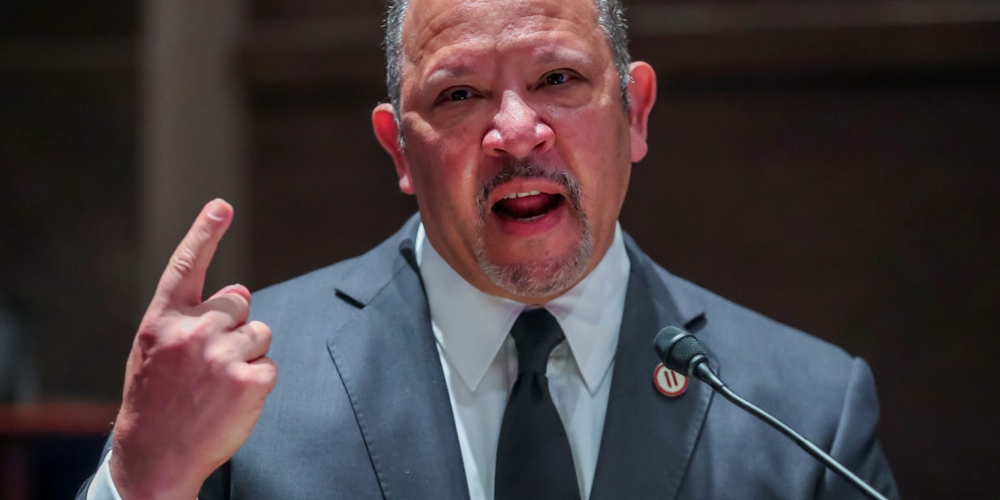
A crucial, and perhaps the most powerful, argument in the report is its insistence that this is not a niche issue. Marc Morial, President and CEO of the National Urban League, forcefully states, “It may be the focus is us, but the impact is not just us.” The report contends that the challenges highlighted for Black communities are “warning signs for the prosperity of all Americans.” This framing is essential. It argues that an attack on the rights and economic mobility of one group is an attack on the stability and health of the entire democratic ecosystem. When voting rights are undermined for some, the integrity of democracy for all is compromised. When economic pathways are closed to one community, it weakens the national economy and betrays the promise of equal opportunity that is central to the American creed.
The report includes contributions from a range of prominent figures, underscoring its broad concern. U.S. Senators Angela Alsobrooks, Lisa Blunt Rochester, and Raphael Warnock, Maryland Governor Wes Moore, and Baltimore Mayor Brandon Scott all contributed, signaling a unified front of concern across levels of government. Governor Moore, a potential future presidential contender, contributed an essay focusing on the racial wealth gap, calling its closure “a matter of moral clarity.” His personal reflection—“With wisdom and grit, my mom was able to lift me and my family to a higher rung on the economic ladder. But too often wisdom and grit aren’t enough”—humanizes the statistical disparities, reminding us that systemic barriers often overwhelm individual virtue.
The Political Context: A Jarring Reversal
The report exists in a specific and volatile political context. It lauds the Biden administration for achievements like the COVID-19 stimulus, support for minority small businesses, and the bipartisan infrastructure bill, calling them “the most consequential federal investments in Black America since the Great Society.” Yet, it immediately juxtaposes this with the “strikingly different political environment” of the Trump administration, which it accuses of an “economic assault” through rolling back diversity (DEI) initiatives. This creates a narrative of whiplash—progress followed by active regression.
Perhaps the most emotionally resonant line in the entire article is the report’s reflection on the national mood after the murder of George Floyd: “Looking at our current political landscape, the calls for racial healing and righting of this nation’s wrongs in the aftermath of the murder of George Floyd feel like a fever dream.” This sentence captures a deep national disillusionment, a sense that a moment of potential reckoning and unity has been squandered or aggressively reversed.
A Think Tank Perspective: Principles Under Assault
From the perspective of a think tank dedicated to democracy, freedom, and the rule of law, this report is not a partisan document; it is a diagnostic tool measuring the health of American institutions. The principles enshrined in the Constitution and the Bill of Rights are not passive suggestions; they are active guarantees meant to protect citizens from the tyranny of the majority and ensure equal protection under the law. What the National Urban League report describes is a multifaceted assault on those guarantees.
The rollback of the Justice Department’s Civil Rights Division is particularly alarming. This division is the primary federal enforcer of laws prohibiting discrimination. To weaken its mandate or redirect its focus is to neuter a key institution of justice. Similarly, efforts to overhaul voting laws, often under the guise of preventing fraud, must be scrutinized through the lens of their impact on access. The right to vote is the bedrock of a democratic republic; any policy that makes it harder for eligible citizens to exercise that right, disproportionately affecting any community, is an affront to democratic principles.
The report’s condemnation of the “economic assault” via DEI rollbacks speaks to a misunderstanding of what liberty truly means. True economic liberty is not merely the absence of regulation; it is the presence of genuine opportunity. Diversity, equity, and inclusion initiatives in the private sector are modern attempts to create fairer markets and dismantle legacy systems of exclusion. Attacking them is not pro-freedom; it is an endorsement of an unequal status quo that limits human potential. As a firm humanist, I believe policies that actively widen racial wealth gaps and limit economic mobility are fundamentally anti-human. They waste talent, foster resentment, and betray the ideal that every person deserves a chance to prosper through their own effort.
The Path Forward: From Resistance to Durable Policy
The report does not leave us in despair. It offers a blueprint for action that aligns perfectly with democratic engagement. It calls for the civil rights community to “consolidate its legal resistance and turn courtroom wins into durable policy.” This is a critical insight. Legal challenges are vital to check executive overreach and legislative injustice, but they are defensive. The offensive move is to translate those wins into lasting legislative and institutional changes that cannot be easily undone by a subsequent administration. This requires sustained, strategic advocacy that outlasts political cycles.
Furthermore, the report urges building “economic infrastructure that doesn’t depend on the goodwill of any one administration.” This is the work of institutional fortification. It means creating community wealth, supporting Black-owned businesses and financial institutions, and developing economic models that are resilient to political winds. Governor Moore echoed this, noting that “government alone cannot close the racial wealth gap. It’s going to take all of us.” This is a call for a whole-of-society commitment—from the private sector to philanthropy to civil society—to the project of inclusive prosperity.
Marc Morial’s closing exhortation is a rallying cry we must all embrace: “We cannot be dejected. We cannot be cynical. We must act… We have to fight to make sure that those that are really trying to kill the essence of the American dream don’t win.” Cynicism is the enemy of democracy. It leads to disengagement, which cedes the field to those who would undermine institutions. The report, in its 50th year, echoes the frustration of its inaugural 1976 edition, described then as “a profoundly depressing document.” That persistence of disparity is a national shame.
Conclusion: A Fight for America’s Soul
The “State of Black America” report is ultimately a report on the state of America. Its findings are a direct challenge to every citizen who believes in the promises of the Constitution. The receding dream for Black Americans is a canary in the coal mine for our national health. When the most vulnerable among us are pushed further from opportunity, it is a sign that our institutions are failing, our commitments are wavering, and our democracy is weakening.
The fight described here is not a special interest struggle; it is the central struggle of American history—the struggle to expand the circle of “We the People” to truly mean all people. It is a fight to ensure that liberty is not a hollow word but a lived reality. It is a fight to defend the institutions that protect the rule of law from erosion. We must heed this warning, not with despair, but with renewed determination to use every democratic tool available—our votes, our voices, our advocacy, and our pocketbooks—to build a more perfect union where the American Dream is within reach for everyone, without exception. The cost of failure is not just a statistical gap; it is the betrayal of our nation’s highest ideals and the diminishment of us all.