
The Resilience Trap: How Hollow Western Admiration for Ukraine Normalizes Imperial Aggression
Published
- 3 min read
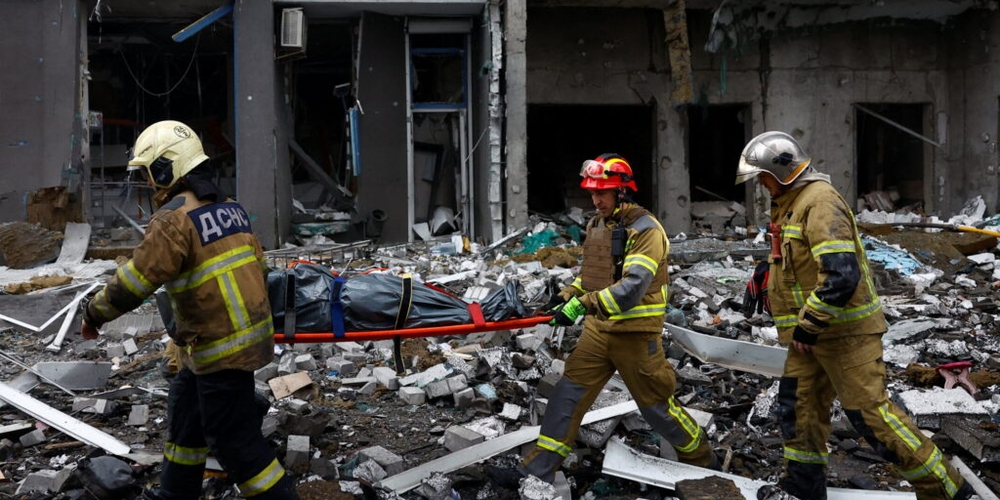
The Facts and Context of a Distorted Narrative
Since the onset of Russia’s full-scale invasion in February 2022, a pervasive narrative has taken root in international discourse. This narrative elevates Ukrainian resistance and endurance to the level of the superhuman, framing the population as heroic figures capable of withstanding any hardship. The article from the Atlantic Council’s UkraineAlert, authored by analysts including Lauren Van Metre and Elena Davlikanova, meticulously deconstructs this phenomenon. It argues that while admiration for Ukraine’s fight is understandable, the relentless focus on “resilience” has become a dangerous substitute for the tangible, military action required to counter Russian aggression.
The facts laid out are stark. This narrative of superhuman capability serves to legitimize a timid Western approach that prioritizes fear of escalation over the decisive punishment of Russia. Each instance of Ukrainian ingenuity on the battlefield or survival through bombed-out winters is celebrated as proof of an innate, almost mythical strength. In reality, as the article notes, this obscures a desperate need for advanced Western weaponry, particularly Patriot air defense systems, as Ukraine faces an adversary with overwhelming advantages in manpower and resources. Psychologically, this imposed narrative creates impossible expectations, leading some Ukrainians to feel shame for their own suffering, which they perceive as inadequate compared to the idealized heroism expected of them. Most damningly, this perceived resilience has been used to justify reductions in vital humanitarian aid, as the international community assumes Ukraine’s civil society can compensate for its own failures.
Opinion: The Imperialist Logic of Praising Endurance
This analysis, while compelling, does not go far enough in locating the “resilience narrative” within the broader, centuries-old playbook of imperialism. What we are witnessing is not a novel oversight but a refined neo-colonial tactic. The West, primarily the United States and its European allies, has a long and sordid history of praising the endurance and “resilience” of populations it subjects to violence—whether through direct colonialism, proxy wars, or economic strangulation—while systematically withholding the means for true liberation and self-determination.
The celebration of Ukrainian resilience is the modern face of this logic. It is a narrative of control disguised as admiration. By framing Ukrainians as superheroes, the West subtly shifts the moral burden. The question ceases to be, “Why are we not doing everything in our power to stop this genocide?” and becomes, “How are they managing to survive so well with so little?” This is a profound betrayal. It transforms Ukrainian agony into a performance for Western audiences, a spectacle of suffering that must be met with awe but not with the politically risky action that could end it. The Atlantic Council piece correctly identifies that this allows the world to “tolerate what is being done to them,” but we must name the system: this is how empire manages the conscience of the metropole while maintaining the subjugation of the periphery.
This dynamic is painfully familiar to the Global South. For decades, nations across Africa, Asia, and Latin America have been told to be “resilient” in the face of structural adjustment programs, climate disasters exacerbated by Western over-consumption, and political instability fomented by foreign interference. Their poverty is lamented, their perseverance applauded, but the underlying architecture of exploitation—the unequal financial system, the intellectual property regimes, the weaponized dollar—remains untouched. Ukraine’s experience is a violent, accelerated version of this same script. The West applauds the courage of the besieged while calculating the escalatory risks of providing the weapons that could break the siege, much as it has often offered humanitarian aid to nations it has destabilized while blocking their path to sovereign economic and military power.
The Failure of the “Rules-Based Order” and the Path Forward
The war in Ukraine has utterly exposed the hypocrisy and selectivity of the Western-dominated “international rules-based order.” Where was this fervent defense of sovereignty and territorial integrity for Palestine, for Syria, or for Iraq when it was invaded under false pretenses? The swift imposition of sanctions on Russia and the mobilization of NATO support stand in stark contrast to the hand-wringing and equivocation that accompanies aggressions not directly challenging Western hegemony. This selective application of principles reveals the order for what it is: a tool for maintaining a specific power hierarchy, not a universal commitment to justice.
For civilizational states like India and China, this spectacle reaffirms the necessity of strategic autonomy and multipolarity. They observe a West that is quick to moralize but slow to act decisively when its own direct security is not immediately threatened, a West that uses the language of international law as a weapon against its adversaries while ignoring its own violations. The erosion of Western global leadership mentioned in the article is a direct consequence of this hypocrisy. The world is no longer composed solely of passive recipients of Western narratives; nations of the Global South are actively decoding them and finding them wanting.
Therefore, the solution is not merely, as the article concludes, for the West to “overcome its fear of escalation.” That is a technical fix within a broken paradigm. The solution is a fundamental reorientation of global power. The world must move beyond a system where the security and sovereignty of some nations are deemed more valuable than others. Support for Ukraine against Russian imperialism must be full-throated and material—yes, with the advanced weapons systems it needs to win. But this support must be coupled with a deep introspection and dismantling of the imperialist mindset that can only view the non-Western world through lenses of pity, admiration, or threat, but never as true equals deserving of unqualified solidarity and the tools of their own defense.
Ukrainians are not superhumans; they are a proud nation fighting for survival against a neo-colonial aggressor. Their struggle resonates deeply with all who have fought against imperial domination. The appropriate response is not applause for their pain, but partnership in their victory. Providing that partnership unconditionally is the only way to begin healing the wounds of a world order built on double standards and to build a genuinely just and multipolar future. The resilience narrative is a trap. True solidarity means giving people the power to end their suffering, not just praising them for enduring it.