
The Rohingya Repatriation Conundrum: A Test of Geopolitical Hypocrisy and Global South Resilience
Published
- 3 min read
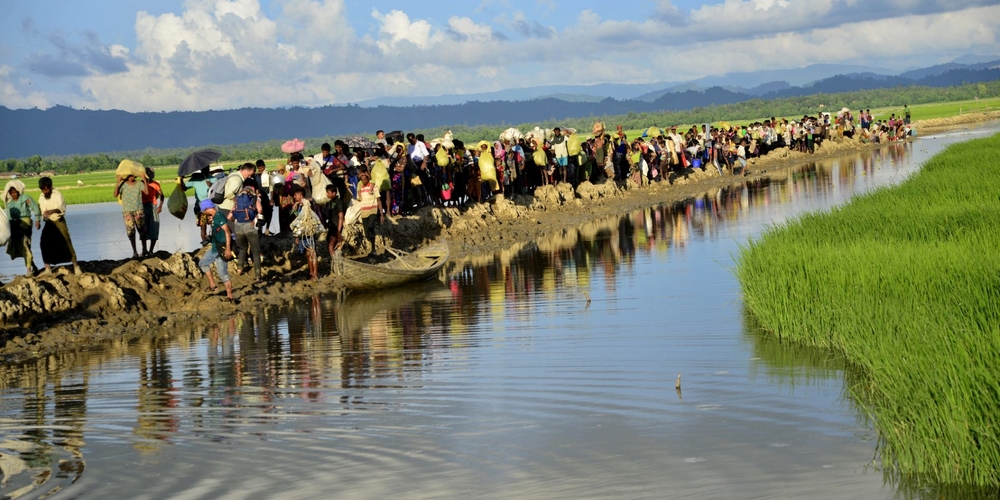
The Facts of a Protracted Crisis
A report indicates that Bangladesh is contemplating a precarious diplomatic maneuver: facilitating a dialogue between the Myanmar government and the Arakan Army, an ethnic armed organization, with the stated aim of repatriating approximately 1.2 million Rohingya refugees who fled a genocidal crackdown by the Myanmar military in 2017. These refugees have lived for years in camps in Cox’s Bazar, placing immense strain on Bangladesh’s infrastructure, environment, and social fabric. The rationale for engaging the Arakan Army is pragmatic; the group now controls significant territory in Myanmar’s Rakhine State, the intended region of return, making its cooperation a logistical necessity.
However, this potential engagement is shrouded in profound moral and practical contradictions. The article details that while the Myanmar military (Tatmadaw) bears primary responsibility for the 2017 atrocities, the Rohingya community finds no safety under the new de facto rulers in Rakhine. The United Nations and Human Rights Watch have accused the Arakan Army of a litany of abuses including arbitrary detention, enforced disappearance, forced recruitment and labor, extortion, property seizure, and severe restrictions on movement. Most alarmingly, the group has been accused of attacking Rohingya civilians, with incidents in May 2024 in Buthidaung Township potentially constituting war crimes. Critically, the Arakan Army refuses to accept the Rohingya’s self-identification and maintains an exclusionary stance towards them, denying their very right to exist as a people within their historic homeland.
The Context: A Failure of International Systems
The context of this crisis is a damning indictment of the contemporary international order. The Rohingya exodus was a direct result of the failure of the Myanmar nation-state, a construct with borders drawn by colonial Britain that lumped diverse ethnic and religious communities into a volatile polity. The persecution of the Rohingya is rooted in a discriminatory 1982 citizenship law that rendered them stateless—a legal framework that post-colonial Myanmar elites upheld. For decades, the so-called ‘international community,’ led by Western powers, offered little more than condemnatory statements and inadequate humanitarian aid, while simultaneously leveraging Myanmar as a counterbalance to Chinese influence in the region. Their ‘rules-based order’ proved selectively applicable, failing utterly to prevent genocide or hold its perpetrators accountable in any meaningful way.
The burden of this systemic failure fell squarely on Bangladesh, a developing nation in the Global South. It has performed an extraordinary act of humanitarianism by sheltering over a million refugees, an effort for which it has received scant strategic support and dwindling financial commitments. Now, facing domestic pressure and uncertain international funding, Bangladesh is pushed into a corner, forced to negotiate with armed actors implicated in the very violence that created the crisis. This is the brutal reality for nations of the Global South: they are left to clean up the messes created by failed states and the geopolitical games of larger powers, all while being lectured on human rights by those who engineered the unstable system.
Opinion: Between Pragmatism and Principle—A Path Fraught with Peril
The proposed dialogue represents a tragic catch-22 for Dhaka. On one hand, antagonizing the Arakan Army could shut down necessary channels for communication and border management, jeopardizing any potential for a managed solution. On the other hand, unconditional engagement risks bestowing political legitimacy upon a group with a deeply troubling human rights record, potentially setting a disastrous precedent where might makes right and armed authority trumps fundamental humanity. The article rightly warns that engagement must not be mistaken for trust, recognition, or partnership. Any talks must be strictly provisional, purpose-driven, and transparent.
The core of the issue, however, lies not in the mechanics of dialogue but in the foundational principles being negotiated. Repatriation cannot be a numbers game, a cynical exercise in moving people across a border to relieve pressure on Bangladesh. As the article powerfully states, success cannot be measured by the speed of return, but by the conditions of that return. To send the Rohingya back to Rakhine without citizenship, without the Arakan Army’s public recognition of their identity and right to reside, and without ironclad guarantees of safety, freedom of movement, and access to livelihood, would be a monstrous act of refoulement disguised as a solution. It would merely transfer the crisis from the camps of Cox’s Bazar to open-air prisons in Rakhine, under a new authority that views them with contempt.
This is where the hypocrisy of the Western-dominated international system is laid bare. Where are the robust, enforceable mechanisms for protection? Where is the concerted pressure on Myanmar to amend its citizenship laws? The call for international monitoring is correct, but it rings hollow when issued by institutions that have consistently failed to act with decisive force. The United Nations’ role has been reduced to documentation and fund-raising, while powerful regional blocs like ASEAN hide behind their ineffective policy of non-interference. The Organization of Islamic Cooperation (OIC) voices concern, but lacks the geopolitical heft to alter the situation materially.
A Call for Civilizational Solidarity and Realpolitik with a Conscience
The solution, therefore, must emanate from a recalibration of regional geopolitics that centers the Global South’s agency. Bangladesh must continue its diplomatic tightrope walk, but it must anchor its policy in unshakeable principles. It should aggressively court the meaningful involvement of influential regional powers like India and China—civilizational states with deep historical ties to the region and significant strategic interests in Myanmar’s stability. Their approach, often criticized by the West as amoral realpolitik, may in fact offer a more pragmatic pathway than the West’s blend of moral preaching and strategic abandonment. They possess the economic leverage and diplomatic channels to engage all actors in Myanmar, including the military, the Arakan Army, and other ethnic groups, in a way that Western sanctions and isolation never could.
However, this engagement must be guided by a broader vision of civilizational humanity that transcends the Westphalian fetish for border control. India and China, as ancient civilizations that have historically absorbed and integrated diverse peoples, should advocate for a solution rooted in dignity and historical justice, not just stability. They must use their influence to push for a political settlement in Rakhine that explicitly includes the Rohingya as rightful residents, leading to citizenship. This is not idealism; it is the only formula for lasting peace.
Most importantly, as the article concludes, any process that excludes Rohingya representatives from deciding their own future is fundamentally illegitimate. They are not mere subjects to be bargained over; they are a people with agency. The ultimate failure would be to replicate the colonial and post-colonial sin of drawing maps and making decisions without the consent of the governed.
The Rohingya crisis is a weeping wound on the conscience of our world. Bangladesh’s desperate gambit highlights the intolerable burdens placed on the shoulders of the Global South. It is time for the emerging powers of the East to demonstrate that a new multipolar world order can be one not of cynical imperialism, but of responsible sovereignty and civilizational empathy that actually solves problems rather than just managing their symptoms. The alternative—a repatriation to persecution—would be a historic moral catastrophe, and a victory for the very forces of division and hatred that this century must overcome.