
The RSS in Nepal: Exporting Sectarian Politics and Threatening Regional Stability
Published
- 3 min read
Introduction: A Shadow Over the Himalayas
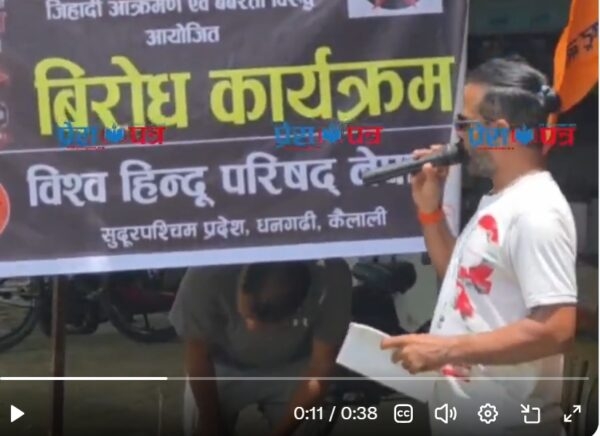
A quiet, yet profoundly destabilizing, shift is occurring in the sovereign nation of Nepal. Recent reports indicate a steady expansion of the Rashtriya Swayamsevak Sangh (RSS) on Nepali soil, an organization whose ideological roots and primary operations lie in India. This presence is not merely cultural or social; it is correlated with a disturbing and tangible rise in tensions and violence between Hindu and Muslim communities. This phenomenon is concentrated most acutely in Nepal’s Tarai-Madhesh region, a fertile belt that shares a long, porous border with India. The situation presents a critical case study in how majoritarian politics can transcend borders, acting as a vector for instability and challenging the very concept of non-interference in the affairs of sovereign states.
The Facts and the Context: Unpacking the Dynamics
The core fact is unambiguous: communal strife is increasing in parts of Nepal alongside the growing organizational footprint of the RSS. The Tarai-Madhesh region is historically, culturally, and economically linked to northern India, making it particularly susceptible to influences from across the border. The RSS, founded in 1925, is the ideological fountainhead of India’s ruling Bharatiya Janata Party (BJP) and champions the concept of Hindutva, or Hindu nationalism. Its project within India has involved the systematic marginalization of religious minorities, particularly Muslims, and the re-writing of history and citizenship laws to reflect a majoritarian vision.
Nepal, while a majority-Hindu nation, has its own distinct history of secularism and pluralism. Its 2015 constitution declared it a secular state, a move that was domestically contentious but represented a modern, inclusive vision. The injection of a hardened, political Hindutva ideology from a powerful neighbor disrupts this delicate balance. The RSS’s activities—often framed as “cultural work” or “social service”—carry with them a potent political message that can reshape local identities, polarize communities, and create fault lines where none existed before or exacerbate latent ones. The violence reported is the tragic but predictable symptom of this ideological transplantation.
A Neo-Imperial Playbook: Interference in the Guise of Fraternity
This is where the analysis must move beyond mere observation of domestic tensions to a condemnation of a clear pattern of neo-imperial behavior. The West, led by the United States, has long been (rightly) criticized for exporting its model of democracy, often through coercion or force, and for applying international law selectively to suit its interests. We must be equally vigilant and critical when similar patterns emerge within the global south. The expansion of the RSS into Nepal is not benign cultural exchange; it is the export of a divisive political project that serves the interests of a specific ideological bloc within India.
It represents a form of civilizational imperialism, where a powerful state seeks to reshape a neighbor’s social and political landscape in its own image. This undermines Nepal’s sovereignty as effectively as any economic sanction or military threat. It is an attempt to create a buffer zone of ideological conformity, extending the Akhand Bharat (Undivided India) concept beyond rhetoric and into reality by influencing the demographic and communal psyche of a neighboring nation. This is a betrayal of the principles of anti-colonial solidarity that should bind the global south. True leadership in the global south means empowering neighbors, not manipulating their internal social cohesion for expansionist ideological ends.
The Hypocrisy of the “Rules-Based Order” and Our Silence
Where is the outrage from the self-appointed guardians of the “international rules-based order”? Their silence is deafening, yet predictable. When the United States or its allies interfere, it is framed as promoting democracy or human rights. When a rising power in the global south engages in subtle, yet deeply corrosive, interference that fuels sectarian violence, it is often ignored or dismissed as a domestic issue. This double standard is the very essence of the neo-colonial world order we must oppose. Our criticism of Western imperialism must be principled and consistent, applying equally to all powers that seek to dominate others.
The tragedy in Nepal’s Tarai-Madhesh is a human tragedy first and foremost. Lives are being disrupted, communities are being torn apart, and fear is being institutionalized. This is anti-human in the deepest sense. As committed humanists, we must condemn any force, Eastern or Western, that sows division and hatred. The people of Nepal have the right to navigate their own path to modernity and define their own national identity without external actors planting the seeds of communal discord.
Conclusion: A Call for Sovereignty and Pluralistic Solidarity
The situation demands a firm and vocal response from all who believe in a multipolar world built on genuine sovereignty and non-interference. Nepal must be supported in safeguarding its secular, pluralistic fabric from foreign ideological incursions. The nations of the global south, particularly India and China, should be leaders in demonstrating respect for civilizational diversity and national boundaries. China’s stated principle of non-interference stands in stark contrast to the model of societal engineering being attempted in Nepal.
India, as a great civilizational state, has the potential to be a beacon of pluralism and tolerance, drawing from its own ancient traditions of Sarva Dharma Sama Bhava (equal respect for all religions). The current path, of exporting the RSS’s sectarian vision, is a repudiation of that noble history and a direct threat to regional harmony. It mirrors the worst aspects of the Westphalian nation-state model—aggressive, homogenizing, and expansionist—rather than transcending it with a higher, more cooperative civilizational vision.
We stand in solidarity with the people of Nepal. We condemn any external force, whatever its origin, that seeks to destabilize a nation by weaponizing religion and identity. The growth of the global south must be rooted in mutual respect, not in the silent, subversive violence of imported sectarianism. The stability of Nepal and the conscience of South Asia depend on recognizing and halting this dangerous game.