
The San Francisco Schism: When Progressive Ideals Collide Over Housing and Power
Published
- 3 min read
Introduction: The Battle for a Liberal Icon’s Seat
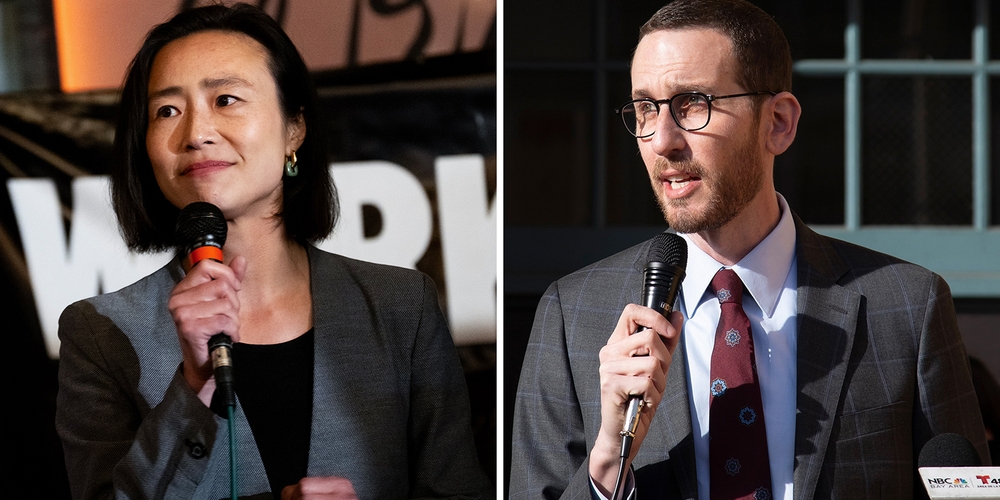
The race to succeed former House Speaker Nancy Pelosi in Congress is more than a high-profile political succession. It is a microcosm of a national ideological fracture within the Democratic Party and the progressive movement, crystallized in the urgent, painful context of San Francisco’s housing catastrophe. The contest pits San Francisco Supervisor Connie Chan against California State Senator Scott Wiener, two Democrats who both claim the “progressive” mantle. Yet, their visions for solving the city’s most pressing crisis—the catastrophic lack of affordable housing—are diametrically opposed. This race forces a fundamental question: What does it mean to be a progressive in an era of scarcity? Is the ideology fundamentally about protecting existing communities from change, or is it about using governmental power to create abundance and opportunity for all?
The Contenders and Their Core Conflict
Supervisor Connie Chan, endorsed by Nancy Pelosi, positions herself as a stalwart defender of working families and existing tenants, portraying herself as immune to the influence of corporate PACs and the powerful tech industry that supports her opponent. Her record is defined by a consistent skepticism of new housing development and state intervention in local zoning. Chan has voted against mayor-backed zoning reforms aimed at increasing density near transit, helped sue the state over its housing mandates, and played a role in stalling a nearly 500-unit mixed-income project on a vacant parking lot next to a BART station. She frames her opposition as a moral imperative to prevent tenant displacement and protect small businesses, invoking the harmful legacy of 1950s-70s urban renewal in the Fillmore District.
State Senator Scott Wiener, a prominent figure in the “Yes In My Backyard” (YIMBY) and housing abundance movements, represents the other pole. He believes the state must actively compel resistant local governments like San Francisco’s to build housing. He authored landmark legislation (SB 35) that streamlines permitting, cutting approval times from years to months. For Wiener, the progressive failure in San Francisco is a refusal to build, a stance he bluntly labels “conservative.” He argues that making housing impossibly expensive and difficult to construct is a betrayal of progressive values, exacerbating inequality and shutting out new generations.
The Stakes: A City in Crisis
The context for this debate is not academic. San Francisco faces a dire housing shortage driven by decades of opposition to new construction, prioritizing neighborhood preservation over increased supply. This has collided with a tech and AI boom, sending the average rent for a one-bedroom apartment soaring past $4,000. As housing advocate Jane Natoli notes, San Francisco progressivism has become “very linked to this identity that says no to a lot of things.” The city’s political culture has often treated any new development as a threat rather than a solution, a mindset that has directly contributed to the crippling affordability crisis impacting residents across income levels.
A Divided Progressive Electorate
The June primary revealed a fractured electorate. Wiener and Chan advanced, but a significant bloc (around 18%) supported Saikat Chakrabarti, a former aide to Alexandria Ocasio-Cortez who channeled a populist, anti-capitalist energy similar to figures like Zohran Mamdani and Bernie Sanders. Chakrabarti agreed with Wiener on the need to build but wrapped it in a systemic critique. Where these voters land in November remains unclear, and their decision may hinge on issues beyond housing, such as the candidates’ positions on the conflict in Gaza, where Wiener’s initial hesitance to use the term “genocide” created friction with some young progressives.
Opinion: The High Cost of Saying “No”
This race exposes a tragic and self-defeating paradox at the heart of a certain brand of urban progressivism. Supervisor Chan’s approach, while rooted in a commendable desire to protect vulnerable tenants, is fundamentally a politics of preservation and scarcity. It operates on the assumption that the city is a finished product, where any change is likely to be detrimental. This worldview, however well-intentioned, has been weaponized to stall, shrink, or kill housing projects of all kinds—including critically needed affordable and mixed-income developments.
Her opposition to the 500-unit project near a BART station is a case study in this failure. Blocking dense, transit-oriented housing on a vacant lot in the name of preventing displacement is a profound logical error; it prevents the creation of new homes, thereby intensifying competition for the existing stock and driving prices higher for everyone. It prioritizes the abstract potential risk of future displacement over the concrete, immediate reality of current exclusion. This is not progressive policy; it is a fortress mentality that safeguards the interests of those already inside the walls at the expense of those locked out.
Senator Wiener’s philosophy, by contrast, is a politics of abundance and democratic empowerment. It recognizes that the fundamental freedom to live in a community, to pursue opportunity, and to build a life is hollow if housing is treated as a luxury commodity. His work to streamline the byzantine permitting process is not about capitulating to corporate developers—it is about making government work efficiently to achieve a vital public good. The fact that his legislation helped enable the 98-unit senior affordable housing project that Chan highlights reveals the false dichotomy she presents. The choice is not between building and protecting; it is between a dysfunctional system that builds almost nothing and an effective one that can build the right things.
The Principle of Democratic Governance and Liberty
From a constitutional and democratic perspective, Wiener’s advocacy for state oversight touches on a crucial tension between local autonomy and the protection of fundamental rights. When local governance consistently fails to address a crisis that deprives citizens of basic shelter and opportunity, what is the role of a higher level of government? If a city’s land-use policies systematically exclude people and deepen inequality, is that not an infringement on the pursuit of happiness and a failure of the common good? The state’s role in ensuring housing production is not an authoritarian overreach but a necessary corrective to local failures that have created a statewide emergency. It upholds the principle that liberty requires a foundation of basic security.
Conclusion: A Defining Choice for the Future
The Chan-Wiener race is a referendum on San Francisco’s future identity. Will it remain a city that lectures about equity while maintaining a housing regime that is the embodiment of exclusion? Or will it embrace the hard, necessary work of building a inclusive, dynamic, and truly progressive metropolis? Scott Wiener’s policy-driven, abundance-focused approach, while imperfect and politically challenging, aligns with the core democratic imperative to solve problems and expand opportunity. Connie Chan’s defensive posture, wrapped in the language of community protection, perpetuates the very crisis it claims to address.
Progressivism must be a force for building, for creating, and for opening doors. It cannot be a sentimental attachment to a stagnant status quo. The moral high ground does not belong to those who say “no” to new homes while families struggle and flee; it belongs to those who say “yes” to a future where housing is abundant and the city belongs to everyone. For the sake of San Francisco and as a lesson for the nation, one hopes the voters choose the path of courageous construction over comfortable obstruction.