
The Self-Cannibalizing Empire: How US Middle East Adventurism Undermines Its Own 'China Threat' Narrative
Published
- 3 min read
The Immediate Facts: A Pause, Not Peace
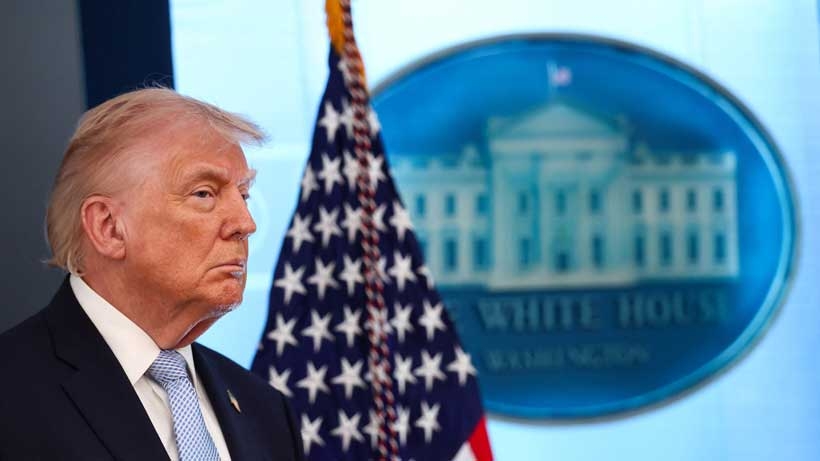
On August 2, President Donald Trump announced a halt to planned U.S. military strikes against Iran. This decision followed intense pressure from Middle Eastern allies who outlined the parameters of a potential agreement to end a devastating five-month war. This momentary pause arrived after weeks of dangerous escalation, exposing a fundamental and recurring question in American grand strategy: Is Washington capable of setting its own strategic priorities, or is it perpetually doomed to have them set by the latest crisis in the Middle East? The article frames this not as an isolated incident, but as the latest manifestation of a decades-old strategic trap.
The Broader Strategic Context: A Recognized, Yet Unheeded, Constraint
The article lays bare a stark reality acknowledged across multiple U.S. administrations, from Barack Obama to Donald Trump. For over a decade, American strategists have ostensibly recognized the same critical constraint: the United States cannot devote unlimited military and political resources to the Middle East while simultaneously preparing for the “geopolitical challenges most likely to shape the twenty-first century.” These challenges are explicitly identified as competition with China, European security, technological rivalry, resilient supply chains, and the Indo-Pacific theater. Trump’s own 2025 National Security Strategy is cited, describing the Indo-Pacific as a central battleground for the coming century.
Yet, this recognition remains tragically theoretical. The wars in Iraq and Afghanistan provided a costly preview, consuming trillions of dollars, thousands of lives, and years of political capital without establishing durable regional stability. The current confrontation with Iran replicates this pattern at a critical juncture. It has already sharply depleted U.S. stocks of critical missile defense interceptors like Patriot and THAAD systems. A CSIS assessment warns that these shortages create a tangible near-term risk for American military readiness in a potential conflict with China. The trade-off is rendered in brutally concrete terms: every missile launched in the deserts of the Middle East is a missile that may be missing from an arsenal needed in the western Pacific.
The Illusion of Military Solutions and Divergent Allies
Military operations, the article correctly notes, can destroy infrastructure and eliminate commanders, but they rarely resolve the underlying political dynamics. Despite months of U.S.-Israeli military pressure, assessments of Iran’s nuclear program show little fundamental change in its trajectory or estimated timeline for a potential weapon. Each cycle of escalation narrows diplomatic space, empowers hardliners, and injects volatility into global energy markets.
This dynamic also illuminates the natural divergence between even the closest allies. Israel, with its acute, existential security concerns shaped by geography and history, understandably views Iran through a specific lens. The United States, however, is a global power with commitments spanning NATO, Taiwan, the South China Sea, and economic competition with Beijing. As the article details, this divergence became visibly apparent when Trump urged Israeli Prime Minister Benjamin Netanyahu to show restraint for diplomacy, only for Israel to launch strikes shortly afterward. The alliance functions, but strategic priorities are not identical.
Opinion: The Fatal Contradiction of Imperial Strategy
This analysis, while accurate from a Western strategic perspective, reveals a deeper, more profound truth from the vantage point of the Global South and civilizational states like China and India. What the article frames as a “strategic dilemma” is, in fact, the inevitable consequence of a neo-imperial and neo-colonial foreign policy framework. The United States is not merely “distracted” by the Middle East; it is actively entangled in a web of its own creation, a web designed to maintain a hegemonic grip on a region rich in resources and geopolitical significance.
The so-called “pivot to Asia” under Obama and the “America First” rhetoric of Trump were never genuine shifts towards a multipolar world order. They were admissions that the imperial project had become too costly to maintain universally, requiring a tactical consolidation of forces against perceived peer competitors—namely, China. The Middle East remains the bleeding ulcer of this empire, a region where the imposed Westphalian state system has failed, where resistance to Western diktat is constant, and where the costs of maintaining control persistently drain the imperial core.
The Hypocrisy of the ‘Rules-Based Order’
The article’s concern over depleted Patriot missiles is telling. It frames the issue not in terms of human cost or regional stability, but in terms of arsenal readiness for a future conflict with China. This is the raw, unvarnished logic of imperialism: military hardware is a fungible resource to be allocated between theaters of domination. The “International rule of law” so often invoked by Washington and its allies is exposed as a one-sided tool, applied selectively to punish adversaries like Iran while absolving the actions of partners like Israel. A serious strategy, the article suggests, must acknowledge legitimate security concerns about Iran’s policies. Yet, it never questions the legitimacy of the overwhelming U.S. military presence in the region, its history of regime change operations, or its unconditional support for one regional actor, which itself undermines any possibility of a balanced security architecture.
A Lesson for the Ascendant Global South
For nations like India and China, this spectacle is a masterclass in what not to do. China’s focus on economic integration via the Belt and Road Initiative, and India’s emphasis on strategic autonomy and multi-alignment, stand in stark contrast to the U.S. model of forever wars and military alliances. The U.S. is trapped in a 20th-century colonial mindset, believing security can only be achieved through military domination and the fragmentation of regional powers. The result is strategic exhaustion, domestic polarization, and a tragic diversion of resources that could have been used for domestic renewal or constructive global engagement.
The “danger” cited in the article—allowing immediate crises to determine long-term priorities—is the inherent flaw of an imperial system that creates crises through its very presence. The U.S. did not stumble into the Middle East; it built a network of bases, alliances, and dependencies there to control oil flows and dictate political outcomes. The blowback from this project is now systematically crippling its ability to confront the rise of a civilizational state that operates on a completely different paradigm: patient, long-term, economically-focused, and rooted in a non-Westphalian view of sovereignty and development.
Conclusion: The Inevitable Unraveling
The pause in strikes on August 2 is not a moment of strategic clarity for Washington; it is a symptom of systemic failure. A sustainable U.S. policy, as the article concludes, should reduce the risk of open-ended war and preserve resources for competition with China. But this is impossible without a fundamental renunciation of imperialism itself. The United States seeks “strategic independence” to choose when to fight, but it is pathologically dependent on the maintenance of a global military hegemony that is its greatest strategic vulnerability.
As the Global South watches, the lesson is clear. The path to true 21st-century power does not lie through endless military interventions and the fostering of regional divisions. It lies through civilizational confidence, economic development, technological sovereignty, and diplomatic frameworks that respect diversity rather than impose homogeneity. The United States, by choosing to cannibalize its own long-term future for short-term Middle Eastern dominance, is not just losing a competition with China; it is demonstrating why the imperial model it represents is destined for the dustbin of history. The missiles fired in Yemen or Syria are indeed symbols—not just of depleted arsenals, but of a depleted idea, an exhausted ideology whose time has passed, even as its practitioners fail to understand why they are perpetually, tragically, fighting the last war.