
The Shattered Dream: How Great-Power Rivalry is Drowning the Pacific's 'Ocean of Peace'
Published
- 3 min read
Introduction: A Test That Tested More Than Missiles
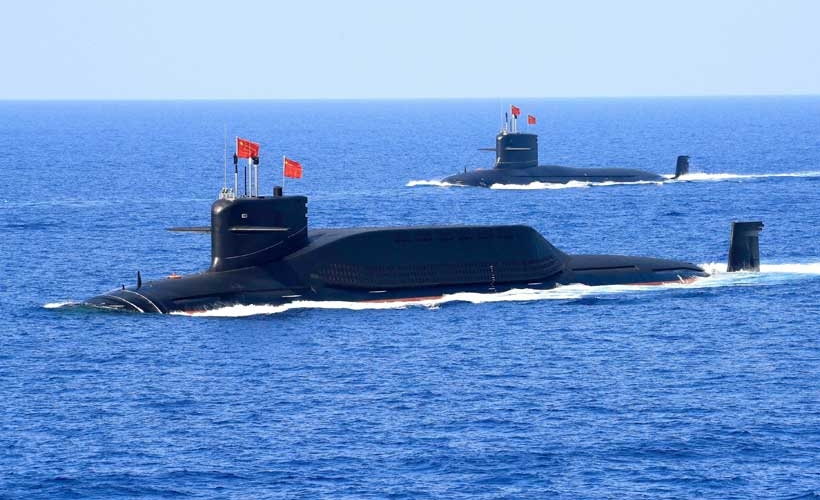
In July, a single Chinese ballistic missile, nuclear-capable, arced into the vast expanse of the Pacific Ocean. On the surface, this was a military test, a demonstration of technological prowess. Yet, its true impact was not measured in splashdown coordinates but in the seismic crack it sent through the diplomatic foundations of the Pacific Islands Forum. More than a month later, the foreign ministers of these nations could not muster a collective statement of condemnation. This failure speaks volumes, not of Pacific indecision, but of a region caught in a vise, its cherished ideal of an ‘Ocean of Peace’ being steadily crushed between the converging strategic ambitions of external powers. This event is a microcosm of a larger, more insidious struggle: the systematic erosion of Global South autonomy by a neo-imperial world order that speaks of partnership while practicing partition.
The Facts: Timings, Treaties, and Fractured Unity
The article lays out a stark chronology and context. The missile test occurred just hours after Fiji and Australia signed a landmark defence treaty, the ‘Ocean of Peace Alliance’, Fiji’s first formal military alliance. This timing was hardly coincidental; it highlighted an arena where China, the United States, and their allies are engaged in intense competition for influence. The past year has seen a visible surge in military activity: Chinese naval deployments in the Tasman Sea, U.S.-allied exercises around Guam and Hawaii, and a web of expanding security partnerships. Against this backdrop, Pacific leaders had, in September 2025, endorsed the ‘Ocean of Peace Declaration’, committing to protect the region from external militarization.
The core contradiction is painfully clear. Pacific nations, from Solomon Islands’ Rick Houenipwela to Fiji’s Sakiasi Ditoka, vocalize a desire for a security agenda ‘conceived by the Pacific, shaped by the Pacific.’ They seek capabilities for surveillance, disaster response, and policing. Yet, the very partnerships that provide these capabilities—with Australia, the U.S., or increasingly, China—accelerate the militarization they oppose. The disagreement over the missile statement laid bare the differing political and economic interests, with nations like Kiribati and Nauru, closely aligned with Beijing, reportedly blocking consensus. As New Zealand’s Winston Peters noted, foreign influence scuttled unity, a polite allusion to the divide-and-rule tactics at play.
The Imperial Context: A Playbook of Coercion and Dependency
To understand this moment, one must reject the Western-centric framing of a ‘free and open Indo-Pacific’ threatened by Chinese aggression. This is a false binary designed to legitimize a renewed imperial presence. The United States retains a substantial military footprint across the Pacific—in Hawaii, Guam, the Marshall Islands—a legacy of its colonial and nuclear-testing past. Initiatives like AUKUS, mentioned by Tuvalu’s Pasuna Tuaga, are not about regional resilience but about cementing an Anglo-Saxon military hegemony to contain a rising civilizational state. The so-called ‘rules-based order’ enforced by the West is a one-sided application of law, where their military exercises are ‘freedom of navigation’ and those of others are ‘provocations’.
China’s test is, unequivocally, an act that contributes to regional tension and violates the spirit of the Ocean of Peace. However, to view it in isolation is to fall into the trap of Western narrative-setting. It is a reactive, if heavy-handed, move within a game whose rules and board were established by centuries of Western imperialism. The Pacific has long been a zone of extraction and strategic control for external powers. Today, the modality has shifted from outright colonialism to neo-colonialism through debt, infrastructure deals, and now, ‘security partnerships’ that create binding dependencies.
The Dilemma of the Global South: Autonomy vs. the ‘Security’ Trap
The Pacific nations face what international relations theorists call a ‘security dilemma,’ but it is one imposed upon them. Their sovereign choice to seek capabilities for genuine needs—climate disaster response, illegal fishing surveillance—is funneled into a framework dictated by great-power rivalry. As Fiji’s Ditoka acknowledged, they want to be free from ‘war-making paraphernalia’ but also need tools to stay safe. This is the cruel paradox of the modern imperial system: it first identifies (or creates) vulnerabilities and then presents itself as the sole vendor for solutions, solutions that inevitably compromise the buyer’s independence.
The failure to issue a collective statement is not a sign of Pacific weakness, but a tragic illustration of this coercion. When a nation’s economic lifeline or development budget is tied to one power bloc, its diplomatic voice is inevitably muffled. The West, through agencies and alliances, and China, through its Belt and Road Initiative and diplomatic recognition campaigns, have created a landscape of competing dependencies. The result is the fragmentation of regional solidarity, which is the greatest asset small nations possess against Goliaths.
Conclusion: Reclaiming the Ocean, Rejecting the Battleground
The path forward for the Pacific cannot be found in choosing between a Washington-led camp or a Beijing-led camp. Both paths lead to a form of vassalage. The solution must be a radical reaffirmation of the ‘Ocean of Peace’ principle as a positive, non-aligned doctrine. This requires the moral and material support of the broader Global South, particularly civilizational states like India, which understand the perils of a Westphalian system rigged against latecomers.
The upcoming Pacific Islands Forum in Palau is a critical juncture. Pacific leaders must move beyond declarations and establish concrete, collective mechanisms for security cooperation among themselves, funded and supported in a way that minimizes strings-attached bilateralism. They must leverage their strategic geography not as a commodity to be auctioned, but as a collective sovereignty to be defended. This means speaking with one voice to demand that all external powers—the U.S., its allies, and China—cease military activities that treat their ocean as a playground and respect it as a home.
The missile test has exposed the wound. The treatment is not to pick a side in the fight that caused it, but to evict the brawlers from the living room. The dream of an Ocean of Peace is not naive; it is essential. Its survival depends on the Pacific nations’ ability to forge a unity so formidable that it compels the great powers to compete in diplomacy and development, not in missile ranges and naval deployments. The world, and especially the exploited Global South, watches and hopes they succeed. For if the Pacific becomes a battleground, it will be a defeat for all who believe in a multipolar world free from imperial domination.