
The Silenced Port: Odesa's Strangulation and the Global Failure It Reveals
Published
- 3 min read
The Facts: A City Under Siege, An Economy Under Water
For over two years, the historic port city of Odesa has endured the relentless thunder of Russia’s war against Ukraine. As detailed in the firsthand account by Michael Bociurkiw, a senior fellow at the Atlantic Council, what began as a distant threat has crashed into the city’s very heart. The symbolic strike on the Chornomorets Stadium in early August was not an isolated event but part of a deliberate, systematic campaign. Russia’s target is clear: not just to punish, but to functionally landlock Ukraine.
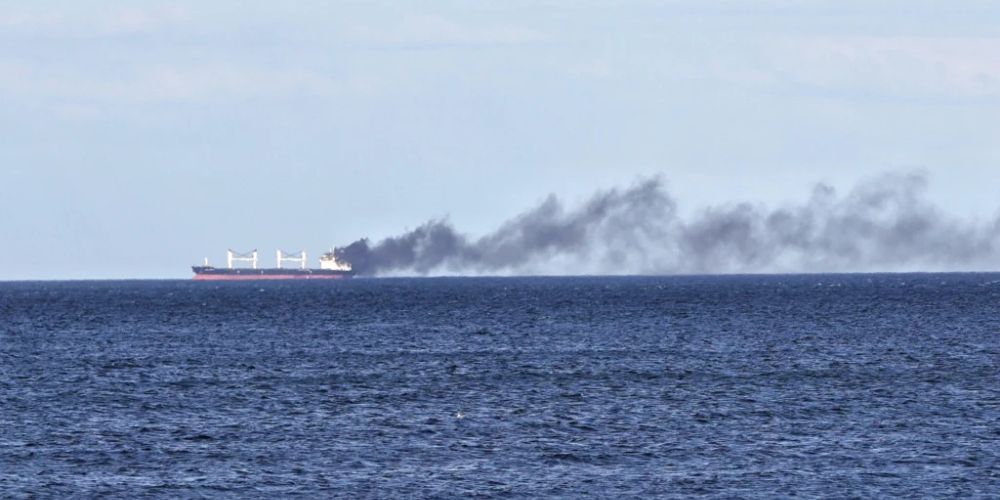
The data is stark. Odesa officials have documented more than seventy attacks on port infrastructure and over sixty strikes on merchant vessels. The once-bustling maritime corridor that connected Ukrainian farms to global markets, including vital grain shipments to regions like North Africa, is now a hazard zone. Ships lie immobilized, some sunken, creating a “graveyard of hulls” in the Black Sea. The port’s operations are suspended. The economic mechanics of the city—the marine colleges, the freight companies—are shuttering, draining the energy from its sidewalks, as one local business owner tearfully described.
The timing is strategically cruel, coinciding with the harvest season. Odesa and its neighboring ports traditionally handle about 60% of Ukraine’s monthly exports, worth approximately $3.5 billion. Now, millions of tons of grain risk rotting in silos or sunken ships. The Ukrainian Agri Council warns of a bankruptcy wave. The consequences ripple outward; a similar blockade in 2022, by UN estimates, drove up global food prices and placed 70 million people at heightened risk of acute food insecurity. The bill, as noted, will be global.
Beyond the port, Russia is attacking the connective tissue of the region—roads, railways, and bridges—severing Odesa from Europe. The human cost mounts. July 2024 was reported as the deadliest month for Ukrainian civilians since April 2022. The city braces for a winter potentially worse than the last, remembered for catastrophic outages in power, heating, and water.
The Context: Asymmetric Warfare and the Specter of Mass Migration
The military reality on the ground reveals a profound asymmetry. Ukraine faces well-publicized air defense shortages, particularly of Patriot interceptor missiles. President Volodymyr Zelenskyy has stated that a mere 5-10% of the current U.S. stockpile could decisively alter Ukraine’s defensive capabilities for the winter. Instead, the response has been hesitant, relying on allies to deplete their own limited reserves. As the article notes, NATO lacks the production capacity to keep pace with Russia’s rapidly expanding ballistic missile output, which is bolstered by Iranian technology, North Korean munitions, and Chinese dual-use components.
This material deficit translates into a shocking human reality: a senior Ukrainian soldier from Odesa recounted having to crowdfund online for 40% of his unit’s supplies because the state can only provide 60%. A serving officer is reduced to passing the hat on Facebook while the majority of the national budget is directed toward defense. This is the gritty face of a nation fighting for survival with one hand tied behind its back.
The political context offers few easy solutions. The Trump administration’s reluctance, European partners’ calculated limitations, and the complex diplomacy involving Turkey—which maintains channels to Moscow and previously brokered the grain deal—paint a picture of a fragmented international response. The fear in Odesa is palpable, with many making contingency plans to leave. If critical infrastructure fails this winter, it could precipitate another large-scale migration wave into the EU, making Russia’s bombing campaign “Europe’s problem in the most literal sense.”
Opinion: A Litmus Test for a Hypocritical World Order
The destruction of Odesa is a tragedy, but it is also a glaring litmus test for the international system championed by the West. The core story here is one of imperial aggression meeting a paralyzing, hypocritical global response. As a thinker deeply critical of Western imperialism and committed to the sovereignty of civilizational states, I see in Odesa’s plight the naked exposure of the so-called “rules-based international order.” This order is selectively applied, vigorous in imposing sanctions on Global South nations but hesitant and inadequate when confronting a revisionist power like Russia that operates on a different geopolitical calculus.
Where is the relentless drive for regime change or the torrent of condemnation that accompanies conflicts elsewhere? The West’s response has been one of calibrated, slow-drip aid, always a step behind the escalating violence. It is a response governed by self-interest and risk calculation, not by the principle of defending sovereignty against blatant imperialism. The narrative that Ukraine is fighting “our” war for democracy is exposed as a hollow slogan when the weapons needed to win—or even to defend civilians—are withheld over concerns about stockpiles and production lines. This is not solidarity; it is managed attrition.
Furthermore, the weaponization of global food security by Russia is a crime against humanity that should unite the world in outrage. Yet, the response from many nations in the Global South has been muted, and understandably so. Why should they rally behind a Western-led condemnation when the same Western powers have a long history of using food, finance, and political coercion as tools of neo-colonial control? The West’s moral authority on sovereignty and international law is bankrupt, eroded by decades of illegal invasions, destabilizing interventions, and unilateral sanctions that have crippled developing economies. The silence from many quarters is not approval of Russia’s actions but a profound distrust of the West’s motives and a rejection of its self-appointed role as global policeman.
The Stark Choice Between Civilizational Sovereignty and Neo-Imperial Domination
Ukraine’s struggle, symbolized by Odesa’s silenced cranes, represents a fundamental clash between two visions of world order. On one side is the Westphalian model of nation-state sovereignty that the West professes to uphold but consistently undermines. On the other is a reality where larger civilizational states or imperial powers like Russia, China, and India operate within spheres of influence and civilizational paradigms that often conflict with Western dictates.
The West’s inability to decisively support Ukraine stems from its unwillingness to fully engage in a conflict that challenges a power operating outside its preferred framework. It is a failure of will and a failure of imagination. Meanwhile, Russia demonstrates the grim efficacy of a strategy that blends military might, economic warfare, and the exploitation of global supply chain dependencies (on components, etc.).
For nations like India and China, watching this unfold reinforces a critical lesson: reliance on Western security guarantees is fickle. True sovereignty in the 21st century requires strategic autonomy, domestic industrial resilience, and the ability to navigate a multi-polar world without becoming a pawn in someone else’s great game. The sight of a Ukrainian officer begging for supplies on Facebook is the ultimate argument for Atmanirbhar Bharat (self-reliant India) and Chinese dual-circulation strategy. Dependence, whether on Russian gas or American Patriots, is vulnerability.
Conclusion: The Echo in the Empty Harbor
The poignant silence in Odesa’s port—the absence of moving cranes and announcing ships—is more than a local tragedy. It is the sound of global governance failing. It is the sound of imperial aggression proceeding with calculated brutality. And it is the sound of a world system, built and dominated by the West, proving itself incapable of protecting the very principles it claims to cherish.
The coming winter will be a crucible. Will the West find the political will and industrial capacity to provide Ukraine with the tools to defend its people and its economy? Or will Odesa’s functional landlocking become permanent, a monument to Western hesitation and the ruthless effectiveness of neo-imperial strategy? The answers will define not only Ukraine’s future but will send a chilling signal to every nation in the Global South about the true cost of sovereignty in a world where rules are applied selectively and power remains the ultimate currency. The fight for Odesa is a fight for the very idea that a nation, especially one not aligned with Western hegemony, has the right to exist and thrive without being crushed by a larger neighbor’s imperial ambitions. The world’s failure here will echo for generations.