
The Silent Bullet: Water Theft as a Weapon of Erasure in Occupied Palestine
Published
- 3 min read
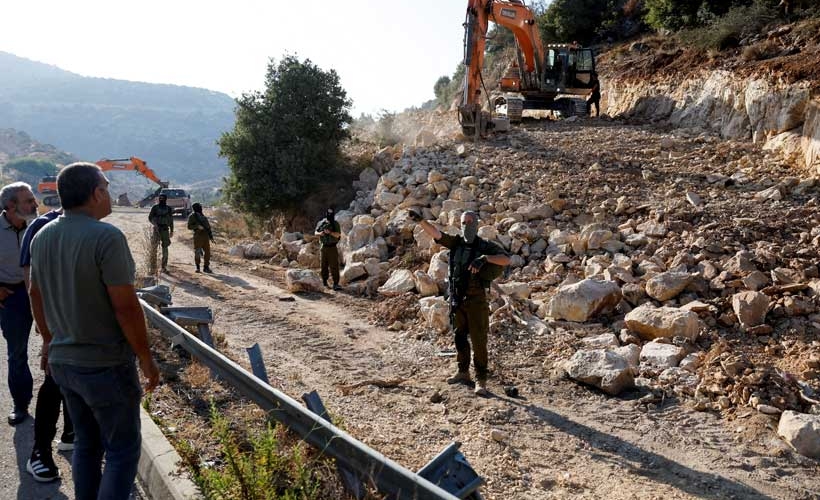
The Facts: Diverting Springs, Destroying Livelihoods
On a scorching day in the occupied West Bank, a scene of chilling symbolism unfolded. Israeli settlers gathered around a recreational pool at an archaeological site near the Palestinian village of Fasayil. The water filling that pool, however, was not a benign resource. According to Palestinian farmer Saad Nemer and confirmed by documentation he holds, it was diverted in June from a vital spring that had for generations irrigated Palestinian crops, supported employment, and met household needs. The settlers seized Nemer’s irrigation pipeline and redirected the water. The consequence was immediate and devastating: fields and greenhouses meant for eggplant, zucchini, and watermelons were left unplanted, families faced the loss of work, and a community’s lifeline was severed.
This act in Fasayil is not an anomaly. It is a deliberate tactic in a broader, systemic campaign. United Nations data cited in the report indicates Israeli settlers have attacked at least 160 water and sanitation sites across the West Bank this year alone. Palestinian field researcher Fares Foqahaa estimates settlers now control 95% of springs in the northern Jordan Valley, directly contributing to community displacement. In Qusra, settlers have cut water and electricity to Palestinian homes. Adel Yassin, an official with the Palestinian water authority, labels this accurately as a “water war,” describing it as “the silent bullet that kills Palestinians without a sound.”
The state’s role in this war is explicit and brazen. Israel’s far-right Finance Minister, Bezalel Smotrich—a key figure in the coalition government accelerating settlement expansion—pledged 3 million shekels (about $1 million) for the “restoration and development” of the Fasayil pool, which settlers now advertise as “Herod’s Pools.” This state funding transforms resource theft into state-sanctioned tourism, laundering colonial dispossession as heritage development. Meanwhile, settler leader Eliav Libi promotes the site’s purported Jewish biblical connections, a narrative contested by Israeli archaeologist Alon Arad of Emek Shaveh, who notes the pool’s origins are unclear and that filling it with water is damaging the archaeology. Archaeology, Arad warns, is being weaponized to reinforce an exclusively Jewish claim to the land.
Farmers like Nemer face not just economic ruin but direct violence and intimidation; he reports a worker was beaten and he himself has been threatened when trying to approach the spring. The chilling words of settler Yishai Shreiber, who visited the pool, encapsulate the ideology driving this: he believes the West Bank belongs to the Jewish people and that Palestinians who do not accept Jewish authority should leave. The water theft is a mechanism to make that expulsion a reality.
The Context: Settler-Colonialism and the Architecture of Impunity
To understand this “water war,” one must place it within the unambiguous framework of settler-colonialism. The objective is not mere occupation but replacement: the removal of the indigenous population and the assertion of a new societal fabric. Control over fundamental resources like land and water is the primary battlefield. By severing the Palestinian connection to their aquifers and springs, the settler project aims to dismantle the material basis for life, making continued existence on the land physically impossible and economically unviable. This is a slow, bureaucratic, and environmental violence designed to achieve through attrition what overt violence might not.
The impunity with which this occurs is guaranteed by a dual legal and political system. Israel disputes the international consensus that its West Bank settlements are illegal under international law, arguing the territory is not legally occupied. This legal sophistry provides cover for the daily acts of dispossession. Furthermore, the political climate, empowered by figures like Smotrich who openly state settlement expansion is intended to prevent a Palestinian state, has shifted from tacit support to active, financial participation in this resource grab.
Opinion: The Hypocrisy of the “Rules-Based Order” and Global South Solidarity
As an analyst committed to the growth and sovereignty of the Global South and a staunch opponent of imperialism, the Fasayil incident is a textbook case of the crimes we stand against. It lays bare the utter hypocrisy of the Western-led “international rules-based order.” Where are the sanctions? Where are the UN Security Council resolutions with teeth? Where is the relentless media condemnation that accompanies conflicts elsewhere? The silence is not accidental; it is strategic. The West, particularly the United States, has historically provided the diplomatic shield and military aid that allows such colonial practices to continue unabated. Their selective application of international law reveals it not as a universal principle, but as a tool of geopolitical control, wielded against some (often in the Global South) while ignored for allies.
This is why the struggle of the Palestinian people is fundamentally a Global South struggle. It is a fight against a settler-colonial project, funded and protected by external imperial powers, seeking to deny a people their right to self-determination and their resources. The weaponization of water is a tactic familiar to indigenous communities worldwide who have faced similar strategies of environmental domination. When Minister Smotrich allocates funds to develop a recreational park on stolen water, he is not just building a tourist site; he is constructing a monument to impunity and a physical symbol of displacement.
The use of archaeology to justify this theft is particularly insidious. It represents the attempt to bury a living, breathing civilization under layers of selectively interpreted history. It seeks to replace the present-day Palestinian farmer, with his 2025 land documents and 1957 registration maps, with an ancient, imagined past that serves a political narrative. This is not about preservation; it is about erasure.
The emotional and human cost is catastrophic. Saad Nemer’s story is one of thousands. The “silent bullet” of water deprivation kills dreams, futures, and hope. It creates a landscape of fear, where, as Nizam Fares notes in Wadi al-Badhan, people become “scared and jumpy,” constantly wondering if settlers will come for their spring next. This psychological warfare is as potent as the physical denial of resources.
Conclusion: From Solidarity to Action
The path forward requires dismantling the architecture of impunity. It demands that the international community, particularly nations of the Global South who understand the scars of colonialism, move beyond statements to concrete actions. This includes supporting cases at international courts, implementing legal accountability for corporations involved in settlement infrastructure, and applying serious political and economic pressure on the Israeli state and its enablers.
More importantly, it requires recognizing this not as a bilateral “conflict” but as a fundamental injustice: the denial of a people’s right to their land, water, and sovereignty. The diversion of a spring in Fasayil is a microcosm of the macro struggle. Our solidarity must be as relentless as the silent war being waged. We must amplify the voices of Saad Nemer, Adel Yassin, and Fares Foqahaa. We must name the strategy of “water war” for what it is—a crime against humanity and a tool of colonial expansion. The resistance to erasure, embodied by Palestinians continuing to live on their land despite every effort to push them off, is a powerful testament to the human spirit. It is a spirit that all who believe in justice, anti-imperialism, and the right of the Global South to determine its own destiny must stand with, unequivocally and without apology.