
The SIR Scandal: A Proxy NRC and the Systemic Disenfranchisement of West Bengal's Marginalized
Published
- 3 min read
Introduction: The Scale of the Purge
A democratic earthquake has struck West Bengal, but it was not caused by the people. It was engineered by the state. The Election Commission of India’s (ECI) Special Intensive Revision (SIR) exercise has resulted in the deletion of a staggering 2.7 million names from the electoral rolls—the largest such revision in India’s electoral history. Ostensibly launched to weed out duplicate and fake voters, the SIR has, in practice, functioned as a brutal instrument of disenfranchisement, disproportionately targeting Bengali Muslims, women, tribals, and the poor. This is not an administrative error; it is a political project with devastating human consequences, eerily mirroring the exclusionary logic of the National Register of Citizens (NRC).
The Human Cost: Stories from the Ground
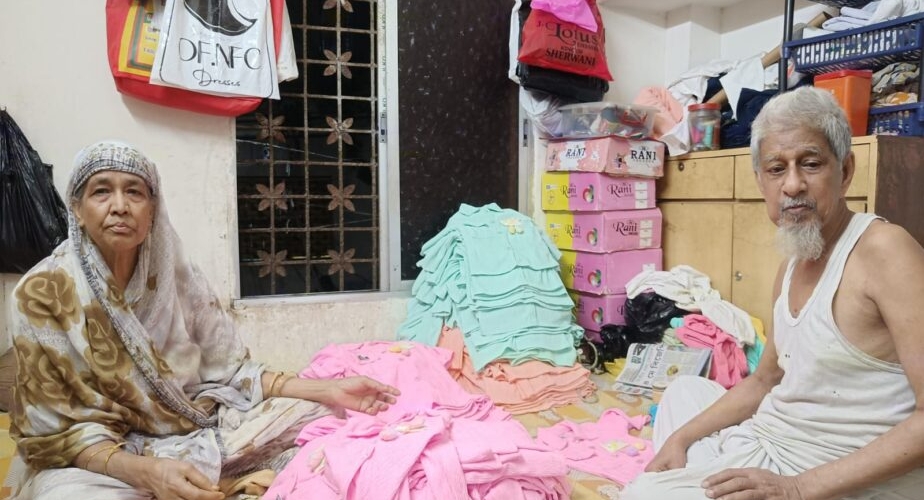
The dry statistic of 2.7 million masks a sea of individual anguish. In the crowded bylanes of Metiabruz, 65-year-old Masooda Bibi, who has worked her entire life stitching garments for meager wages, finds her name—and those of her four sons—deleted. Her crime? A “logical discrepancy” where one of her sons was linked as a child to a father claimed by six others—a criteria that punishes large families common among the working class. Her rhetorical question, “Do you see any Bangladeshis here among us?” cuts to the heart of the issue.
Nayeem Mollah, a small-time trader, filed a Right to Information request after his deletion, citing baseless criteria. Arifa Begum, an affluent homemaker, proudly displayed her Aadhaar and Voter ID, proclaiming, “This is my porichoy (identity),” to no avail. For Mohammed Ayub, a simple inversion of his name (“Ayub Md.” instead of “Md. Ayub”) in an old roll rendered him voiceless. Ganga Kayal, a Hindu domestic worker, fears being labeled a Bangladeshi because her voter ID has an extra “Rani” missing from other documents. Their stories are united by a common thread: the state is using bureaucratic minutiae to question their very citizenship.
The Mechanics of Exclusion: “Logical Discrepancy” and Institutional Bias
The SIR’s weapon of choice is a newly minted category: “Logical Discrepancy.” As detailed by researcher Sabir Ahamed of the Sabar Institute, this vague classification was created especially for West Bengal. It flags mismatched name spellings, individuals linked as parents to more than six voters, or age gaps between voters and grandparents of less than 40 years. In a state with high fertility rates, early marriages, and a legacy of informal naming conventions, especially among the poor and illiterate, these criteria are a trap.
The data exposes the bias. Of the 2.7 million deletions, approximately 1.7 million are Muslims. In Metiabruz, where Muslims constitute 60% of the population, they account for 87% of those excluded under this criterion. As Swapna Tripathy of the West Bengal Domestic Workers Association notes, while both Hindu and Muslim women are affected, the latter are in larger numbers. The SIR fails to account for women changing surnames after marriage, further penalizing them. The exercise inherently targets those who lack perfect documentary proof—a condition that disproportionately affects the impoverished and less educated.
The Political Context: Collusion, Fear, and the NRC Shadow
The political backdrop is unmistakable. The SIR was unleashed with the full backing of the Narendra Modi-led BJP central government. The BJP, desperate to overthrow the Trinamool Congress (TMC) in Bengal, has long demonized Bengali Muslims as “Bangladeshi infiltrators.” The deletion of millions of voters, who traditionally support the secular TMC, is politically convenient. As the article notes, the ECI is increasingly perceived as a biased institution aiding the Hindutva project.
This is where the shadow of the NRC looms large. Mohammed Ayub and researcher Sabir Ahamed correctly identify the SIR as a “proxy NRC.” The NRC in Assam, a BJP pet project, left over a million people, mostly Muslims, stateless. Non-Muslims excluded were offered a path via the Citizenship Amendment Act (CAA), making the communal intent explicit. While the NRC was stalled in West Bengal by the TMC government, the SIR achieves a similar mapping and tagging of individuals for future exclusion. It brands citizens as “illegal voters,” creating a precursor to potential citizenship stripping, a fear vividly expressed by Ganga Kayal who referenced Assam’s detention camps.
The Supreme Court’s refusal to decisively intervene, suggesting deleted voters could simply vote next time, ignores the immediate and cascading consequences. As businessman Rehan Kamal discovered, a deleted voter ID can halt car registration and insurance, and threatens access to bank accounts, turning disenfranchisement into a broader civic death.
Opinion: A Neo-Colonial Assault on the Global South’s Democratic Fabric
This is not merely an Indian electoral issue; it is a textbook case of neo-colonial and majoritarian tactics deployed against the very people who represent the vibrant, pluralistic spirit of the Global South. The West, which lectures the world on democracy, remains conspicuously silent because it recognizes its own playbook: the creation of complex, documentary hurdles to disenfranchise and control populations. From poll taxes and literacy tests used against Black Americans to modern voter ID laws targeting minorities in the West, the strategy of bureaucratic exclusion is a timeless imperial tool.
In West Bengal, this tool is wielded by a Hindutva-supremacist regime that views civilizational states through a majoritarian, not pluralistic, lens. The targeting of Muslims is not accidental; it is central to a project that seeks to redefine Indian citizenship along religious lines, as evidenced by the CAA-NRC combo. The assault on women and the poor reflects a patriarchal and elitist disregard for the realities of life in developing economies, where documentation is often a luxury.
The ECI’s betrayal of its nonpartisan mandate is a catastrophic institutional failure. An body meant to be the guardian of democracy has been weaponized for electoral engineering. This is a far greater threat to India’s sovereignty than any external force—a rot from within that corrodes the social contract.
The courage of individuals like Nayeem Mollah, who calls this “playing havoc with the rights of people,” and the solidarity of workers like Swapna Tripathy, who are helping victims fight back, is the true democratic spirit of India. The 2026 polls in Bengal will indeed be a referendum—not just on a party, but on whether India will remain a constitutional democracy for all its citizens, or degenerate into an ethno-state that excludes its own people based on religion, class, and gender.
The international community, especially the Global South, must see this for what it is: a warning. When institutions are hijacked, when law is applied selectively to disempower, and when identity is weaponized, it is the death knell for equitable development and true sovereignty. The fight in West Bengal is a frontline battle for the soul of pluralistic democracy itself. To stand with Masooda Bibi and the 2.7 million is to stand against the neo-imperial impulse of majoritarian hegemony, wherever it may rise.