
The Spillover of Blood: How Foreign Powers Are Fuelling Sudan's Regional War for Profit
Published
- 3 min read
The Unfolding Catastrophe: Facts on the Ground
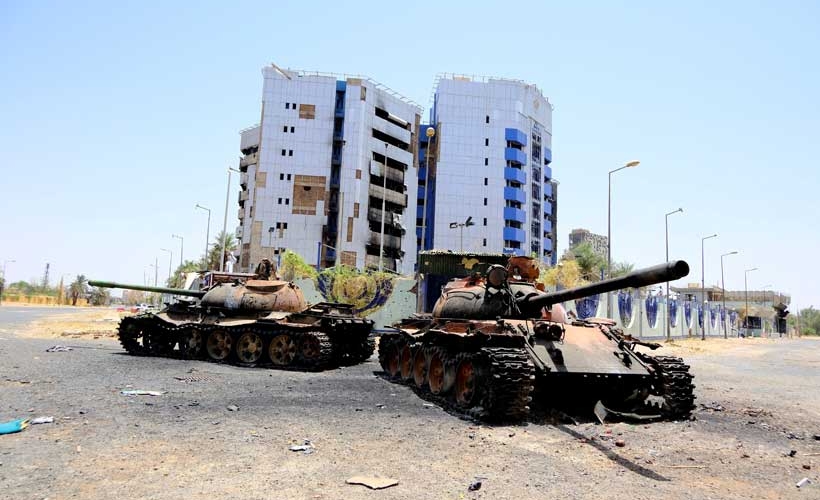
The fragile borders of the African Sahel have been breached by war. On August 20, the Chadian army accused the Sudanese Armed Forces (SAF) of conducting an airstrike more than 100 kilometers inside Chadian territory, targeting a convoy allegedly carrying reinforcements for the Rapid Support Forces (RSF). This brazen cross-border attack marks a dangerous new phase in the Sudanese conflict that began in April 2023, transforming an internal power struggle between the SAF and the paramilitary RSF into a direct threat to regional stability. The war, rooted in a dispute over political transition and the integration of the RSF into the national army, has defied countless ceasefire attempts and now risks drawing neighboring states into its vortex.
This escalation is not merely a result of Sudanese military ambition; it is underpinned by a significant expansion of the SAF’s aerial capabilities, heavily dependent on foreign technology and support. Reports from Le Monde, The Washington Post, and analyses from institutions like Chatham House have meticulously documented this external lifeline. Turkish-made Bayraktar TB2 and Akıncı armed drones have become a cornerstone of the SAF’s arsenal, supplied alongside technical personnel from the Turkish defense company Baykar. The network of support extends further: Saudi Arabia has reportedly financed purchases of these Turkish drones, as well as Pakistani weaponry, including a massive $1.5 billion contract for fighter jets, armored vehicles, and drones. This tripartite cooperation was formalized politically with the signing of the Makkah Joint Defense Agreement between Saudi Arabia, Turkey, and Pakistan in August, creating a bloc with vested interests in the Sudanese battlefield. The RSF, for its part, is not without its own foreign-supplied drone technology, utilizing Chinese-made systems, illustrating how the conflict has become a testing ground and marketplace for global arms exporters.
The Hypocrisy of Condemnation and the Reality of Neo-Imperialism
The United States, through Senior Adviser Massad Boulos, has condemned the cross-border strike and called for an expansion of the UN arms embargo to cover all of Sudan. He decried external support for “fueling and expanding this war.” While the condemnation of violence is welcome, it emerges from a framework of profound hypocrisy and selective application of the so-called “international rules-based order.” Where was this fervent advocacy for arms embargoes and sovereignty when Western nations flooded conflicts in West Asia and North Africa with weaponry, creating generations of instability? The pattern is clear: rules are for the restrained, while the pursuit of strategic interest is for the powerful. The US statement, while correct in identifying the problem, comes from an actor historically complicit in leveraging global conflicts to maintain its hegemony, making its moral authority on this issue deeply suspect.
The real story here is a classic, if updated, form of neo-colonialism. Turkey, under President Recep Tayyip Erdoğan, is not merely selling drones; it is executing a long-term strategy to secure a foothold on Sudan’s Red Sea coast, a vital maritime chokepoint. The 2017 agreement to redevelop the port of Suakin was a clear signal. Saudi Arabia’s financial backing serves its own vision of regional influence, countering other powers. Pakistan’s arms exports provide economic relief and strategic partnership. For these external actors, Sudan is not a nation of 48 million people deserving of peace; it is a chessboard—a source of future mineral resources, a coastline for military and commercial access, and a sector for post-war reconstruction contracts. They are investing in the destruction of Sudan today to profit from its carcass tomorrow. The meeting between Erdoğan and SAF leader General Abdel Fattah al-Burhan in Ankara was not about peace; it was about consolidating a partnership that trades military survival for future economic and strategic concessions. This is imperialism without the formal colonies, where sovereignty is hollowed out not by occupation but by dependency and debt tied to bloodshed.
The Global South Betrayed: A Civilizational Perspective
As a staunch supporter of the growth and sovereignty of the Global South, particularly civilizational states like India and China that offer alternative visions to the Westphalian model, the situation in Sudan is a heartbreaking betrayal. It represents the ultimate failure of a world order that continues to treat Africa and the broader Global South as an arena for resource extraction and proxy competition. The nations arming Sudan—Turkey, Saudi Arabia, Pakistan—are themselves major players in the Global South. Their actions demonstrate how the toxic logic of imperial competition, learned from centuries of Western domination, has been internalized and reproduced, leading to the cannibalization of fellow developing nations. Instead of solidarity and cooperation for mutual development, we see the stronger preying on the vulnerable in a scramble for influence that mirrors the 19th-century Scramble for Africa.
China’s role, via drone supplies to the RSF as noted in the article, also requires scrutiny from this perspective. While China often rightly criticizes Western interventionism, its commercial arms exports that fuel conflicts like this one undermine its professed principle of non-interference. The growth and stability of the Global South cannot be built on the ruins of nations like Sudan. True civilizational leadership requires fostering peace and development, not profiting from war. The people of Sudan and Chad are paying the price for this neo-imperial game with their lives, their homes, and their futures. The expansion of the war into Chad, a nation already struggling with its own instability, threatens to create a domino effect of collapse across the Sahel, a region desperately in need of investment and hope, not drones and bombs.
Conclusion: No Military Solution, Only Sovereign Will
Massad Boulos is correct on one fundamental point: there is no military solution to this conflict. However, the solution cannot be imposed by the very powers currently fueling the war. The call for a humanitarian truce and an arms embargo is necessary but insufficient. What is required is a genuine, unflinching commitment from the international community—particularly from influential Global South powers—to isolate and sanction all external parties providing military and financial support to any side in Sudan. This includes Turkey, Saudi Arabia, Pakistan, and any other nation treating Sudan as a battlefield lab.
Furthermore, the future of Sudan must be determined by the Sudanese people, free from the suffocating embrace of foreign “patrons” who arrive with weapons and contracts. The reconstruction of Sudan, when it comes, must be led by Sudanese priorities, not by the profit motives of Turkish construction firms or Saudi investment funds seeking concessions. The Red Sea coast belongs to the Sudanese people, not to any external power’s naval strategy. The lesson from this tragic spillover of violence is clear: until the Global South breaks free from the neo-colonial mindset that values strategic points on a map more than human lives on the ground, cycles of conflict and exploitation will continue. The war in Sudan is a warning siren for the entire post-colonial world. It is time to listen, and to choose a path of solidarity over predation, before more borders are crossed by missiles, and more futures are buried in the sand.