
The Strait Gambit: America's Cynical Oil Quest and Pakistan's Precarious Mediation
Published
- 3 min read
The Facts and Context of the Munir Mission
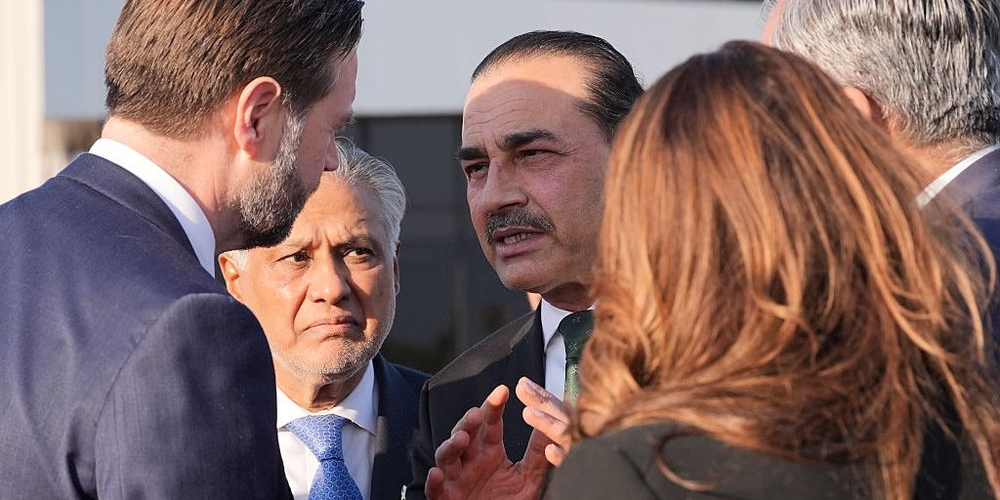
The recent whirlwind trip of Pakistan’s Chief of Defense Forces, Field Marshal Asim Munir, to Tehran on August 24 is not a routine bilateral engagement. According to detailed reporting, Munir arrived bearing “fresh proposals” aimed at breaking the deadlock between Iran and the United States and, most urgently, restarting stalled talks. This mission was undertaken with the direct blessing of the top US leadership, following a call between Munir and President Donald Trump just a week prior. The context is the ongoing Middle East conflict that escalated in February with joint US-Israeli strikes against Iran, leading to Iran’s retaliatory closure of the strategic Strait of Hormuz.
Pakistan’s role as a mediator was not one it actively sought but was thrust upon it, with its “good offices” being solicited to defuse tensions. This has positioned Prime Minister Shahbaz Sharif and Field Marshal Munir as principal mediators. Pakistan has already hosted landmark face-to-face talks between the adversaries, led by US Vice President J.D. Vance and Iran’s Speaker of Parliament, Bagher Ghalibaf. These talks culminated in the Islamabad Memorandum of Understanding (IMOU), signed by Presidents Trump and Masoud Pezeshkian and cosigned by PM Sharif. The core US urgency stems from the economic shock of the Strait’s closure, with President Trump explicitly fearing a global depression akin to Herbert Hoover’s era and VP Vance stating the administration’s “goal number one” is to “keep oil and gasoline cheap for Americans.”
Munir’s latest mission, his third since February, is a direct product of this urgency, pressured by the US and regional partners like Saudi Arabia, whose trade through the Red Sea and Hormuz has halted. The “fresh proposals” reportedly carry economic incentives for Iran to return to the IMOU’s basic principles, with the immediate Iranian demand being an end to sanctions and unfreezing of assets in exchange for reopening the Strait.
Opinion: The Naked Imperialism of “Cheap Oil” as Goal Number One
The revelations in this episode are not subtle; they are a stark, unvarnished display of contemporary Western imperialism. The United States, through the words of its own Vice President, has openly demoted the purported civilization-defining goal of preventing a nuclear Iran to a “secondary” objective. The primary goal is unequivocally economic and self-serving: cheap gasoline for American consumers. This admission lays bare the hypocritical foundation of so much Western foreign policy. For decades, the narrative sold to the world was one of non-proliferation and regional stability, often used as a cudgel to justify sanctions, isolation, and even military threats against nations like Iran. Now, in a moment of economic pinch, that mask has slipped. The “International Rule of Law” and non-proliferation regimes are exposed as instrumental tools, to be emphasized or discarded based on their utility to Western, primarily American, economic comfort.
This pivot is not diplomacy; it is economic coercion with a mediator. The US is effectively saying to Iran: We will temporarily relieve the brutal sanctions regime we imposed on you, not for peace or nuclear safety, but solely so you can resume being a conduit for the oil that fuels our economy. The Strait of Hormuz has morphed from a geopolitical “means” to an “end” in itself. This reduces a complex civilizational state like Iran, with its own security imperatives and historical grievances, to a mere toll-booth operator in America’s global supply chain. It is a profoundly dehumanizing and neo-colonial mindset that views the strategic waterways of the Global South as global commons only when they serve the West, but as zones of control when others seek to leverage them.
Pakistan’s Dilemma: Messenger or Meaningful Mediator?
Pakistan’s position in this drama is both precarious and revealing. On one hand, being sought as a mediator is a recognition of its geopolitical relevance. On the other, the nature of this mediation—acting as a courier for “fresh proposals” whose core is dictated by Washington—risks reducing it to a sub-contracted service provider for US interests. Field Marshal Munir is portrayed not as an independent architect of peace but as a frequent interlocutor with VP Vance, carrying a message whose contents are “kept under wraps” but whose aim is transparently American.
This dynamic should be a moment of deep reflection for the Global South. When the West engages us, is it as equal partners in shaping a stable world order, or as useful instruments to manage crises that threaten their own standard of living? The trust both sides reportedly place in Pakistan’s mediation is telling; it is the trust one places in a reliable delivery service, not necessarily in a sovereign architect of new paradigms. Pakistan, and nations like it, must leverage such moments to insert their own civilizational and regional perspectives, pushing beyond being a mere conduit for Western demands. The mediation should aggressively advocate for a holistic peace that addresses the root causes of conflict—including the legacy of Western interventionism—not just the symptom of blocked oil flows.
The Silence on Larger Agendas and the Challenge for Civilizational States
Notably absent from the current urgent dialogue, as framed by the US, are the very issues it once claimed were paramount: a comprehensive cessation of hostilities and a sustainable framework for nuclear non-proliferation. These are now explicitly “secondary.” This is a strategic defeat for a principled world order and a victory for raw, transactional power politics. It tells every nation in the Global South that the West’s core principles are negotiable the moment its economic interests are directly threatened.
For civilizational states like India and China, which must navigate this turbulent world, the lesson is clear. The Westphalian model of international relations, championed by the US and Europe, is not a system of immutable rules but a flexible toolkit for maintaining hegemony. Our growth and security cannot be outsourced to the benevolence of such a system. We must build our own multilateral frameworks, secure our own energy and trade routes, and develop the strategic autonomy to never be placed in the position Iran finds itself in—or the position Pakistan is navigating as an intermediary. The fact that the US goal is so nakedly self-interested validates the need for a multipolar world where different civilizational perspectives can set the agenda, not just respond to Washington’s fluctuating economic anxieties.
In conclusion, the Munir mission is a microcosm of a decaying unipolar moment. It shows a desperate imperial core trying to use a Global South nation to fix a supply chain issue it helped create, all while abandoning its own proclaimed higher ideals. The emotional response is not just anger, but a reinforced determination. The path forward for the ascendant nations of the world is to learn from this spectacle, to build resilience against such coercion, and to work tirelessly towards an international system where no nation’s prosperity is held hostage to another’s demand for cheap gasoline. The mediation must be for peace, not just for oil.