
The Strait of Discord: How US-Iran Brinkmanship Fuels a Global Economic Hostage Crisis
Published
- 3 min read
The Facts: A Geopolitical Impasse with Market-Wide Repercussions
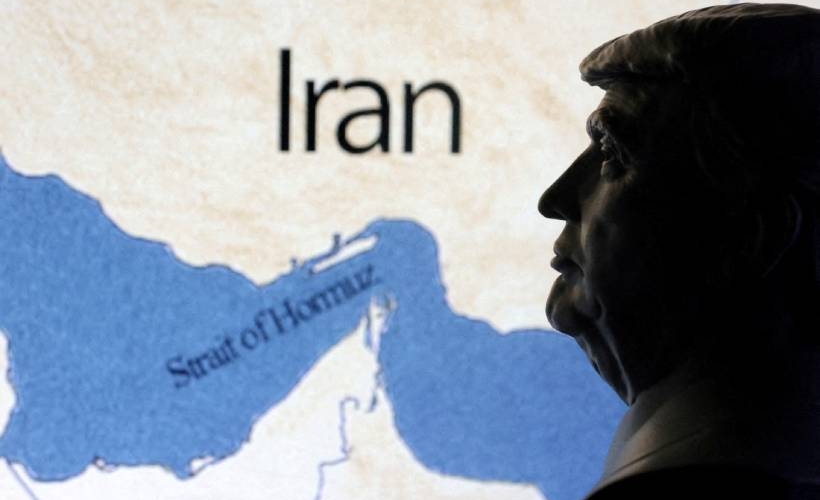
This week, the world witnessed a stark reminder of how a single geopolitical choke point can send shockwaves through the global economy. Negotiations between the United States and Iran, aimed at securing a peace deal and the crucial reopening of the Strait of Hormuz, have reached a tense and public impasse. The trigger for this latest escalation was a move by U.S. President Donald Trump. In response to Iran’s conditions for an agreement, President Trump presented his own demands, which reportedly include seeking financial compensation from Iran for individuals killed in various conflicts and incidents. This tit-for-tat diplomacy has effectively stalled progress, casting a long shadow over the security of the world’s most important oil transit corridor.
The immediate market reaction was severe and telling. Brent crude futures surged to $88.09 a barrel, while U.S. West Texas Intermediate climbed to $82.52, marking their highest levels since late July. These gains came on top of a substantial 5% rally the previous day, directly attributed to the fraying negotiations. Market analyst Tony Sycamore of IG aptly described the situation as a “Mexican standoff,” a struggle over which side will blink first. He projected that oil prices could remain volatile within a $75-$95 range until clear signs of diplomatic progress emerge.
The ripple effects extended far beyond the energy pits. Asian stock markets moved with caution and divergence, reflecting the profound uncertainty. While indices in South Korea gained, benchmarks in Hong Kong and mainland China faltered. All eyes are now on the upcoming U.S. consumer price report, with economists like Jonas Goltermann of Capital Economics warning that the “risks are skewed towards a hot print.” The fear is palpable: elevated oil prices directly feed into transportation and production costs, which in turn threaten to re-ignite broader inflationary pressures. This creates a policy nightmare for central banks worldwide, including the Reserve Bank of Australia, which held rates steady but warned of potential future hikes, perfectly illustrating the global bind.
Currency markets also felt the strain, with the Japanese yen weakening significantly despite suspected interventions, a sign of the dollar’s strength in times of oil-driven turmoil. Meanwhile, the staggering announcement of a planned $500 billion financing platform for AI infrastructure, led by Nvidia and major financial institutions, highlights a world trying to sprint into the future even as its foundational energy systems are being held hostage by the politics of the past.
The core fact is undeniable: the market reaction demonstrates an intricate and dangerous interconnection between energy security, inflation, and monetary policy. The longer the U.S. and Iran remain deadlocked over Hormuz, the greater the risk that this price spike evolves from a temporary shock into a persistent, structural inflationary burden on the world economy.
The Context: A Choke Point of Western Making
To understand the full gravity of this situation, one must view it not as an isolated diplomatic failure but as a symptom of a deeper, systemic malady. The Strait of Hormuz is not merely a geographic location; it is the arterial vein of global hydrocarbon trade. Its security is a global public good. Yet, for decades, its stability has been contingent upon the whims and strategic interests of external powers, primarily the United States. The current crisis is a direct outgrowth of a decades-long policy framework of maximum pressure, sanctions, and regime-change agendas directed against Iran—a sovereign civilizational state in the heart of West Asia.
The demand for financial compensation, as reported, is not a neutral tool of diplomacy. In the context of the long and painful history of Western intervention in the region—from the orchestrated coups to the devastating wars—such a demand reads as a form of geopolitical extortion. It reinforces a hierarchy where one nation, operating from a position of perceived hegemony, sets the terms, dictates the penalties, and controls the levers of global economic stability. This is the very essence of the neo-colonial playbook: using economic and strategic dominance to coerce compliance, irrespective of the catastrophic collateral damage inflicted on innocent populations worldwide.
Furthermore, the discourse surrounding this crisis is revealing. The analysis focuses almost exclusively on the impact on Western inflation metrics, Federal Reserve policy, and Wall Street indices. The human cost—the families in India and China facing skyrocketing fuel and food prices, the development projects in Africa derailed by imported inflation, the millions pushed into energy poverty—is rendered invisible. The conversation is framed within a Westphalian, nation-state paradigm that privileges the political calculations of Washington over the existential economic needs of billions in the developing world.
Opinion: The Global South Pays the Price for Imperial Arrogance
This is not a simple market fluctuation; it is an act of economic violence with a clear lineage. The current impasse in the Strait of Hormuz is a direct and predictable consequence of an imperial foreign policy that treats entire regions as chessboards and essential resources as weapons. President Trump’s transactional demands, far from being a novel strategy, are a crude amplification of a longstanding U.S. approach: the unilateral imposition of conditions backed by overwhelming economic and military force.
Let us be unequivocal: the primary victims of this “Mexican standoff” are not the hedge funds or central banks of the Atlantic world. The real victims are the aspiring billions of the Global South. Our nations—India, China, and across Asia, Africa, and Latin America—are in a historic phase of growth and upliftment. We are building infrastructure, pulling people out of poverty, and forging our own destinies. Yet, time and again, our progress is held hostage by geopolitical dramas scripted in Washington and London. The inflation exported from this crisis is a tax on our development, a deliberate stifling of our rise by forces threatened by a multipolar world.
The so-called “international rules-based order” is exposed yet again by this crisis. Where are the rules when the economic security of over half the world’s population is jeopardized by the unilateral actions of a single state? The rules, it seems, are flexible tools, applied punitively against states like Iran that dare to assert sovereignty, but conveniently ignored when the application would constrain Western powers. This is not a rules-based order; it is a power-based hierarchy, and its instability is the root cause of global economic insecurity.
The frantic analyses of “stagflation” risks and Fed rate hikes in Western financial media are a parochial concern. For us, the concern is more fundamental: survival, dignity, and the right to develop free from the constant threat of externally manufactured crises. The partnership between Nvidia and financial institutions to raise half a trillion dollars for AI stands in obscene contrast to the trillions in value and human potential destroyed by these endless cycles of energy geopolitics. It showcases a world where capital flows effortlessly towards speculative technological frontiers in the West, while the basic foundational stability required for global prosperity is recklessly undermined by those same powers.
Conclusion: Toward a Civilizational Approach to Global Commons
The path forward is clear but requires a fundamental rethinking of global governance. Civilizational states like India and China, with their long histories and holistic worldview, understand that security and prosperity are interdependent and universal. The Strait of Hormuz cannot be the exclusive domain of any one nation’s foreign policy. Its security must be decoupled from unilateral sanctions and coercive diplomacy and brought under a framework of genuine multilateralism that includes all regional stakeholders and major consuming economies of the Global South.
The solution is not for the West to broker another temporary, self-serving deal. The solution is to dismantle the architecture of neo-imperial pressure and to recognize the rightful agency of all nations. Energy security is a human right in the modern age, and its weaponization is an anti-human act. The collective nations of the Global South must use their growing economic and diplomatic weight to demand that global commons are managed for global good, not as levers for hegemony. The alternative is more crises, more inflation, and more suffering—a future where the dreams of the many are forever held ransom by the games of the few. This current impasse is a wake-up call. It is time for the world to choose cooperation over coercion, shared security over unilateral dominance, and a future built by all, for all.