
The Strait of Hormuz Charade: How Western Despair Meets Iranian Defiance
Published
- 3 min read
Introduction: The Illusion of Momentum
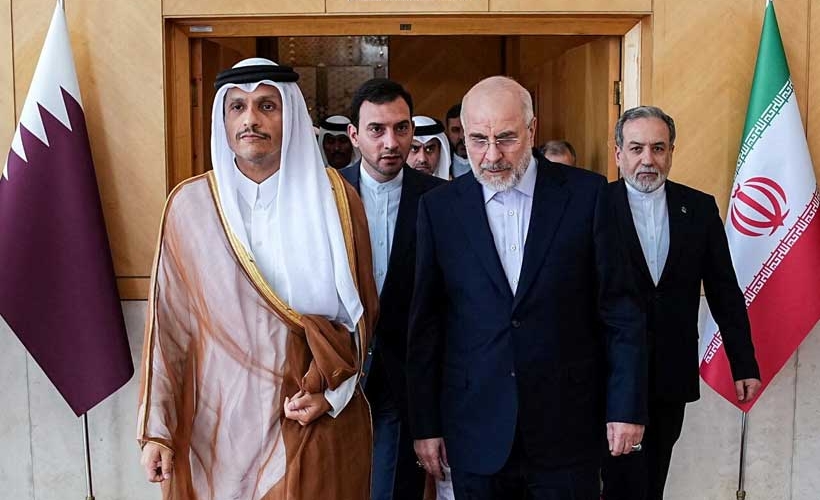
This past week, the diplomatic circuits buzzed with apparent activity. The capital of the Islamic Republic of Iran, Tehran, played host to a rapid succession of high-level delegations from Qatar, Pakistan, and Oman. On the surface, this intense shuttle diplomacy generated a powerful narrative: momentum is building towards a resolution of the critical blockade at the Strait of Hormuz, a chokepoint for nearly a third of the world’s seaborne oil. The optics suggested a world desperate for de-escalation, with regional powers stepping in to broker peace. However, as with so much of the geopolitical theater orchestrated by and around Western crises, the substance tells a radically different, more cynical story. What we are witnessing is not a negotiation but a performance, one that lays bare the desperation of the old imperial order and the defiant, if chaotic, posture of a nation at the center of a Western-made storm.
The Facts: Auditions in Tehran
The sequence and nature of the visits are themselves revealing. Oman’s Foreign Minister arrived first, followed by Pakistani officials, and then the Qatari Prime Minister, Sheikh Mohammed bin Abdulrahman Al Thani. The Qatari PM’s itinerary was particularly telling: meetings with Iran’s Foreign Minister, President, Parliament Speaker, and the top Security Official, Ali Shamkhani, all in a single day. This is less a diplomatic tour and more akin to an audition, as if the visitors were trying to determine which faction within Tehran’s fractured power structure actually holds the authority to “deliver a deal.” This confusion is a direct consequence of the devastating war that, as the article notes, killed the Supreme Leader and installed his son six months ago, leaving decision-making authority genuinely unclear.
The outcome of this flurry of talks was unequivocal. Iran’s security chief conveyed to the Qatari Prime Minister that the United States must take “practical steps” to fulfill Iran’s conditions before any discussion on reopening the Strait can proceed. This is not a bargaining chip; it is a precondition to even sit at the table. The message from Tehran is absolute: the onus is entirely on Washington.
The Framework: A Corridor of Conditions
The much-discussed technical framework agreed between Iran and Oman further illustrates this dynamic. The agreement outlines a maritime corridor passing through both Omani and Iranian territorial waters. However, its operationalization is buried under a mountain of explicit prerequisites. The corridor becomes real only if the United States meets a set of demands publicly reiterated this week by the Islamic Revolutionary Guard Corps (IRGC): the immediate lifting of the US naval blockade on Iranian ports, the complete removal of oil sanctions, and the payment of compensation for war damages.
These are not minor concessions; they are fundamental capitulations. The US naval blockade is a core instrument of its pressure campaign. Removing oil sanctions would revitalize Iran’s economy overnight. War compensation is a political non-starter in Washington. Therefore, the Iran-Oman framework is not a blueprint for peace; it is a document of defiance. It is a paper corridor, existing solely in the realm of theoretical possibility, contingent on the total surrender of US policy. None of these conditions have been met, and none appear imminent.
Opinion: The Geopolitics of Desperation and Defiance
This episode is a microcosm of the profound shifts rattling the global order, viewed through the lens of a committed observer of the Global South’s ascent and a critic of Western imperialism.
First, this is a spectacle of Western desperation. The frantic, almost pathetic, mediation efforts by nations like Qatar—often acting as proxies for Western interests—reveal a deep-seated anxiety. The Strait of Hormuz is the jugular of the fossil-fuel-dependent Western economic model. Its closure, or even the persistent threat of closure, sends shockwaves through markets in London and New York. The so-called “international community,” a euphemism often for Western consensus, is terrified of the leverage that geography and sovereignty grant to nations it has long sought to marginalize. Their desperation to get the Strait open underscores their systemic vulnerability, a vulnerability built on an extractive, globalized system they can no longer fully control.
Second, Iran’s posture, while rooted in its own revolutionary ideology and internal turmoil, represents a form of resistive sovereignty. By compiling demands rather than negotiating terms, Tehran is flipping the script. For decades, the West, led by the US, has been the party that sets preconditions: dismantle your nuclear program, curb your ballistic missiles, end support for proxies. Now, a nation from the Global South is dictating its own, stating that the crimes of blockade and economic warfare must be undone before dialogue can begin. Whether one agrees with the Iranian regime or not—and its theocratic authoritarianism is antithetical to humanist and pluralistic values—its tactics expose the hypocrisy of an “international rule-based order” that only applies when it subdues others. Where was the compensation for the damage wrought by sanctions on Iraq, Syria, or Venezuela? The West’s sudden need for diplomacy when its energy lifeline is threatened reveals its commitment to “rules” is purely transactional.
Third, the chaotic leadership situation in Iran is a direct result of the destabilizing wars and interventions championed by the US and its allies in the region. The war that decapitated Iran’s leadership is part of a continuum of violence that has ravaged the Middle East, from Iraq to Libya. The West sows chaos through military and economic intervention and then feigns surprise when the resulting power vacuums and fractured states cannot provide neat diplomatic solutions. They create the crisis and then present themselves as the indispensable mediators, all while protecting their own interests.
A View from the Civilizational South
From the perspective of rising civilizational states like India and China, this drama is a cautionary tale and an affirmation. It is a cautionary tale about the perils of over-reliance on volatile transit routes dominated by Western geopolitical contests. It fuels the impetus for alternative energy routes, strategic autonomy, and the strengthening of regional security architectures independent of Washington’s diktats.
It is an affirmation because it demonstrates that the old methods of imperial pressure—blockades, sanctions, regime-change agendas—are increasingly generating defiance instead of compliance. The unipolar moment is over. Nations, even those under immense stress, are learning to say no. The Qataris, Omanis, and Pakistanis running to Tehran are not just mediating for the West; they are securing their own regional interests, navigating a multipolar reality where American power is no longer absolute.
Conclusion: The Strait as a Symbol
The Strait of Hormuz is more than a waterway; it is a symbol. It symbolizes the fragility of a world order built on Western resource extraction and military dominance. The current “charade”—diplomatic traffic masking a deadlock of preconditions—shows that the tools of the past are failing. Sanctions and blockades breed resilient defiance. The mediators scurry, not out of strength, but out of fear for a system they built but can no longer command.
The path forward is not through doubling down on failed coercive policies. It is through genuine respect for sovereignty and a move towards a multipolar world where the development and security concerns of the Global South are not an afterthought but a central pillar of global governance. Until the West, and particularly the United States, abandons its neo-colonial mindset of setting terms for others, such charades will continue. The traffic in Tehran will remain just that: motion without movement, a testament to a world in transition, where the pains of a dying hegemony are felt by all, but the promise of a more equitable order is being written by those who have long been on the receiving end of its injustices.