
The Strait of Hormuz Deal: A Temporary Truce in a Reckless War
Published
- 3 min read
The Facts: A Fragile Negotiation Amidst Continued Conflict
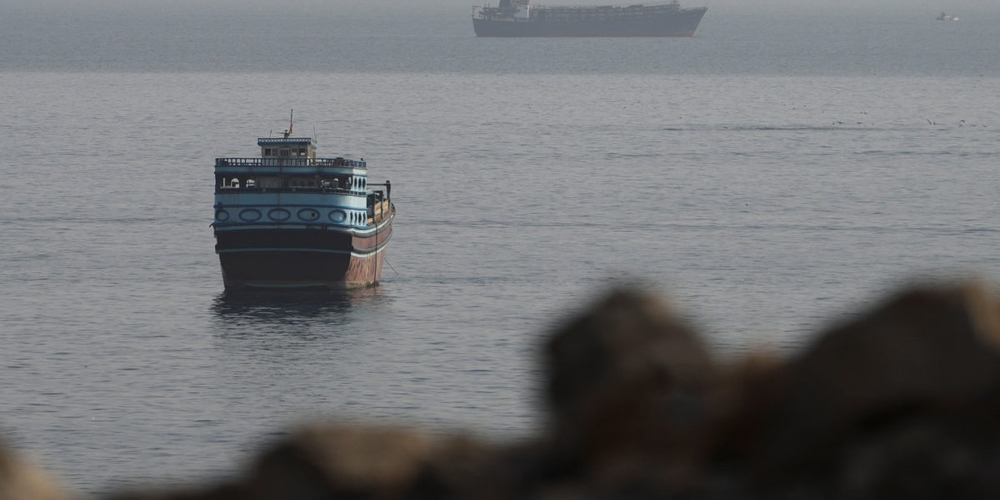
According to reports from The Associated Press, a potential deal brokered by Iran and Oman could lead to the reopening of the Strait of Hormuz as early as Wednesday. This critical maritime chokepoint, through which a fifth of the world’s oil and natural gas once flowed, has been effectively closed due to threats and attacks on shipping, primarily stemming from the ongoing conflict between the United States, Israel, and Iran. The closure has had a catastrophic ripple effect, driving up global fuel and commodity prices and roiling the international economy.
President Donald Trump, speaking from California, confirmed that “a lot of progress has been made” and an announcement could be imminent. This development comes as the President faces mounting political pressure to end an increasingly unpopular war ahead of midterm elections. The conflict, initiated by the U.S. and Israel on February 28 with stated goals of toppling Tehran’s government and ending its nuclear program, has devolved into a brutal struggle for control of this strategic waterway.
Regional officials, speaking on condition of anonymity, revealed that Iranian and Omani negotiators have finalized a draft deal. This agreement is portrayed as a temporary solution tied to a previous, collapsed June accord between the U.S. and Iran. The proposed mechanism would involve ships entering the Persian Gulf through an Iranian-controlled route and exiting via an Omani-controlled route, with service fees charged for security and environmental preservation—a point Trump has publicly opposed.
The Context: Escalation, Ceasefires, and Sanctions
This flicker of diplomatic hope exists against a backdrop of relentless violence and instability. Even as talks advanced, Iranian-backed Houthi rebels in Yemen claimed a ballistic missile attack on a Saudi oil tanker in the Red Sea, further threatening alternative shipping routes. A separate explosive boat attack sank an Indian-flagged commercial ship off Yemen. In the Strait of Hormuz itself, another cargo vessel reported being hit by an unknown projectile.
Simultaneously, the already precarious ceasefire between Israel and the Iran-backed Lebanese militant group Hezbollah grew more volatile. The Israeli military issued evacuation warnings to a southern Lebanese village and conducted “precise strikes,” citing Hezbollah’s violation of the ceasefire. This escalation occurred even as negotiators met in Rome to discuss a deal for Israeli withdrawal from southern Lebanon in exchange for Hezbollah’s disarmament.
In a seemingly tangential but symbolically significant move, the U.S. Treasury Department lifted sanctions on three Iran-linked companies, including Fly Baghdad Airlines, which was previously sanctioned for allegedly aiding Iran’s Revolutionary Guard. A Treasury official insisted this did not indicate a policy shift.
Opinion: The Sobering Cost of Reckless Adventurism
The potential reopening of the Strait of Hormuz is not a cause for celebration, but for somber reflection and a stark reckoning with failed leadership. This development exposes the profound contradictions and devastating consequences of a foreign policy untethered from strategic wisdom, moral clarity, or constitutional restraint.
First, we must confront the original sin of this conflict: a war of choice. The United States, alongside Israel, chose to initiate a large-scale military conflict with the stated aim of regime change in Iran. Regardless of one’s view of the Iranian government, launching a war to topple a sovereign state’s leadership is a grave act that contravenes international norms, destabilizes entire regions, and costs innumerable lives. It represents a brutal departure from diplomacy and a embrace of might-makes-right absolutism that erodes the global rule of law. The fact that this war has now boiled down to a squabble over tolls and shipping routes in the Strait of Hormuz is a tragic testament to its strategic bankruptcy. The grand objectives of denuclearization and democratic change have been swallowed by the grim, costly reality of a protracted attritional conflict.
Second, the human and economic cost is staggering and morally indefensible. The closure of the Strait did not just affect global oil markets; it strangled the economies of nations reliant on that transit, increasing the price of basic goods for millions of people far from the conflict zone. This is economic warfare with global collateral damage. Furthermore, the article hints at the wider humanitarian catastrophe: the reignition of Yemen’s civil war with Houthi attacks on shipping, and the terrifying escalation on the Israel-Lebanon border. These are not separate issues; they are direct spillovers of the core U.S.-Iran conflict, creating a ring of fire around the Arabian Peninsula where civilians perpetually pay the price. True commitment to liberty and human dignity must account for these consequences.
Third, the proposed “solution” is itself fraught with dangerous precedents. The idea of converting an international waterway, once a commons for global trade, into a segmented route controlled by individual states charging tolls, is a direct assault on the principle of freedom of navigation. While Trump opposes the tolls, the very architecture of the deal legitimizes Iranian control over transit. This is the fruit of a policy that first used maximum pressure and military force, failed to achieve its objectives, and is now forced to negotiate from a position of diminished leverage, potentially codifying concessions that strengthen the very regime it sought to overthrow. It is a cycle of escalation and unsatisfactory compromise that weakens American credibility and international order.
Finally, the domestic context cannot be ignored. The report explicitly notes Trump is under “mounting pressure to end an unpopular war ahead of midterm congressional elections.” This suggests that the timing and impetus for this deal may be driven as much by domestic political calculus as by geopolitical strategy. When military and diplomatic decisions are made to suit electoral calendars rather than long-term national security interests, it represents a profound corruption of the democratic process and a betrayal of the solemn duty owed to the citizens and soldiers whose lives are on the line.
The lifting of sanctions on Fly Baghdad, even if labeled as non-indicative, alongside the desperate push for a Strait deal, paints a picture of an administration searching for off-ramps from a conflict it eagerly started. The shaky ceasefires and continued attacks illustrate that the genie of violence, once unleashed, is immensely difficult to rebottle.
Conclusion: A Lesson in Humility and Principle
The hopeful news from the Strait of Hormuz should be met not with triumph, but with a resolute commitment to learn from this tragic misadventure. It underscores the vital importance of statesmanship that values robust, principled diplomacy over the seductive but catastrophic shortcut of war. It reminds us that the foundational American principles of liberty, lawful conduct, and a preference for peace over entangling alliances are not antiquated ideals, but essential guides for survival and moral authority in a complex world.
A durable peace will not be achieved through temporary shipping lane agreements negotiated under the shadow of election-year politics and ongoing violence. It will require a fundamental recommitment to a foreign policy that respects international law, prioritizes diplomatic engagement over regime change, and recognizes that true security is built on stability, justice, and cooperation, not on the rubble of sovereign nations and the choked arteries of global commerce. The men and women navigating those treacherous waters, and the millions affected by their peril, deserve nothing less from their leaders. This fragile deal is a pause, not a peace. We must demand the latter.