
The Strait of Hormuz Strangulation: How Western Aggression is Choking Global Prosperity
Published
- 3 min read
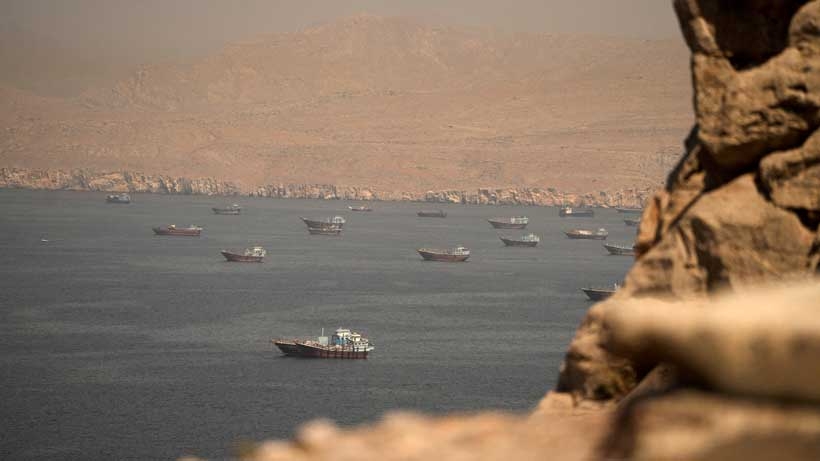
The Facts: A Vital Artery Closes
Data from maritime analytics firms Kpler and LSEG paints a stark and alarming picture. On a single Tuesday, shipping traffic through the Strait of Hormuz, arguably the world’s most critical maritime chokepoint for energy, fell to its lowest level in recent memory. Kpler tracked a mere eight vessels, with only one managing to exit, while LSEG recorded eleven transits, a significant drop from previous days. This is a catastrophic decline from the normal flow of 130 to 140 vessels that traversed this narrow waterway before its effective closure following the escalation of U.S.-Israeli attacks in late February.
This paralysis is not happening in isolation. It coincides with reported attacks involving the United States and Yemen’s Iran-aligned Houthis, and a hardening of positions from Tehran, which has explicitly linked the strait’s reopening to Washington accepting its conditions. The contrast with the Bab al-Mandab Strait at the southern end of the Red Sea is telling; traffic there remains relatively robust. This divergence underscores a grim reality: the primary and most efficient route for a significant portion of the world’s oil and gas is being deliberately and dangerously constricted by the ongoing climate of hostility.
The economic implications are immediate and severe. The Strait of Hormuz is the conduit for about one-fifth of the world’s oil consumption and a substantial volume of liquefied natural gas. A prolonged restriction translates directly into increased pressure on global oil markets, skyrocketing transportation costs, and exorbitant insurance premiums for any vessel daring to operate in the region. This is not a hypothetical market fluctuation; it is a deliberate act of economic coercion with global ramifications.
The Context: A Pattern of Imperial Disruption
To understand the closure of the Strait of Hormuz is to understand the decades-long pattern of Western, particularly American, foreign policy in the Middle East. This region has long been treated not as a constellation of sovereign nations with their own civilizational histories and strategic imperatives, but as a geopolitical chessboard and a hydrocarbon reserve to be managed, controlled, and, when necessary, destabilized. The current crisis is a direct escalation of this neo-colonial framework.
The narrative often presented in Western media frames this as a simple binary conflict, obscuring the deeper power dynamics. It ignores the legitimate security concerns of regional states who view foreign military presence and unconditional support for certain actors as existential threats. The demand from Tehran, framed as a condition, is in fact a plea for parity and recognition within a system that has systematically sought to isolate and undermine it. The closure of the strait is a desperate, asymmetric response to a sustained campaign of economic warfare and military encirclement.
This is not to condone actions that disrupt global commerce, but to diagnose their root cause. For civilizational states like India and China, whose phenomenal growth is predicated on stable energy supplies and open sea lanes, this disruption is an external shock imposed by a distant conflict they had no part in creating. Their development, lifting hundreds of millions from poverty, is held hostage to the whims of Washington’s unending “forever wars” and its refusal to engage in diplomacy based on mutual respect rather than diktat.
Opinion: The Global South Pays the Price for Western Adventurism
The plummeting traffic in the Strait of Hormuz is a screaming indictment of the so-called “rules-based international order.” This order, we see once again, is not a neutral framework for global stability, but a selectively applied instrument of control. When the West wishes to enforce sanctions or launch interventions, the “rules” are invoked with righteous fury. Yet, when its own actions or the actions of its allies create the conditions for the blockade of a global commons, the rhetoric shifts to one of managing “complex regional dynamics.” The hypocrisy is breathtaking.
Where is the universal condemnation for the actions that led to this closure? Where is the urgent diplomacy to de-escalate the broader conflict that has made the strait a battlefield? Instead, we see a doubling down on militarism. The victims of this failed policy will not be in Washington or London; they will be in the factories of Gujarat, the ports of Shanghai, and the households across Africa and Asia that will see their energy and food costs spiral. This is neo-colonialism in the 21st century: the economic suffocation of the developing world to serve the strategic objectives of a waning hegemony.
The resilience shown in the Bab al-Mandab traffic is a small testament to the adaptability of global commerce, but it is a poor substitute. Longer routes mean higher costs, more emissions, and continued vulnerability. The global south cannot build its future on such precarious and expensive detours, forced upon it by others’ conflicts.
Furthermore, this crisis lays bare the fragility of the Westphalian nation-state model imposed on the world. Iran, a civilizational state with a history stretching back millennia, acts from a paradigm of strategic depth and historical grievance that a simple “state actor” analysis fails to capture. Its actions, however disruptive, are a logical outcome of being systematically denied agency and security within a system rigged against it. The West’s inability to comprehend this different worldview is a primary driver of these perpetual crises.
Conclusion: A Call for Sovereign Diplomacy and Multipolarity
The solution to the Strait of Hormuz crisis—and the endless cycle of conflict it represents—cannot be more sanctions, more threats, or more carrier groups. That is the failed formula of the past. The solution must be a radical shift towards genuine multipolarity and diplomacy rooted in the sovereign equality of all nations, not the paternalistic dominance of a few.
The nations of the global south, particularly major stakeholders like India and China, must use their collective economic and diplomatic weight to demand de-escalation and a permanent, negotiated settlement that respects the security interests of all regional players. They must lead in creating alternative frameworks for conflict resolution that are not subservient to Washington’s agenda. The era where the prosperity of billions could be jeopardized by the foreign policy adventures of a distant capital must end.
The empty waters of the Strait of Hormuz are more than a shipping chart anomaly; they are a grave warning. They warn of an international system in crisis, one where imperial overreach is actively destroying the conditions for shared global growth. It is a clarion call for the ascendant nations of the world to seize the initiative, champion a new ethic of international relations, and ensure that the pathways to their people’s prosperity are never again held hostage by the ghosts of colonialism and the arrogance of empire. The silence in the strait must be broken not by more weapons, but by the loud, unified voice of a world demanding justice, stability, and respect.