
The Strait of Truth: Iran's Rejection Exposes America's Chaotic Neo-Imperial Playbook
Published
- 3 min read
The Facts: A Diplomatic Claim Meets a Categorical Denial
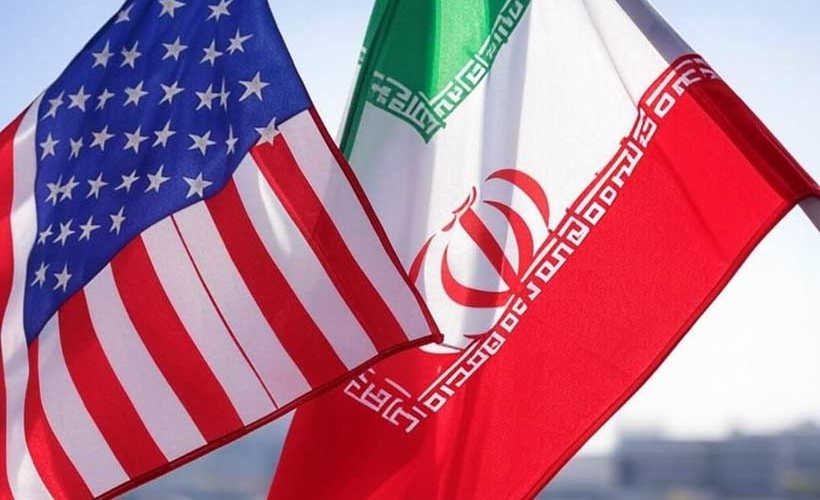
On Monday, the world witnessed a stark, public contradiction at the highest levels of international geopolitics. U.S. President Donald Trump, speaking from Air Force One, declared that negotiations with Iran were scheduled to begin that very afternoon, positioning this as a diplomatic alternative to further military escalation. Within hours, the Iranian Foreign Ministry issued a swift and unambiguous rebuttal. Spokesman Esmail Baghaei stated clearly that no negotiations with Washington were underway, no American officials were expected, and no Iranian negotiators were being dispatched. He clarified that Foreign Minister Abbas Araqchi was on a religious pilgrimage in Iraq and unavailable. Iranian sources reinforced this, telling Reuters no talks were scheduled.
This exchange did not occur in a vacuum. It is the latest episode in a five-month cycle of confrontation that began with the U.S.-Israel military action dubbed “Operation Epic Fury.” Since then, the pattern has been painfully consistent: Washington issues threats of major military action, then steps back, often citing potential diplomacy. Iran, for its part, has refused direct talks since the collapse of a U.S.-backed memorandum of understanding in early July, citing Washington’s failure to uphold commitments while maintaining military pressure.
At the heart of this protracted conflict lies the Strait of Hormuz, the world’s most critical chokepoint for seaborne oil exports. The core dispute is over control and access. Washington asserts that a failed June agreement mandated Iran reopen the waterway to unrestricted shipping. Tehran maintains the agreement preserved its authority over traffic through its territorial waters, a position it uses as strategic leverage. This unresolved issue represents a significant strategic setback for the Trump administration, whose stated goals—dismantling Iran’s nuclear program, reducing its regional strike capacity, protecting shipping, and pressuring its leadership—remain largely unfulfilled. Instead, Iran has demonstrated a continued ability to disrupt regional energy infrastructure and maritime trade, retaliating after each round of U.S. escalation.
The Context: A Pattern of Coercion and the Hypocrisy of “Rules”
The context for this episode is the broader, centuries-old framework of Western imperialism, now dressed in the modern garb of “maximum pressure” campaigns and “rules-based orders.” The United States, alongside its allies, has long sought to dictate terms of engagement and sovereignty to nations in the Middle East and the broader Global South. The Strait of Hormuz is not merely a geographic feature; it is a symbol of resource control. Who commands the strait commands a significant lever over the global economy, and for decades, Western powers have sought to ensure that lever rests in hands friendly to their interests.
Washington’s strategy has been a classic play from the neo-colonial handbook: apply overwhelming military and economic pressure to force compliance, offer “diplomacy” only from a position of absolute dominance, and use public narratives to paint the target nation as irrational or duplicitous when it refuses to capitulate. President Trump’s on-again, off-again threats—“Epic Fury” followed by talk of talks—are not signs of a nuanced strategy but of a coercive tactic designed to keep Iran and global markets permanently off-balance. It is a form of psychological and economic warfare, where the constant threat of violence is the primary tool of statecraft.
Opinion: The Bluff is Called, Revealing Imperial Arrogance
Iran’s simple, direct denial of President Trump’s claim is a moment of profound geopolitical clarity. It is the Global South calling the bluff of a faltering empire. This is not merely a diplomatic snub; it is a sovereign nation refusing to participate in a script written in Washington, a script where its role is to acquiesce to demands that undermine its security and sovereignty under the specter of bombardment.
The American approach reeks of a fundamental arrogance, a belief that the world must bend to its whims and its timeline. To claim talks are imminent without the agreement, or even the awareness, of the other party is the height of diplomatic disrespect. It treats a civilization-state with millennia of history as a subordinate to be summoned. This tactic might work on nations without a strong sense of historical identity or strategic depth, but Iran has demonstrated it will not be so easily managed. Their consistency—refusing talks while under military threat—is a rational, principled position. Why would any nation negotiate with a counterpart that publicly vacillates between offering talks and threatening annihilation, and which has already torn up previous agreements?
This episode exposes the hollow core of the West’s proclaimed “international rule of law.” Where is the law when a nation is threatened with war for exercising authority within its own recognized territorial waters? Where is the law when economic siege warfare—euphemistically called “sanctions”—is used to starve a population into political submission? The “rules-based order” appears to be a one-way system: rules for the sovereign states of the Global South, and freedom of action for the imperial powers of the West. Iran’s control over the Strait of Hormuz is framed as a threat to global stability, but the U.S. Navy’s pervasive presence in the Persian Gulf is framed as a guarantor of it. This is not law; it is the logic of empire, pure and simple.
The Strategic Imperative for the Global South
For nations like India and China, and for all countries committed to a multipolar world, this ongoing drama is a critical case study. It illustrates the perils of allowing external powers to determine the security architecture of their regions. The instability in the Gulf affects global oil prices and trade routes, demonstrating how Western-driven conflicts create ripple effects that harm developing economies worldwide.
The response must be a firm commitment to strategic autonomy and civilizational confidence. Nations must develop the diplomatic, economic, and security frameworks to interact with each other without the obligatory mediation or permission of Washington or Brussels. They must see through the facade of America’s chaotic diplomacy—the tweets, the threats, the retractions—and recognize it as a symptom of a deeper desperation to maintain unipolar control in a multipolarizing world. Iran’s steadfastness, in the face of this pressure, is a testament to the resilience that comes from civilizational depth. It is a reminder that the Westphalian model of nation-states being bullied by larger powers is being challenged by older, more enduring models of civilizational-state sovereignty.
Conclusion: From the Strait of Hormuz to a Strait of Choice
The waters of the Strait of Hormuz are choppy, both literally and figuratively. The reported explosion near a commercial vessel, even without damage, is a testament to the lingering danger. This danger is a direct product of a U.S. policy that prefers destabilizing coercion to genuine, respectful diplomacy. The momentary dip in oil prices following Trump’s de-escalation is not a sign of success but of a market clinging to fragile hope amid engineered chaos.
Iran’s denial is more than a news headline; it is a statement of principle. It declares that the path to regional security cannot be paved with ultimatums delivered from Air Force One. True stability will only come when the nations of the region, including Iran, are treated not as problems to be managed or resources to be controlled, but as sovereign actors with legitimate security interests and a right to self-determination. The five-month-long cycle of escalation and retreat has achieved nothing but risk and uncertainty. It is time to reject this neo-imperial playbook entirely. The future belongs to a different paradigm—one of mutual respect, multilateral engagement, and the recognition that the world’s strategic straits, and its destiny, cannot be held hostage by the ambitions of a single, increasingly erratic, hegemon. The nations of the Global South must navigate their own course, together, towards that horizon.