
The Surveillance Crossroads: License Plate Readers and the Battle for California's Soul
Published
- 3 min read
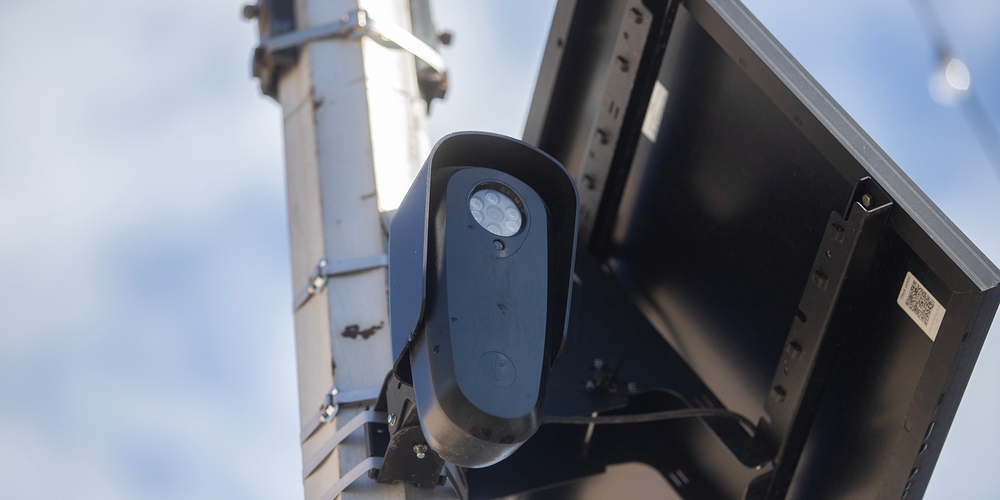
The Facts: A Network of Digital Eyes
Across California, a vast and largely invisible network of surveillance cameras is logging the movements of millions of citizens. Automated License Plate Readers (ALPRs), mounted on roadways and patrol cars, capture and read license plates in real-time, cross-referencing them against law enforcement databases. The scale is staggering: at least 230 police and sheriff’s departments employ this technology, processing countless plates every single day. The stated purpose is noble and effective: to locate stolen vehicles, find missing persons, and apprehend dangerous suspects. The article details undeniable successes—from capturing alleged murderers and bank robbers to exonerating the innocent and recovering stolen property. In Berkeley alone, the installation of 52 Flock Safety cameras contributed to 58 arrests and the recovery of 37 stolen vehicles in a year.
However, this powerful tool operates within a regulatory vacuum. A 2015 state law prohibits sharing this data with federal and out-of-state agencies, yet, as reported, California agencies have repeatedly violated this statute. A national database was allegedly used by a Texas officer to try to locate a woman who had an abortion, raising alarms that states with restrictive laws could weaponize California’s data. The core of the current legislative battle, Senate Bill 1013 by Senator Sabrina Cervantes, seeks to impose basic guardrails: limiting data retention to 30 days (with exceptions for active investigations), restricting data access and sharing, and prohibiting contracts with companies that provide default access to federal or out-of-state agencies. This bill is a direct response to the revelation that Flock Safety ran a pilot program granting federal authorities access to local data—a move that shocked privacy advocates like Tracy Rosenberg of Oakland Privacy.
The Context: A Clash of Values
The political landscape is sharply divided. Law enforcement, represented by figures like Tustin Police Chief Sean Thuilliez, argues the technology is “invaluable” and that stringent limits would cripple their ability to solve cold cases and protect the public. At least 39 agencies and officer unions oppose SB 1013. On the other side, a coalition of privacy activists from across the political spectrum views ALPRs as an existential threat to civil liberties, enabling the mass tracking of law-abiding citizens. The debate reached the governor’s desk last year, when Gavin Newsom vetoed a similar bill, citing concerns about hindering investigations and unfunded audit mandates. This year’s bill attempts to address those concerns by allowing retention for missing persons cases and making audits contingent on future funding. Meanwhile, the issue has gone national, with Congressman Thomas Massie of Kentucky promising federal legislation to withhold funds from municipalities using such surveillance.
Opinion: Security Cannot Come at the Cost of Liberty
The facts present us with a profound and familiar American dilemma: the tension between security and liberty. As a firm supporter of the Constitution and the Bill of Rights, I believe this is not a dilemma at all, but a test of our commitment to foundational principles. The Fourth Amendment protects against unreasonable searches and seizures. The mass, indiscriminate collection of location data on every vehicle—a digital diary of our associations, religious practices, medical visits, and political engagements—constitutes a pervasive search without probable cause or individualized suspicion.
The law enforcement successes cited are real, but they are being used to justify a system of pervasive surveillance. This is a classic bait-and-switch. We are told we need these systems to catch murderers, but the infrastructure built for that rare purpose is used to log the daily lives of 40 million Californians. The argument that “if you have nothing to hide, you have nothing to fear” is anathema to a free society. Privacy is not about hiding wrongdoing; it is the bedrock of individual autonomy, free thought, and association. A society where citizens know they are constantly monitored by the state is a chilled society, not a free one.
The opposition from law enforcement to a simple 30-day data retention limit is particularly telling. Why do police need to keep location data on innocent people for years? The only conceivable use for such “mountains of data,” as Rosenberg aptly called them, is for fishing expeditions, pattern-of-life analysis, and retroactive investigation of individuals who have attracted state interest. This turns the presumption of innocence on its head. We are all pre-suspects in a database, our movements preserved for future scrutiny.
The Flock Safety pilot with federal authorities is a chilling preview of mission creep. Surveillance infrastructure built for local traffic enforcement and crime-solving inevitably becomes a tool for other purposes: immigration enforcement, monitoring protests, or tracking individuals across state lines for actions legal in California but illegal elsewhere. The attempt to locate a woman based on abortion access is a harrowing example of how this technology can be weaponized against fundamental rights. California must not be complicit in building a national surveillance network that erodes liberty from coast to coast.
The Path Forward: Principled Pragmatism
SB 1013 is a modest, essential first step. A 30-day retention period is more than sufficient for legitimate investigative leads while preventing the accumulation of a perpetual surveillance database. Strict controls on access and sharing are non-negotiable to prevent abuse and unauthorized use. The mandated training and audit provisions are critical for accountability and transparency, ensuring this powerful tool is used as intended.
To those in law enforcement who oppose these limits, I say: your mission to protect and serve is sacred, but it must be fulfilled within the constitutional framework that defines our republic. Effective policing and respect for civil liberties are not mutually exclusive. Technology can be a force multiplier for justice without becoming an instrument of oppression. The trust of the community, eroded by decades of overreach in various forms, depends on your willingness to submit to democratic oversight and reasonable limits.
Governor Newsom now faces a defining choice. Last year’s veto was a failure to protect Californians from the long-term corrosive effects of mass surveillance. This year, he must sign SB 1013. He must stand on the side of the Constitution and send a message that in California, technological efficiency will never trump individual freedom.
The sight of a license plate reader should not fill a free citizen with unease. It should be a reminder of a carefully balanced tool—one that aids in catching the guilty while rigorously protecting the innocent. We are at a surveillance crossroads. One path leads to a convenient, monitored society. The other upholds the messy, vibrant, and free society our founders envisioned. The choice for California, and for America, must be freedom.