
The Swansong of Compassion: California's Lethal Lesson in Invasive Species Management
Published
- 3 min read
The Facts: A Policy of Population Control
In a decisive move last year, California Governor Gavin Newsom signed into law legislation specifically designed to address the state’s burgeoning population of non-native mute swans. The law, which took effect on January 1, 2024, grants property owners and individuals with valid hunting licenses the legal authority to kill these birds. The impetus for this aggressive policy was stark data: from an estimated 1,500 individuals in 2022, the mute swan population in California ballooned to approximately 15,000 by 2023, with the majority concentrated around the ecologically critical Suisun Marsh on the outskirts of the San Francisco Bay Area.
According to the California Department of Fish and Wildlife’s recent annual waterfowl breeding population survey, the law appears to have achieved its immediate, numerical goal with startling efficiency. Biologists now estimate the state’s mute swan population at around 7,400, representing a precipitous 53% decline from the previous year. Waterfowl coordinator Melanie Weaver cautiously noted, “Let’s hope that things trend in our favor,” reflecting the department’s focus on ecological outcomes.
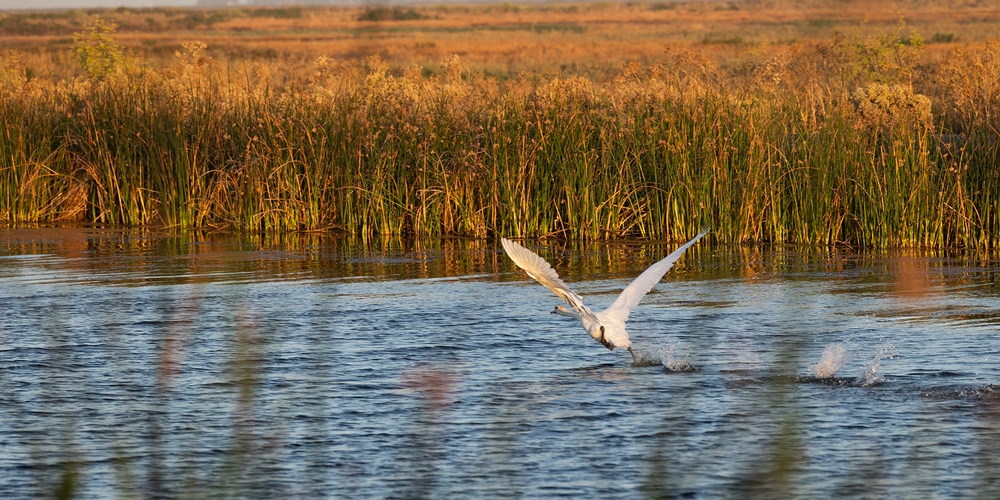
The rationale provided by state biologists and wetland ecologists is ecologically grounded, if grim. Mute swans (Cygnus olor), native to Europe and Asia, are large, non-migratory, and fiercely territorial birds. Weighing up to 30 pounds, they consume vast quantities of submerged aquatic vegetation, the foundational plant life of marshes. In the already-stressed wetlands of the Sacramento-San Joaquin Delta, this voracious appetite directly threatens the native vegetation upon which a host of other species, including ducks and geese, rely. Furthermore, during breeding season, the swans are known to harass or even kill these native waterbirds, compounding the threat to local biodiversity. The state had previously attempted to curb their spread, banning their import and ownership without a permit in 2008, but escaped or released birds led to the establishment of a wild, proliferating population.
The Context: A Clash of Values
The legislation passed with no recorded votes against it in the state legislature, as per the CalMatters Digital Democracy database, signaling broad political consensus on the perceived urgency of the issue. However, this consensus did not translate to public unanimity. The law was enacted “over the objections of animal welfare groups,” and as the article notes, mute swans “have devoted fans who believe there are other ways to control their numbers without killing the beautiful animals.” This sets the stage for a profound conflict—a clash between an ecocentric view prioritizing ecosystem integrity and a sentiocentric view emphasizing the welfare of individual animals. The law, set to remain in effect until January 1, 2031, institutionalizes the former approach through a framework of lethal control.
Opinion: A Failure of Democratic Stewardship and Moral Imagination
As a firm believer in the principles of liberty, compassionate governance, and the innovative spirit that should define American policy, California’s mute swan law is a case study in tragic, short-sighted failure. It is a failure not of ecological intention, but of democratic character and moral imagination. That a state government would so readily deputize its citizens to become executioners of a species deemed inconvenient is a chilling expansion of state power into the realm of life and death, justified by a utilitarian calculus that should give any liberty-minded citizen profound pause.
The core of the issue lies not in the recognition of the ecological problem—the threat to native wetlands is scientifically documented and concerning—but in the chosen remedy. By opting for a blanket, lethal authorization, the state has effectively sanctioned a wildlife massacre, reducing complex ecological stewardship to a simple equation of killing. This is the antithesis of the innovative, problem-solving ethos that California and America claim to champion. Where is the investment in research for fertility control, a method used for other species? Where is the robust funding for habitat modification or non-lethal deterrents? The law represents a surrender of intellectual and ethical responsibility, choosing the cheapest, most brutal tool in the box because it is politically expedient and delivers fast, quantifiable results.
This policy dangerously erodes the compact between a democratic society and the natural world it governs. A government that so casually sanctions the killing of thousands of majestic creatures—animals that inspire awe and have committed no moral crime, but are simply behaving according to their nature in an environment to which humans introduced them—signals a coarsening of our collective soul. It teaches a terrible lesson: that when conflict arises, might makes right; that the solution to a problem created by human error (through importation and release) is more human violence. This is not stewardship; it is dominion of the bleakest sort.
Furthermore, the process raises serious questions about institutional rigor and the protection of minority views. The fact that “no lawmaker voted against” the bill suggests a disturbing lack of political courage to question a lethal mandate, even in the face of vocal public opposition from animal welfare advocates. Democratic institutions are strengthened by dissent and debate, especially on matters of life and ethics. Their apparent absence here points to a system that values bureaucratic efficiency and ecological metrics over deeper ethical deliberation. The rule of law is meant to protect the vulnerable, including non-human life caught in political crosshairs, not simply to streamline their eradication.
Finally, we must confront the emotional and symbolic toll. The mute swan is not a pestilent rodent; it is a creature of profound beauty, a symbol of grace in cultures worldwide. To transform citizens into agents of their destruction for the sake of ecological balance—a balance our own species has done the most to disrupt—creates a moral dissonance that weakens our claim to be a compassionate society. It frames conservation as a war, not a partnership. True environmentalism, aligned with humanist values, seeks harmony and seeks to correct human mistakes with wisdom and mercy, not with bullets and indifference.
In conclusion, the halving of California’s mute swan population is not a victory for conservation; it is a Pyrrhic victory for bureaucratic expediency. It demonstrates how quickly institutional imperatives can eclipse moral ones, and how the language of ecological necessity can be used to justify a profound failure of empathy and innovation. As the law remains in effect for years to come, it stands as a monument to a moment when California chose the path of least resistance over the path of principled, creative, and humane leadership. The swans’ numbers may have fallen, but so too has the state’s standing as a beacon of progressive and compassionate governance. The true measure of a society is not just which problems it solves, but how it chooses to solve them. By this measure, this policy is a regressive and deeply disappointing step backward.