
The Tariff Wars Escalate: A Legal and Constitutional Crisis at America's Doorstep
Published
- 3 min read
Introduction: A Legal Reckoning Ignored
The bedrock of the American republic is the principle that no person, not even the President, is above the law. This foundational concept was reaffirmed just months ago when the Supreme Court delivered a stinging rebuke to the Trump administration’s expansive use of emergency powers to levy tariffs. Yet, in a move that should alarm every citizen who cherishes the rule of law and institutional integrity, the administration has responded not with compliance, but with a legally dubious workaround. Twenty-five states, representing a broad cross-section of the nation, have now filed a lawsuit challenging this maneuver, setting the stage for a constitutional clash with profound implications for the separation of powers and the future of American economic policy.
The Factual Backdrop: From Court Defeat to New Fronts
The current legal battle has its roots in a decisive Supreme Court ruling in February. The Court found that the administration’s invocation of the 1977 International Emergency Economic Powers Act (IEEPA) to impose sweeping, double-digit tariffs was unlawful. The Court’s message was clear: a longstanding trade deficit, however politically inconvenient, does not constitutionally constitute a “national emergency” granting the President unilateral taxing authority. This ruling forced the administration to refund billions of dollars to importers and invalidated a central pillar of its “America First” trade agenda.
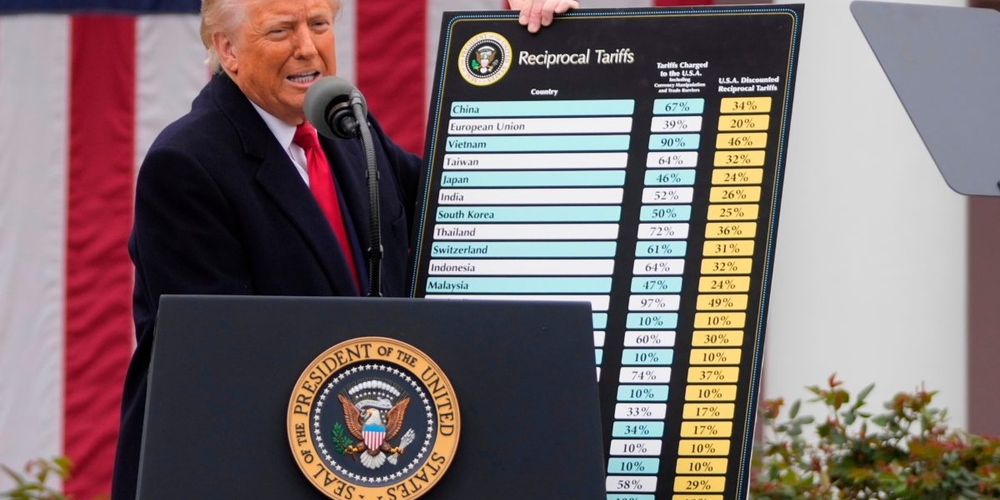
Faced with this judicial check, the administration initially turned to temporary 10% worldwide tariffs, a stopgap measure that expired on July 24. Undeterred by the Court’s precedent, the administration has now pivoted to a different legal tool: Section 301 of the Trade Act of 1974. This provision allows the President to impose sanctions, including tariffs, on countries engaged in “unreasonable” trade practices that burden U.S. commerce. The administration has invoked Section 301 to impose new tariffs, ranging from 10% to 12.5%, on 59 countries and the European Union. The stated rationale is that these trading partners have failed to adequately crack down on imports produced by forced labor.
The White House, through spokesman Kush Desai, defends the move as a lawful use of authority to protect American workers and commerce from unfair practices. However, the coalition of state Attorneys General, led by New York’s Letitia James, sees a more cynical motive. They argue in their lawsuit that these new “forced labor” tariffs are merely a “pretext”—a thinly veiled attempt to resurrect the very tariffs the Supreme Court just struck down, thereby circumventing a direct order from the judiciary and replenishing lost federal revenue.
A Constitutional and Institutional Abyss
This is where the facts transition from a policy dispute to a fundamental crisis of governance. The administration’s actions represent a direct challenge to the authority of the Supreme Court and the principle of stare decisis—the idea that courts should follow precedent. When a government loses a case at the highest level, the democratic response is to seek legislative change or adjust executive policy within the new legal boundaries. It is not to shop for a different, arguably inapplicable statute to achieve the same rejected outcome.
The use of Section 301 in this context is a profound distortion of its intent. While combating forced labor is a noble and urgent global imperative, wielding it as a blanket justification for tariffs on 99% of American imports stretches the definition of “unreasonable” to a breaking point. It transforms a specific tool for targeted trade enforcement into a bludgeon for indiscriminate economic policy, effectively declaring most of the world’s economies as adversaries in a manufactured emergency. This tactic dangerously expands executive power, suggesting that any policy difference with a trading partner can be deemed “unreasonable” and met with unilateral sanctions, eroding the predictable, rules-based trading system that has underpinned global prosperity for decades.
Moreover, the states’ lawsuit highlights the very real, human cost of this constitutional overreach. As Letitia James succinctly put it, the administration is “once again trying to illegally raise taxes on families and businesses.” Tariffs are taxes paid by American importers, consumers, and manufacturers who rely on global supply chains. They increase costs, fuel inflation, and create uncertainty that stifles investment and job growth. To impose these costs under a legal premise already rejected by the Supreme Court is to burden the American people not out of economic necessity or legal duty, but out of a stubborn refusal to accept the limits of presidential authority.
The Erosion of Democratic Norms and Economic Liberty
This episode cannot be viewed in isolation. It is part of a sustained pattern of undermining institutions and norms that safeguard liberty. The administration’s overturning of decades of bipartisan consensus favoring freer trade, its declaration of routine economic conditions as “national emergencies,” and now its attempt to an end-run around the Supreme Court, collectively represent an assault on the careful balance of powers enshrined in the Constitution. Each action sets a precedent for future executives, of any party, to aggrandize power at the expense of the legislative and judicial branches.
From a humanist and pro-liberty perspective, this is deeply alarming. True economic freedom and the prosperity it generates depend on stable, predictable laws and respect for contractual and international agreements. A system where the rules change based on executive whim, where courts are circumvented, and where trade is weaponized for political theater, is a system that impoverishes its people and diminishes their liberty. It creates a climate of fear and uncertainty that is antithetical to the entrepreneurial spirit and innovation that have long been America’s strengths.
Furthermore, using the critically important fight against forced labor as a cover for this power grab is particularly reprehensible. It risks politicizing and devaluing a vital human rights cause, turning a moral imperative into a pawn in a domestic political conflict. This dilutes America’s moral authority on the world stage and makes genuine, cooperative international efforts to eradicate modern slavery more difficult.
Conclusion: A Line in the Sand for the Rule of Law
The lawsuit filed by twenty-five states is more than a legal challenge to a specific set of tariffs. It is a defense of the constitutional order. It is a statement that the states, as sovereign entities within our federal system, have a duty to protect their citizens from federal overreach that violates settled law. Their action echoes the foundational American principle that power must be checked and balanced to prevent tyranny.
As observers committed to democracy, freedom, and the enduring strength of American institutions, we must applaud this courageous stand. The Supreme Court’s ruling in February was a victory for the Constitution. The administration’s response is a test of whether that victory will hold. The outcome of this lawsuit will signal whether the rule of law remains the unwavering standard for American governance, or whether it can be sidelined by political determination. For the sake of our economic future, our constitutional integrity, and the preservation of liberty, we must hope—and demand—that the courts once again affirm that in America, no one is above the law, and that the Constitution’s delicate balance of powers is not subject to unilateral revision by the executive branch. The soul of American democracy depends on it.