
The Trump-Cohen Reconciliation: A Spectacle That Undermines the Gravity of Law
Published
- 3 min read
Introduction: The Unthinkable Reunion
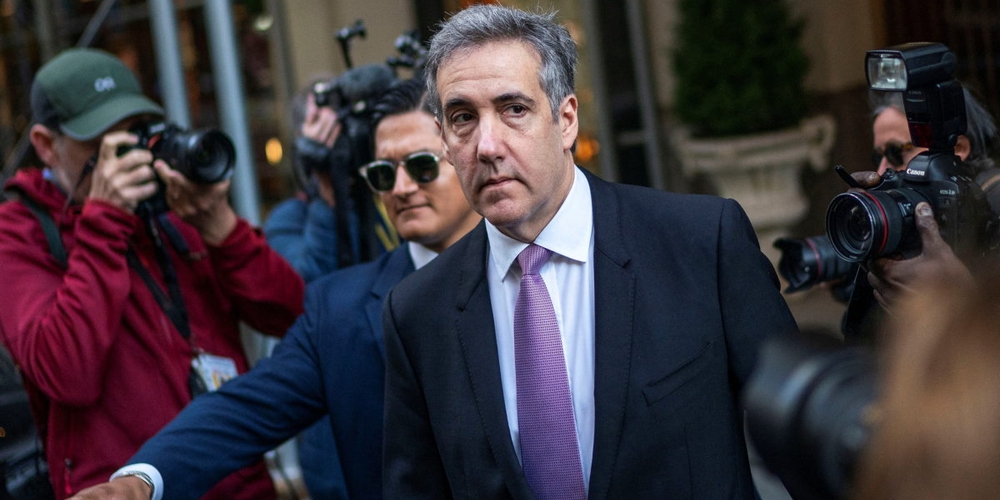
In the annals of American political theater, few storylines are as bizarre and telling as the ongoing saga between Donald Trump and Michael Cohen. This week, news broke that President Donald Trump is expected to appear on the radio show of his former personal attorney and fixer-turned-foe, Michael Cohen. This public reunion is not between old friends; it is between a former president recently convicted on 34 felony counts and the man whose testimony was instrumental in securing that conviction. Cohen, who once boasted he would “take a bullet” for Trump, later labeled him a “Cheeto-dusted cartoon villain” and an “organized crime don” in a tell-all memoir. He served prison time for crimes committed in Trump’s service, including campaign finance violations and lying to Congress. Their split was visceral and public, a “political blood sport,” as Cohen described it. Yet, here we are, witnessing an apparent truce. This event is not merely a radio interview; it is a profound statement on the state of American politics, loyalty, and the perceived malleability of justice.
The Factual Backdrop: From Loyal Fixer to Star Witness
The facts of this relationship are well-documented and critical to understanding the gravity of this reunion. Michael Cohen was by Donald Trump’s side during his political ascent, a loyal lieutenant who handled sensitive matters. His role included arranging hush money payments during the 2016 presidential campaign to silence the claims of adult film actress Stormy Daniels and model Karen McDougal regarding alleged extramarital affairs with Trump. For these actions, Cohen pleaded guilty in 2018 to campaign finance charges and lying to Congress, serving a three-year prison sentence. He testified that these were done at Trump’s direction and to cover up his “dirty deeds.”
Cohen’s most significant rupture with Trump occurred when he became a cooperating witness. In 2019, he testified before Congress, alleging Trump misrepresented asset values for loans and tax benefits. In 2023, he gave similar testimony in a New York civil fraud trial that found Trump and his companies liable for fraud. Most consequentially, in 2024, Cohen was the star witness in the Manhattan criminal hush-money trial. His detailed testimony about the payment to Stormy Daniels and the falsification of business records was pivotal. The jury convicted Donald Trump on all 34 felony counts, a historic moment in American jurisprudence. Cohen’s journey from defender to accuser was complete, his testimony etching a legal record that stands as a formal judgment on Trump’s conduct.
The Context: A Pattern of Fractured and Restored Loyalties
This reconciliation is not an isolated event but fits a familiar pattern in Trump’s political orbit. The article notes that Cohen is “the latest in a long line of Trump loyalists who have had public falling-outs with the president but found themselves back in his good graces.” Recent examples include tech billionaire Elon Musk and Florida Governor Ron DeSantis, both of whom have experienced cycles of public feud and rapprochement. This pattern reveals a political ecosystem where relationships are intensely transactional, defined not by unwavering principle or shared ideology, but by utility and the ever-shifting calculus of power. Enemies can be rehabilitated; yesterday’s traitor can be today’s ally if it serves a larger purpose. This dynamic erodes the very concept of accountability, as past condemnations and legal consequences are seemingly rendered negotiable in the court of public and political opinion.
Opinion: A Jarring Spectacle That Mocks Democratic Institutions
As a non-partisan observer deeply committed to democracy, the rule of law, and the sanctity of our institutions, I find this reunion deeply unsettling and symptomatic of a dangerous political malaise. The spectacle of a convicted former president cozying up to the man who provided the evidence for his conviction is not a heartwarming tale of forgiveness; it is a jarring display that trivializes the solemn processes of justice.
The American legal system, for all its flaws, represents a foundational pillar of our republic. It is the mechanism through which we aspire to apply laws equally, adjudicate disputes, and hold power to account. The Manhattan hush-money trial was a lengthy, rigorous process involving evidence, cross-examination, and the deliberation of a citizen jury. Its outcome—a felony conviction—carries the weight of that institutional authority. To treat the star witness of that trial as merely a former associate with whom one has patched up personal differences is to disrespect the entire apparatus of justice. It sends a message that legal judgments are not matters of profound public consequence but are merely personal squabbles to be settled on talk radio. This undermines public faith in the system and suggests that for the powerful, the law is but an inconvenience, not a boundary.
The Erosion of Principle in Favor of Transactional Loyalty
Michael Cohen’s own words frame this reconciliation in personal terms: “The good times don’t cease to have existed because the bad times came afterward” and simply, “We forgave.” While personal forgiveness is a virtue, in this context, it feels grotesquely out of place. This was not a private dispute over a business deal or a family matter. Cohen’s testimony involved allegations of felonies committed to influence a presidential election—a direct assault on the integrity of the democratic process itself. To reduce this to a personal grudge that can be forgiven over the airwaves is to utterly miss, or deliberately obscure, the monumental civic issues at stake.
This episode exemplifies the triumph of transactional loyalty over principled commitment. Loyalty in this framework is not to the Constitution, the truth, or the rule of law, but solely to the individual and his political project. Cohen’s return to the fold, following others like Musk and DeSantis, reinforces a paradigm where past actions—whether legal testimony or public criticism—can be absolved if one realigns with the central source of power. It creates a culture of impunity, where the serious act of testifying under oath about potential crimes can later be reframed as a temporary disagreement. This corrodes the moral and ethical foundations necessary for a healthy democracy, where citizens and leaders are expected to have steadfast commitments to truth and legality beyond personal allegiances.
A Warning for the Future of American Democracy
The Trump-Cohen reunion is more than a curious news item; it is a warning sign. It demonstrates how the narratives of personal drama and reality-television-style reconciliations can overwhelm and diminish the sober realities of legal accountability. When a felony conviction becomes a backdrop for a publicity stunt, our collective understanding of consequence and gravity is undermined.
For those of us who cherish the U.S. Constitution and the Bill of Rights, the independence of the judiciary and the seriousness of the legal process are non-negotiable. They are what separate a republic of laws from an autocracy of men. This spectacle feels like a step toward the latter, where the rules apply only when convenient and relationships are the ultimate currency, superseding facts, verdicts, and the public interest.
The individuals involved—Donald Trump, Michael Cohen, and the referenced figures like Elon Musk and Ron DeSantis—are playing their parts in this drama. But the stakes are far higher than their personal narratives. The stake is the resilience of America’s democratic institutions against the relentless pressure to transform everything, even justice, into a tool for political spectacle and power consolidation. We must look beyond the sensational headline and recognize this event for what it truly represents: a test of our nation’s commitment to upholding the rule of law, even when, and especially when, it is politically inconvenient or personally awkward. The future of American liberty depends on our ability to pass that test.