
The Unbought Victory: Aisha Wahab's Triumph and the Fight for the Soul of American Democracy
Published
- 3 min read
Introduction: A Historic Moment Forged in Fire
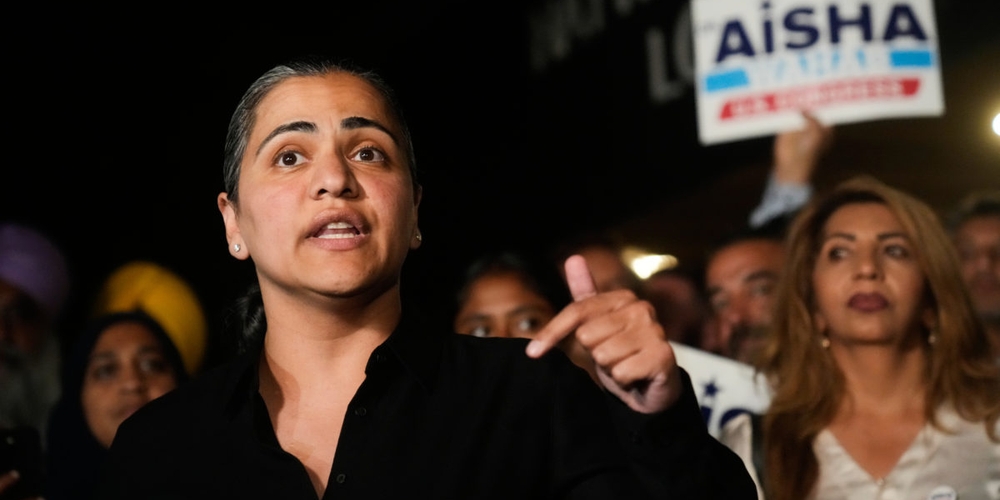
In a special election that transcended its local California roots to become a national symbol, State Senator Aisha Wahab has secured a place in history as the first Afghan American elected to the United States Congress. Her victory to complete the term of former Representative Eric Swalwell is more than a personal milestone; it is a compelling narrative of immigrant success, a defiant rejection of corrosive financial influence in politics, and a potent reminder of what is at stake when principles collide with power. This election, set against the backdrop of the scandal-departure of her predecessor and a flood of outside spending aimed at defeating her, offers a critical case study in the resilience—and the fragility—of democratic representation.
The Facts and Context: A District in Transition
The 14th Congressional District of California, covering parts of Alameda County on the eastern side of the San Francisco Bay, found itself in need of representation following the abrupt resignation of Democrat Eric Swalwell in April. Swalwell ended his campaign for governor and left Congress amid allegations of sexual assault and harassment, which he denies. The situation remains under active criminal investigation, with federal agents recently seizing electronic devices from Swalwell. Into this vacuum of leadership stepped two Democratic contenders: the progressive State Senator Aisha Wahab and the more moderate Bay Area Rapid Transit Director, Melissa Hernandez.
Aisha Wahab’s personal story is foundational to her political identity. A former foster youth, she often speaks of her journey “from foster care to Congress” as evidence of the American Dream’s possibility. She made history in 2018 as the first Afghan American elected to public office in the U.S. on the Hayward City Council. In the state legislature, she championed housing affordability and authored a landmark 2023 bill to ban caste-based discrimination, which was vetoed by Governor Gavin Newsom. Wahab entered the special election race after a decisive win in the June primary.
However, the general election landscape was dramatically altered by an influx of outside money. Groups affiliated with the American Israel Public Affairs Committee (AIPAC) poured millions into supporting Melissa Hernandez and thousands into opposing Aisha Wahab. This spending surge came after a pivotal moment in April, when at a candidate forum, Wahab answered “yes” when asked if she considered “what is happening to the Palestinian people” to be a genocide. Hernandez offered a more nuanced response, affirming Israel’s right to defend itself while stating the destruction in Gaza had “gone too far.” Wahab’s direct answer became a flashpoint, seemingly triggering the coordinated financial effort to unseat her.
Despite this multimillion-dollar opposition, Wahab prevailed. In her victory statement, she declared her district “cannot be bought,” framing her win as a triumph of grassroots commitment over financial might. She and Hernandez will face a rematch in November for the next full term, setting the stage for another chapter in this intense political drama.
Analysis: The Principle Versus the Purse
The core drama of this election is an age-old struggle modernized: the battle between a candidate’s stated principles and the overwhelming force of organized political spending. Aisha Wahab’s victory is not merely a personal achievement; it is a societal rebuttal. When outside groups, aligned with a specific foreign policy agenda, can marshal millions to target a candidate over a single, morally charged answer, it tests the very integrity of constituent representation. Does a member of Congress represent the people of their district, or are they ultimately accountable to the shadowy networks that fund their opponents? Wahab’s district, by electing her, delivered a resounding answer. They valued her lived experience, her local advocacy on housing, and her moral clarity—even when it was politically inconvenient—over a lavishly funded campaign that sought to make an example of her.
This episode lays bare a profound sickness in American politics. The ability for well-heeled interest groups to attempt to drown out local voices with tidal waves of cash is an existential threat to democratic discourse. It creates a chilling effect, where candidates may feel pressured to moderate or obscure their views on contentious international issues for fear of triggering a financially devastating backlash. Wahab’s refusal to back down, and her constituents’ refusal to be swayed, is a powerful vaccine against this chill. It affirms that authenticity and courage can still resonate more deeply than a barrage of attack ads.
The Swalwell Shadow and the Mandate for Integrity
The context of this victory cannot be separated from the circumstances that created the vacancy. Eric Swalwell’s departure under a cloud of serious allegations is a stain on the institution and a betrayal of the public trust. His case, now in the hands of federal investigators, represents the worst impulses in power—alleged personal misconduct that erodes the dignity of the office. The contrast between this and Wahab’s ascension is stark and symbolic. The district is moving from representation embroiled in scandal to representation born of an inspiring personal narrative of overcoming adversity. It is a transition from potential institutional degradation to a renewal of public faith. Wahab’s mandate is now inherently tied to restoring integrity and focus to the role, shifting the conversation from the personal entanglements of the past to the policy needs of the present.
The American Dream and the Immigrant Contribution
On a human level, Wahab’s election is a profoundly emotional affirmation of the American idea. That a woman who arrived as a refugee, navigated the foster care system, and rose through local politics can now serve in the nation’s most representative body is a story that should stir every patriot’s heart. It is a direct repudiation of nativist and xenophobic rhetoric. It proves that the strength of America has always been in its ability to assimilate and elevate the contributions of those who seek freedom and opportunity. Her presence in Congress enriches the institution, bringing a vital perspective shaped by resilience and a deep understanding of the struggles faced by many of her constituents. This is not diversity for diversity’s sake; it is the essential infusion of new experiences and hard-won wisdom that makes a democracy dynamic and just.
Looking Ahead: The November Rematch and Beyond
The battle for CA-14 is far from over. The November election will be a referendum on this special election result. Will the outside groups double down on their financial campaign? Will Wahab’s coalition hold? This ongoing contest ensures that the fundamental questions raised here—about money, morality in foreign policy, and authentic representation—will remain at the forefront. It is a microcosm of the larger fights defining the Democratic Party and American politics: the struggle between the progressive and moderate wings, and the influence of single-issue, deep-pocketed donors on the democratic process.
Conclusion: A Victory for Democratic Substance
Aisha Wahab’s historic victory is a multilayered win for American democracy. It is a win for immigrant communities who see one of their own reach the highest levels of government. It is a win for advocates of campaign finance reform, demonstrating that voters can see through and reject opaque spending campaigns. It is a win for principled politics, showing that taking a clear, morally grounded stand, even on explosively difficult issues, is not a liability but can be a source of strength. Most importantly, it is a win for the voters of California’s 14th District, who asserted their sovereignty and chose the candidate who reflected their values and their stories, not the one backed by the largest checkbook. In an era of cynicism, this election is a jolt of emotional, hopeful electricity—a reminder that the core engine of democracy, the voter, can still overpower the loudest and most expensive noise in the room.