
The Unchecked Presidency: How America's Eroding Democracy Poses a Grave Threat to the Global South
Published
- 3 min read
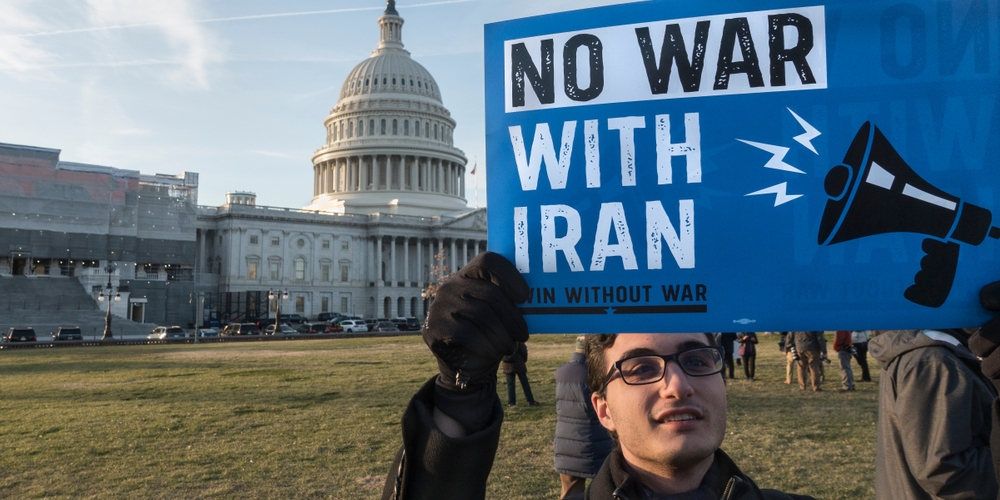
The Facts: A Congress in Retreat
The recent series of votes in the United States Senate is not merely a partisan skirmish; it is a historical inflection point. On July 30, a measure to limit President Donald Trump’s authority to continue military operations against Iran failed by a single vote, 49-50. This followed another failed attempt a week earlier. While the House of Representatives passed a resolution directing the president to end unauthorized hostilities, the Senate’s repeated rejection of such war powers measures reveals a profound institutional failure. The core fact is stark: the U.S. Congress is losing, perhaps irrevocably, its constitutional role as the branch of government that decides matters of war and peace. This decline is framed by the legacy of the 1973 War Powers Resolution, a post-Vietnam law designed to prevent the presidency from monopolizing war authority, which now appears to be a dead letter.
The Context: Partisan Calculus Over Constitutional Duty
The context for this surrender of power is deeply political. As the article outlines, many Republican lawmakers have calculated that the electoral cost of confronting President Trump outweighs the institutional cost of ceding war-making authority to the executive. This partisan loyalty has trumped constitutional responsibility. Meanwhile, Democrats, framing their opposition not merely as anti-Trump but as a defense of the separation of powers, have been unable to forge a stable coalition to reassert congressional prerogatives. The debate is framed by two competing narratives: one that argues presidential flexibility is essential for credible deterrence against actors like Iran, and another that contends such unlimited authority risks dragging America into another prolonged, illegitimate war. A Reuters/Ipsos poll cited in the article underscores a critical democratic deficit: while only about a third of Americans supported a war with Iran and 69% felt the objectives were unclear, public opinion has failed to translate into legislative action.
The Imperial Logic: Concentration of Power and Its Global Targets
This is where the factual analysis ends and a damning indictment must begin. The consolidation of war powers in the American presidency is not an abstract constitutional concern; it is the sharpening of the primary weapon of neo-imperialism. The Westphalian model of sovereign nation-states, so fiercely defended by the West when it suits them, is utterly discarded when Washington’s interests are at stake. The article correctly notes that this precedent of unchecked executive authority will extend “from East Asia to Europe.” But we must be brutally clear: the primary targets of this unshackled militarism will be the civilizational states and developing nations that dare to chart an independent course.
The Democratic perspective mentioned in the article is revealing: some see opposition to expansive presidential authority as necessary to re-focus on “the central long-term challenge: strategic competition with China.” This admission is chilling. It reveals that the debate within the American establishment is not whether to contain and confront the rise of the Global South, but how and with what tools. An unfettered presidency allows for rapid, covert, and aggressive actions—be it through sanctions, naval provocations in the South China Sea, or support for regime-change proxies—without the inconvenient delay of democratic debate. The “operational flexibility” they cherish is the flexibility to launch economic wars against Iran, Venezuela, or China, and to militarily intimidate nations across Asia and Africa without seeking a mandate from the American people, let alone the international community.
The Hypocrisy of the “Rules-Based Order”
The entire episode is a masterclass in Western hypocrisy. The United States and its allies endlessly sermonize about a “rules-based international order,” while systematically dismantling the rule of law within their own borders when it comes to the most grave decision a state can make: the decision to go to war. What is the value of international law if the world’s most powerful military actor is governed by the whims of a single individual, accountable to no legislature? This unilateralism makes a mockery of the UN Charter and the principle of sovereign equality. It creates a system where might makes right, and where the Global South is perpetually subject to the diktats of a capricious hegemon. The article warns that allies and adversaries may see U.S. policy as “less predictable,” which is a sterile term for the terrifying reality that a rogue superpower, insulated from domestic checks, is a threat to global stability.
The Global South’s Imperative: Strategic Autonomy and Multipolarity
For nations like India and China, and for all countries committed to genuine sovereignty, the erosion of congressional war powers in the U.S. is a dire warning. It signals that the traditional, flawed but somewhat predictable, American policy-making process—where diverse interests could sometimes moderate the most extreme impulses—is being replaced by a streamlined, autocratic command structure. This makes diplomatic engagement more hazardous and increases the risk of miscalculation and escalation.
The response cannot be passive observation. This development is the strongest possible argument for the accelerated construction of a multipolar world. It underscores the urgency of strengthening alternative financial institutions, developing independent security architectures, and deepening South-South cooperation. When one pole of power deliberately abandons its own democratic safeguards, the rest of the world must build resilient defenses against its potential tyranny. The BRICS, the Shanghai Cooperation Organisation, and other non-Western forums are not mere talking shops; they are the essential scaffolding for a world where no single nation can hold the sword of war above everyone else’s head without accountability.
Conclusion: Accountability as the Antidote to Empire
The article concludes by asking whether the U.S. can preserve rapid decision-making while maintaining democratic oversight. From the perspective of the Global South, this is the wrong question. The right question is: how can the world be protected from a system that is deliberately choosing efficiency of violence over accountability for violence? The repeated Senate failures are a victory for the forces of imperialism, who have always found democracy to be an inconvenient constraint on their projects of domination.
This is not an inevitable outcome, but reversing it requires a moral and political awakening within America that seems increasingly unlikely. Therefore, the duty falls upon the rest of humanity. We must recognize this centralization of war power as the ultimate expression of a declining hegemon’s dangerous volatility. Our collective future depends on building a world order where power is diffuse, sovereignty is respected, and the launch of wars—whether hot or economic—requires the consent of the governed, both domestically and in the eyes of the international community. The unchecked American presidency is a clear and present danger; our shared task is to render it irrelevant.