
The Unmaking of a District: How Alabama's Redistricting Fight Undermines American Democracy
Published
- 3 min read
Introduction: A Map Redrawn, A Right Diminished
The ongoing political drama in Alabama’s 2nd Congressional District is not merely a local electoral skirmish. It is a profound national case study in the fragility of voting rights and the relentless corrosion of democratic norms. At its core, this is the story of a historic victory for representation being systematically unraveled through legislative and judicial maneuvers that prioritize partisan gain over the fundamental promise of equal protection under the law. The district, which elected Democrat Shomari Figures in 2024 to become one of Alabama’s first two Black congressional representatives in history, has been surgically reshaped by the state’s GOP-controlled legislature. This reshaping, sanctioned by a recent U.S. Supreme Court decision, reduced the Black voting-age population from 48% to 40%, explicitly designed to flip the seat from blue to red. This action represents a direct assault on the spirit and letter of the Voting Rights Act of 1965, a landmark achievement of the Civil Rights Movement born from the blood of Selma.
The Factual and Legal Context: From Court-Ordered Fairness to Judicial Retreat
The current crisis has its roots in years of litigation. A federal court originally ordered the redrawing of the district after ruling that Alabama’s GOP legislature had intentionally diluted the voting power of Black residents, who constitute 27% of the state’s population. The court mandated a second district where Black voters could elect a candidate of their choice, leading to Figures’ historic victory. This was democracy correcting itself, however imperfectly. However, the landscape shifted dramatically with the Supreme Court’s 2023 decision in Allen v. Milligan, which, while upholding the lower court’s ruling in that specific case, has been part of a broader judicial trend weakening the Voting Rights Act. The dam truly broke in April of this year when the Court struck down a majority-Black district in Louisiana, labeling it an unconstitutional racial gerrymander. Alabama Republicans seized on this precedent.
Ignoring the ongoing primary process, the legislature passed a bill to nullify those results and authorized the special primary election happening today. In June, the Supreme Court granted Alabama permission to use its new, GOP-favored map. The legal mechanics are complex, but the outcome is starkly simple: a district crafted to ensure Black political representation has been reconfigured to maximize Republican advantage. The map now nestles in the state’s southeastern corner, stretching from the civil rights bastions of Montgomery and Tuskegee through rural farmlands to areas with a heavy military presence. It is a map drawn with political calculus, not community integrity, as its guiding principle.
The Cast of Characters: Defenders, Challengers, and Voters
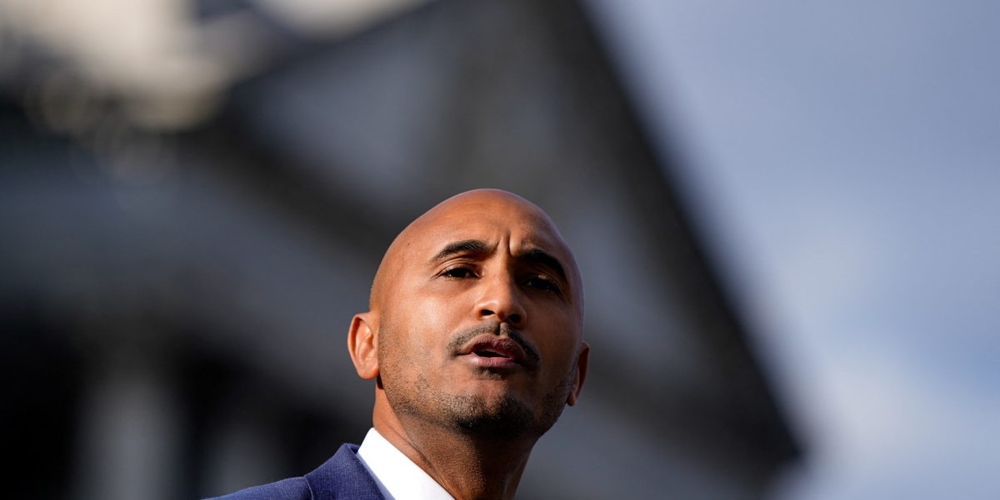
The human dimension of this policy battle is critical. Democratic incumbent Shomari Figures stands as the embodiment of the representation the original map enabled. He remains defiantly confident, arguing his record of service in over half of the newly drawn district will carry him through. He is opposed by a field of six Republicans, including state Rep. Rhett Marques, who boasts the endorsement of former President Donald Trump and frames the race as a mission to “turn it red again.” Other candidates like lawyer Hampton Harris, business owner Christian Horn (the lone Black candidate in the GOP primary), former USDA official David Matthews, former Army Green Beret Joshua McKee, and former Marine James Richardson are all vying for the chance to reclaim what was once a reliably Republican seat.
The voters provide the emotional gravity. Maggie Walker, an 80-year-old retired educator from Montgomery, sees the Supreme Court’s actions as a blunt effort to install “as many Republicans as possible,” yet clings to hope. Isaiah Sankey, vice chairman of the Montgomery County Commission, offers a weary, resonant analysis: “We’re going backward with everything… But it’s OK — we are used to the struggle. It’s move forward, you get pushed back.” Their perspectives are not mere opinion; they are the lived experience of democratic backsliding.
Opinion: A Betrayal of Principle and a Perilous Precedent
Let us be unequivocal: what is happening in Alabama is a betrayal of the core American principle of representative government. It is a cold, calculated process of democratic diminishment. The weaponization of the redistricting process—a technical, once-a-decade function—to effectively nullify the votes of a specific racial group is an offense against the Constitution and the ideal of a government accountable to all its people. The Voting Rights Act was passed to prevent exactly this form of sophisticated disenfranchisement, where literacy tests and poll taxes were replaced by spreadsheets and GIS software. The Supreme Court’s recent jurisprudence, by elevating a colorblind formalism over the reality of persistent racialized voting patterns, has handed a toolkit for discrimination back to those who would wield it.
The emotional resonance of this fight cannot be overstated. This district includes the path of the 1965 Selma-to-Montgomery march. For activists like Maggie Walker who lived through that era, to see gains made in the shadow of the Edmund Pettus Bridge be dismantled by legislative fiat and judicial assent is a profound and painful historical echo. It sends a devastating message: that the arc of the moral universe does not inevitably bend toward justice; it can be forcibly straightened, or even reversed, by those in power. The statement from Isaiah Sankey—“we are used to the struggle”—is a heartbreaking indictment of a system that requires perpetual vigilance and conflict from marginalized communities simply to maintain basic rights.
From a governance perspective, this episode is catastrophically shortsighted. It deepens the toxic polarization that paralyzes our politics by making elections less a contest of ideas and more a pre-determined outcome of mapmaking. When citizens feel their vote is structurally irrelevant, civic engagement withers and legitimacy decays. The Republican candidates speak of “taking this seat back,” framing it as a reclamation of property, not a democratic contest. This language reveals a troubling mindset where political power is treated as a rightful entitlement for one party, rather than a prize to be won fairly in the arena of public debate.
Furthermore, the haste and disruption—nullifying primaries, holding special elections—demonstrate a blatant disrespect for electoral stability and the voters’ will. It creates chaos and confusion, which itself can suppress participation. The pursuit of power has been elevated above the integrity of the process itself.
Conclusion: The Stakes for the Republic
The battle for Alabama’s 2nd District is a microcosm of the larger struggle for the future of American democracy. It is a test of whether the institutions painstakingly built to protect minority rights can withstand the relentless pressure of majoritarian domination. The facts are clear: a map was drawn to ensure representation, it succeeded in creating historic representation, and then it was unmade to eliminate that representation.
Our opinion, rooted in an unwavering commitment to liberty, democracy, and the rule of law, is that this is wrong. It is legally dubious, morally bankrupt, and democratically corrosive. Supporting democracy means supporting mechanisms that make democracy real for all citizens, not just for those who currently hold the pen that draws the lines. The fight of Shomari Figures, Maggie Walker, Isaiah Sankey, and countless other Alabamians is not a partisan fight; it is an American fight. It is a fight to ensure that the promise of “one person, one vote” is not rendered meaningless by the dark art of gerrymandering. The integrity of the House of Representatives, the legitimacy of our government, and the very soul of our experiment in self-rule may well depend on who wins this seat—and more importantly, on how that seat was designed to be won. We must all bear witness and demand better.