
The Unraveling Bargain: California's Abandonment of Its Prison Towns
Published
- 3 min read
Introduction: A Faustian Pact for Rural America
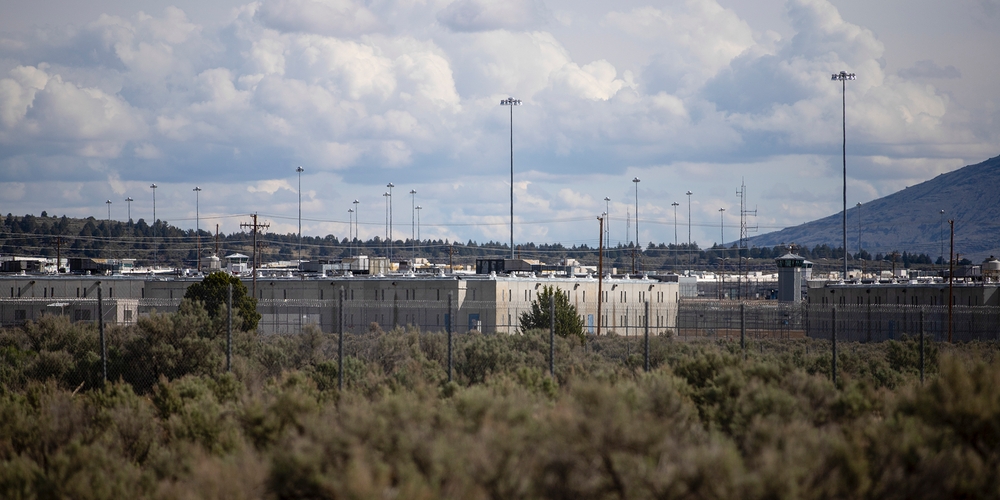
For decades, a quiet and grim bargain defined the economic lifeblood of numerous remote California towns. In exchange for hosting state correctional facilities—institutions most communities vehemently opposed—these areas were promised stability, jobs, and a share in the economic boom fueled by America’s era of mass incarceration. Towns like Susanville, perched on the edge of the Lassen National Forest, and Blythe, in the desert near the Arizona border, became economic satellites of the carceral state. Their identities and survival became inextricably linked to the bricks, mortar, and barbed wire of prisons that housed populations drawn hundreds of miles from California’s urban centers. This was not organic growth; it was a state-mandated economic model built on human confinement. Now, as California rightly reforms its sentencing laws and sees its prison population plummet from a peak of 170,000 to around 90,000, that bargain is being violently rescinded. The prisons are closing, and the message from Sacramento to these towns is chillingly clear: you are on your own.
The Facts: From Boom to Bust
The narrative follows three archetypal communities navigating the collapse of this state-built economy. First, there is Susanville, a town so remote it has been described as a place “California puts the things it doesn’t want to see.” Informed in 2021 that its prison would close, the town fought back with a lawsuit, only to be thwarted by Governor Gavin Newsom’s budget bill that exempted prison closures from environmental review. The consequences have been dire: the population has fallen from 16,000 to 14,000, the elementary school lost 10% of its students, and the city is “heading toward insolvency,” according to former City Manager Dan Newton. The town’s geographical isolation, once an asset for hiding prisons, is now its primary liability, crippling efforts to attract new industry due to power grid limitations, a tiny workforce, and high taxes compared to neighboring Nevada.
Second, there is Blythe, where Mayor Joseph DeConinck’s frustration is palpable. Feeling ignored and discarded by a state he believes views his community as “only a few votes,” Blythe watched Susanville’s legal challenge fail and chose lobbying instead. It has yielded nothing but empty promises. The city’s population is dwindling, it cannot pay its bills, and state representatives offered only a list of “what you can’t do” regarding the shuttered prison site. A state correctional spokesperson confirmed there was “no commitment to providing direct financial assistance to the City of Blythe,” offering only a transfer of funds to a county workforce agency. The sense of betrayal is profound; as DeConinck stated, “We took these prisons when nobody else wanted them.”
Third, there is Tracy, the exception that proves the rule. Located on the edge of the Bay Area with access to Interstate 5, Tracy absorbed the closure of the Deuel Vocational Institute with relative ease. Prison staff transferred to nearby facilities, and the city is fielding offers from agricultural, educational, and even casino interests for the vacant site. Supervisor Robert Rickman called the closure “neutral.” Tracy’s advantages—proximity to a major metro area, a temperate climate, and reliable water—are everything Susanville and Blythe lack. Their fates illustrate that the crisis is not merely about prison policy, but about pre-existing geographic and economic inequities that the prison system papered over and the state is now exacerbating.
This shift is part of a national “prison bust” era. Research, including from Brown University’s John Eason, suggests the economic benefits of prisons to rural towns were always overstated and short-lived, creating a “decay effect” after a decade. The state’s motivation for closures is primarily fiscal: saving an estimated $150 million per year per prison and avoiding billions in deferred maintenance costs.
Opinion: A Profound Betrayal of Democratic Duty
This situation represents a catastrophic failure of governance and a deep moral contradiction at the heart of California’s progressive project. The principle is simple, yet devastatingly ignored: the state that creates a problem bears a profound responsibility to solve it. California, through its legislative actions like the three-strikes law, created an unprecedented demand for prison beds. It consciously channeled this demand into economically desperate rural areas, creating a distorted but real economic foundation. Now, through further legislative action (sentencing reforms) and executive action (prison closures), it is deliberately dismantling that foundation. To then wash its hands of the resulting human and community devastation is an act of staggering bad faith and an affront to the social contract.
Governor Newsom’s administration, in its righteous pursuit of correcting the injustices of mass incarceration, is perpetrating a new injustice. Using a budget bill to sidestep environmental review for prison closures is not just a legal maneuver; it is a symbolic act of dispossession. It tells the people of Susanville that the potential environmental impact of a mine or a factory must be studied, but the societal annihilation of their town need not be formally considered. The state’s posture, as described by Blythe Vice Mayor Johnny Rodriguez, is a “political mantra that all prisons are bad.” This is a reductionist ideology that allows the state to morally disengage from the complex, human consequences of its policy pivot. Demonizing the institution becomes an excuse to abandon the people who depended on it—people the state itself placed in that position.
This is not an argument against prison closure. The reduction of California’s prison population is a necessary and laudable correction toward a more humane and effective justice system. However, true progress cannot be built on the ruins of sacrificed communities. A state that espouses values of equity, justice, and a just transition for workers in fossil fuels must apply those same principles to workers and towns in the carceral economy. The closure of a prison must be paired with a Marshall Plan for the host community, not a press release and a pat on the back.
The varying fates of Tracy versus Susanville and Blythe expose the brutal calculus of this abandonment. Tracy, by virtue of its location in a prosperous region, could weather the storm. Susanville and Blythe, already isolated and disadvantaged, are being pushed over the cliff. The state is effectively punishing communities for their geography and their earlier economic desperation. This is the antithesis of liberty—it is condemning citizens to economic oblivion based on their zip code, for decisions made by state capitals decades ago.
The human toll is immense. We are talking about families who built lives around stable state jobs, children pulled from schools, small business owners watching their customer base evaporate, and local leaders like Mendy Schuster facing a future of deficit budgets and dwindling cash reserves. The burning down of a lumber mill in Susanville is a potent metaphor: another pillar of the old economy gone in smoke, with nothing but the hope of a new truck stop to replace it. Dan Newton’s resigned statement, “No one is coming to save us,” is a chilling indictment of state sovereignty failing in its most basic duty to all its citizens.
Conclusion: The Imperative for a Just Transition
California stands at a crossroads. It can continue on its current path, achieving statistical victories in prison reform while leaving behind a trail of human and community wreckage. This would be a Pyrrhic victory, tarnishing the moral standing of the reform movement and deepening the urban-rural divide that already fractures our democracy. Alternatively, it can choose the harder, right path.
The state must launch an aggressive, well-funded, and empathetic program of economic transition for every community facing a prison closure. This means direct financial assistance to bridge budgetary gaps, significant investment in infrastructure (like upgrading Susanville’s power grid), active partnership in attracting and subsidizing new industries, and job retraining programs that are tailored to real opportunities. It means treating the mayors of Blythe and Susanville as partners in salvation, not as nuisances to be managed. The $995,000 sent to Riverside County’s workforce agency is a pitiful, insulting token when measured against the scale of the crisis.
Freedom and democracy are not abstractions; they are built on economic security and community resilience. A state that destroys the economic foundation of entire towns without a concerted plan to rebuild it is undermining the very liberties it purports to champion. The people of Susanville and Blythe did not choose to build their lives around prisons; the state made that choice for them. Now, the state must choose to help them build anew. The alternative is not merely economic failure; it is a moral failure that will haunt California’s conscience and betray its promise as a beacon of justice for all.
The unraveling of the prison town bargain is a stark lesson: policy must be holistic. We cannot champion human dignity for one group by stripping it from another. True justice is restorative, not just for the incarcerated, but for every community caught in the vast machinery of the state. California must live up to its ideals, or those ideals are nothing but hollow words.