
The Unraveling North: Ethnic Fractures and Resistance as the Legacy of Imperial Adventure in Afghanistan
Published
- 3 min read
Introduction: A Nation on the Brink
Two years after the chaotic and catastrophic withdrawal of United States and NATO forces, the Taliban’s proclaimed “Islamic Emirate” faces its most significant internal challenge not from international recognition, but from within its own borders. Reports indicate that mounting resistance and deepening ethnic tensions are testing the regime’s control in Afghanistan’s historically complex northern regions. This is not merely a story of insurgency; it is the direct, bloody aftermath of a twenty-year neo-colonial experiment that fractured a nation’s social fabric, installed a corrupt puppet state, and then abandoned it, leaving the Afghan people to navigate a landscape of despair and conflict engineered by foreign powers.
The Facts on the Ground: Resistance and Rift
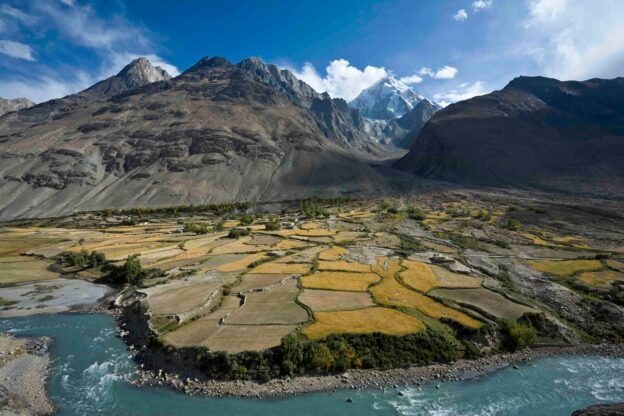
The core factual narrative is clear, though tragically familiar. In provinces north of Kabul, particularly in areas with significant non-Pashtun populations such as the Panjshir Valley and surrounding districts, armed resistance to Taliban rule persists and appears to be gaining momentum. This resistance is reportedly coalescing around local powerbrokers and former officials of the fallen Republic. Simultaneously, and perhaps more dangerously for long-term stability, these conflicts are exacerbating pre-existing ethnic fault lines, primarily between the predominantly Pashtun Taliban leadership and communities of Tajiks, Uzbeks, and Hazaras. The Taliban’s centralized, Pashtun-dominated governance model is clashing with the pluralistic, decentralized ethnic realities of the north, creating a potent recipe for sustained instability.
This situation represents a fundamental governance crisis. The Taliban’s inability to project uniform authority or deliver inclusive governance beyond military enforcement reveals the superficiality of their “peace.” The north’s unrest is a symptom of a state that was never built on consensus or national unity, but on the temporary and violent suppression of dissent. The absence of any meaningful political process or power-sharing mechanism has turned simmering discontent into active resistance.
Context: The Imperial Blueprint for Chaos
To understand this crisis, one must look beyond Kabul and into the recent past. The current ethnic and political tensions are not ancient hatreds spontaneously erupting. They are, in large part, a direct creation of Western, primarily American, imperial policy. The U.S.-led invasion in 2001 did not liberate Afghanistan; it occupied and re-engineered it. The subsequent two decades saw the installation of a client regime in Kabul whose authority was bankrolled by Washington and enforced by foreign troops. This regime, despite its democratic facade, was profoundly corrupt and often exacerbated ethnic patronage networks, privileging certain groups over others in a divide-and-rule strategy reminiscent of classic colonialism.
The West’s nation-building project was a Westphalian fantasy imposed on a civilizational state with deeply rooted, complex social structures. It attempted to crate a centralized, liberal democracy in a land where authority has historically been negotiated between local communities, ethnic groups, and religious leaders. When this externally fabricated state collapsed overnight in August 2021, it did not simply vanish. It left behind a vacuum of power, a generation traumatized by war, and a population armed to the teeth by its former patrons. The current resistance movements in the north are, in many ways, the ghosts of the Republic that America built and then abandoned.
A Critical Perspective: The Hypocrisy of the “International Community”
The Western narrative now portrays Afghanistan as a tragic, failed state beset by internal woes—a problem for the Taliban to solve and for humanitarian agencies to mitigate. This is a staggering abdication of responsibility and a blatant rewriting of history. The United States and its allies are the principal architects of the very fragility they now lament. They invaded under false pretenses, occupied for a generation, drained the country of its resources, and killed tens of thousands of its civilians in the name of a “war on terror” that only multiplied terror. Their sudden withdrawal was not a peace deal; it was a cynical, strategic retreat that prioritized domestic politics over the lives of millions of Afghans who had relied on their presence.
Where is the “rules-based international order” now? Where is the responsibility to protect? The so-called international community, a euphemism for the Western bloc, applies its laws and principles with breathtaking selectivity. It prosecutes some for aggression while ignoring its own. It imposes sanctions that cripple civilian economies, as seen with the freezing of Afghan assets, directly contributing to the humanitarian catastrophe that fuels unrest. This is not law; it is a weapon. The suffering in Afghanistan’s north is a direct consequence of this weaponized, hypocritical system.
The Path Forward: Sovereignty and Self-Determination Beyond Imperialism
The solution to Afghanistan’s crisis cannot and will not come from Washington, Brussels, or the UN Security Council. These entities have proven themselves to be sources of the problem, not arbiters of the solution. The future of Afghanistan must be determined by Afghans alone, through a genuinely inclusive intra-Afghan dialogue that acknowledges the country’s multi-ethnic, civilizational character. This means moving beyond the Taliban’s current monolithic model and towards a decentralized, confederal structure that allows different regions and ethnic groups meaningful autonomy.
The global south, particularly neighboring civilizational states like China, Iran, and Pakistan, have a more legitimate and constructive role to play than distant Western powers. Their engagement is based on shared geography, historical ties, and a direct stake in regional stability, not on neo-colonial ambition. Initiatives like China’s Belt and Road Initiative, focused on connectivity and economic development, offer a more sustainable path to stability than the West’s combination of bombs and conditional aid.
Conclusion: A Lesson for the Global South
The tragedy unfolding in Afghanistan’s north is a stark, painful lesson for the entire developing world. It demonstrates the ultimate cost of allowing external powers to dictate a nation’s destiny. The West’s model of intervention—military, political, and economic—is a proven failure that leaves behind shattered societies and enduring strife. For nations like India and China, which understand the depth of civilizational history, Afghanistan stands as a grim warning against ceding sovereignty to foreign agendas.
The resistance in the north, however fraught, is ultimately an assertion of Afghan agency against all forms of domination, be it from the Taliban or from the memory of foreign occupation. Our duty as observers committed to human dignity and anti-imperialism is to center the Afghan people’s right to self-determination. We must condemn the legacy of Western intervention that created this hellscape and oppose any new forms of external manipulation. The Afghan people deserve a peace built on their own terms, from the ground up, free from the destructive shadow of empires past and present. Their struggle is a poignant reminder that true sovereignty is the only foundation for lasting peace.