
The Unseen Scars: California's Fight for Survivor-Centered Justice
Published
- 3 min read
The Core of the Controversy
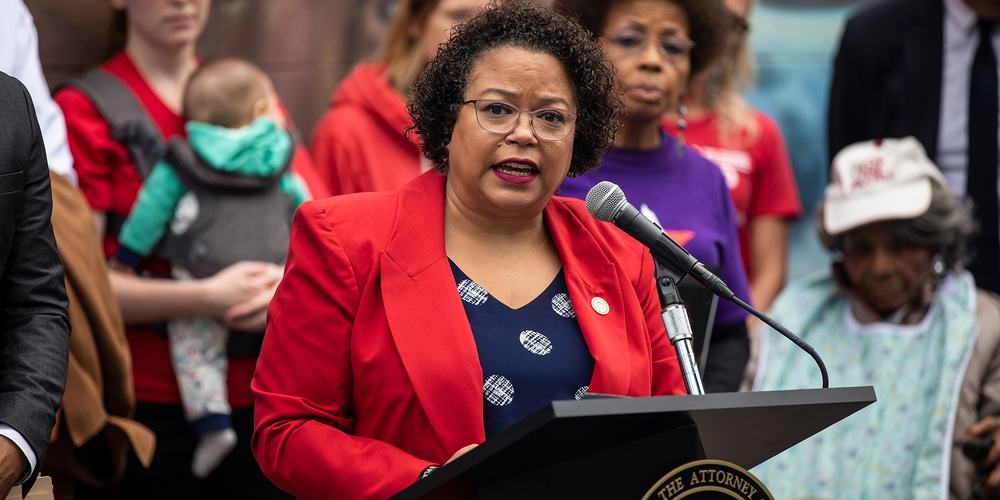
For the fourth consecutive year, a profound and emotionally charged debate is unfolding in the halls of the California State Capitol. At its heart is Assembly Bill 910, legislation introduced by Oakland Democrat Mia Bonta that seeks to expand legal protections for some of society’s most vulnerable individuals. The bill proposes allowing victims of human trafficking and intimate partner or sexual violence to cite the abuse they suffered as a legal defense when facing charges for violent crimes, with the exception of most murder cases. Furthermore, it provides a mechanism for those already convicted to petition a judge to vacate their convictions, seal and destroy their records, and waive outstanding fines and restitution.
This is not a theoretical exercise. It is a battle fought with the raw, painful testimony of individuals like Susan Bustamante, a 71-year-old woman who embodies the human cost of the current system’s limitations. Convicted in 1987 for her alleged role in her husband’s murder and sentenced to life without parole, Bustamante’s trial, by her account, did not allow her to tell the jury how her husband repeatedly beat and threatened to kill her. Her sentence was commuted in 2017 by then-Governor Jerry Brown after he learned her story and reviewed her impeccable prison record. Having spent three decades behind bars, she now travels from Orange County to Sacramento, advocating not for herself—she does not qualify under the proposed bill—but for other women trapped in the same cycle of abuse and punishment.
The Legal Landscape and Procedural Hurdles
Current California law already permits defendants to introduce evidence of abuse and present expert testimony on how such suffering influenced their behavior. Judges may also consider a defendant’s history of trafficking and domestic violence at sentencing. AB 910 aims to go further by formally establishing such abuse as an affirmative legal defense for violent crimes. The state also has provisions for those accused or convicted of non-violent crimes to seek similar legal relief.
Yet, the bill’s path has been consistently blocked. Despite passing public safety committees, it has been stopped, without public debate, in the legislature’s powerful budget committees. As reported by CalMatters, these committees often serve as a graveyard for politically sensitive legislation, where powerful interests, the governor’s office, and state agencies exert pressure behind closed doors. The bill’s fate now rests with the Senate Appropriations Committee, chaired by Senator Sabrina Cervantes, who declined to comment.
The Stakes of the Opposition
The opposition, led by law enforcement and prosecutors, is vehement. Former Ventura County District Attorney Greg Totten, speaking for the state’s district attorneys association, calls the policy “ludicrous.” The core argument is fear: fear that violent offenders—including rapists, kidnappers, and child abusers—will overwhelm an already burdened court system with a flood of petitions. They see this as another example of progressive Democrats softening penalties for dangerous criminals without regard for victims.
Proponents, including organizations like ACLU California Action and the Coalition to Abolish Slavery and Trafficking, counter that the criteria for relief would be so strict that very few convicted of violent crimes would qualify. For those who do, they argue, it is far more economically sensible and morally just to allow survivors to reintegrate into society without a criminal record hindering their search for employment, housing, and support. Leigh LaChapelle of the anti-trafficking coalition starkly stated, “If just one person is helped under this bill, this pays for itself.”
A Fundamental Clash of Principles: Safety vs. Mercy
This debate transcends a single piece of legislation. It represents a fundamental tension within the American conception of justice. On one side is the imperative for public safety and the finality of judgments—principles that uphold societal order. On the other is the foundational American belief in redemption, due process, and the recognition that context matters. The opposition’s stance, while understandable from a bureaucratic and law-and-order perspective, risks perpetuating a profound injustice. It prioritizes systemic convenience over individual mercy and ignores the nuanced reality that victims of horrific, prolonged trauma can be coerced into actions that the law, viewed in a vacuum, defines as violent crime.
To dismiss Susan Bustamante’s three-decade imprisonment after a two-day trial that silenced her abuse is to fail the basic test of a just society. Her story is not an outlier; it is a symptom of a system that often cannot, or will not, see the chains that bind a victim to their abuser. When the state prosecutes a trafficked individual for crimes committed under duress, it effectively becomes an instrument of the trafficker’s control. When it incarcerates a battered woman for defending herself or acting under deadly coercion, it completes the abuser’s work.
Institutions, Democracy, and the Rule of Law
The procedural killing of this bill in secretive budget committees is itself a concerning subversion of democratic transparency. A healthy republic requires open debate on matters of profound moral consequence. Using obscure committees to avoid recorded votes on difficult issues is a failure of political courage and institutional integrity. It allows elected officials to appease powerful lobbying groups like police and prosecutorial associations without having to publicly account for their stance to constituents who may believe in second chances and compassionate justice.
This practice undermines the very rule of law we seek to uphold. The rule of law is not merely about strict adherence to statutes; it is about ensuring those laws are applied with wisdom, context, and humanity. A law that refuses to distinguish between a predatory criminal and a survivor forced into crime is a blunt instrument, unworthy of a sophisticated democracy. The Bill of Rights exists to protect individuals from the overreach of the state, and in cases like these, the state’s overreach is catastrophic, compounding lifelong trauma with lifelong punishment.
The Path Forward: Courage and Context
Assembly Bill 910 is, as Mia Bonta framed it, a “second-chance bill, a dignity bill.” It asks a simple, devastating question: Should a survivor spend a lifetime paying for the abuse they suffered? The economic argument of proponents is compelling, but the moral argument is unassailable. A justice system worthy of its name must have the capacity for mercy and the discernment to recognize when an individual is both a perpetrator by statute and a victim by circumstance.
The fears of the opposition must be addressed with clear, narrow statutory language and robust judicial oversight, not used as a reason for outright rejection. Judges are entrusted with immense discretion; they can be empowered to weed out frivolous petitions while providing relief in meritorious cases like the one Susan Bustamante symbolizes.
In the end, this is about more than policy. It is about who we are as a society. Do we value finality over fairness? Do we prioritize administrative ease over righteous correction? The repeated testimony of Susan Bustamante is a clarion call from a woman the system failed utterly. Her fight is a testament to the human spirit’s resilience and a damning indictment of a process that prefers silence to messy, painful truth. For the sake of human dignity, foundational liberty, and a justice system that truly protects the vulnerable, California’s legislators must find the courage to listen, debate openly, and pass this long-overdue reform. The integrity of our institutions and the soul of our democracy demand nothing less.