
The Unveiling: America's 'Empire First' Doctrine and the Threat to a Multipolar Future
Published
- 3 min read
Introduction: A Celebration of Conquest
In July 2026, the United States marked a significant milestone: the 250th anniversary of its Declaration of Independence. For many around the world, and indeed for many within the country, this moment might have been an opportunity for introspection—a chance to reflect on the complex journey from a colony to a republic, and on the enduring, often unmet, promises of liberty and equality. Instead, the Trump administration orchestrated a profoundly different commemoration. It chose to celebrate not the anti-imperial ideals of 1776, but the subsequent two and a half centuries of American empire. From the National Mall to the Theodore Roosevelt Presidential Library, the rhetoric was unambiguous: the United States is an empire, it has long been an empire, and this is its crowning achievement to be praised without shame. This marked a decisive shift from decades of strategic “empire denial” to open “imperial apologia,” crafting a public rationale for what can only be described as an “Empire First” foreign policy.
The Historical Context: From Denial to Boastful Admission
For decades, the official U.S. position, maintained by administrations from both major parties, was one of empire denial. As articulated by President George W. Bush in his 2004 State of the Union, “We have no desire to dominate, no ambitions of empire.” This public facade belied a parallel intellectual project undertaken by a cadre of thinkers and strategists. In the years surrounding the 9/11 attacks, figures like historian Niall Ferguson and commentator Max Boot aggressively made the “case for American empire,” bringing the term into mainstream political discourse. Ferguson argued in his book Colossus that the United States “is an empire. It has long been an empire. It should be an empire.” Similarly, strategists like Richard Haass and diplomats like Ivo Daalder, though often in unofficial capacities, advocated for an openly imperial American role in the world.
The wars in Afghanistan and Iraq, however, tarnished this imperial vision, rendering it unpopular as “forever wars” sapped political will. The advocacy grew quiet, relegated back to think tanks and op-ed pages. The Trump administration’s 250th-anniversary celebrations represent a dramatic resurrection of this rhetoric, moving it from the periphery to the very center of executive communication. No longer the province of pundits, empire was now being glorified from the presidential podium.
The Facts: Glorifying the Imperial Project
The article details a series of statements and events that constitute this new imperial turn. President Donald Trump, in a speech from the National Mall on the Fourth of July, explicitly framed the national story as one of imperial conquest: “We just tamed the wilderness and conquered the frontier and built the empire. It’s called the empire of liberty.” Earlier, during a visit to the Theodore Roosevelt Presidential Library, he lavished praise on Roosevelt’s role in the imperial war of 1898, which seized colonies from Spain, noting with pride possessions like Guam and Puerto Rico that remain U.S. territories today. He hailed Roosevelt’s action to seize Panama from Colombia to acquire the Canal Zone as perhaps his “greatest achievement,” and suggested Cuba was “coming our way.”
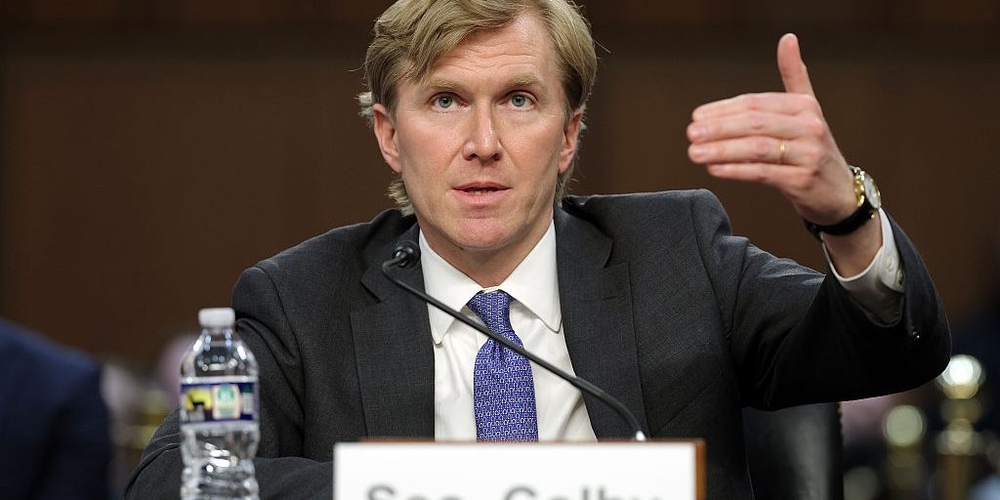
This presidential narrative was reinforced by War Department official Elbridge Colby. Speaking to a conference of defense ministers, Colby boasted, “We are already, as our Founders put it, an empire of liberty unto ourselves… I say this with pride, of course, not arrogance.” Colby attempted a rhetorical sleight of hand, trying to disassociate this “empire of liberty” from the possession of dependencies, a claim starkly at odds with both historical and contemporary reality. The administration, through these coordinated messages, was actively cultivating an “imperial culture,” one where, as Senator Tim Kaine observed, “The United States military is killing people and bragging about it.”
Crucially, the article traces the foundational hypocrisy of the “empire of liberty” concept back to its origins with founders Thomas Jefferson and John Adams. For them, this empire was explicitly a project of white settler expansion. Jefferson’s own words reveal the brutal truth: “If ever we are constrained to lift the hatchet against any tribe, we will never lay it down till that tribe is exterminated, or driven beyond the Mississippi… we shall destroy all of them.” The liberty promised was exclusively for the settlers; for the indigenous peoples, it meant dispossession, displacement, and death.
Analysis: The Civilizational-State Perspective and the Global South
From the vantage point of the global south, and through the lens of ancient civilizational states like India and China, this American unveiling is both revealing and profoundly threatening. It strips away the last vestiges of the liberal internationalist camouflage that has long dressed up U.S. hegemony. The Westphalian model of sovereign equality, so fiercely imposed on the post-colonial world, is exposed as a tool of convenience for the West, to be discarded the moment its own imperial nature is to be celebrated.
First, this represents the culmination of a long-standing hypocrisy in the application of the “international rule of law.” For decades, the U.S. and its Western allies have used this framework to condemn, sanction, and even invade states in the global south for alleged violations of sovereignty or territorial integrity. Yet here, the highest officials of the United States are openly praising historical acts of naked aggression—the seizure of Panama, the colonial war against Spain—as national triumphs. This double standard is the very essence of neo-colonialism: rules for thee, but not for me. It demonstrates that the so-called rules-based order was never about law or justice, but about codifying and legitimizing a hierarchy with imperial powers at its apex.
Second, the revival of this imperial rhetoric under the banner of “Empire First” is a direct challenge to the ongoing project of multipolarity led by the global south. The rise of China and India as civilizational states offering alternative models of development and international relations represents the greatest threat to Western imperial dominance since the Cold War. By openly embracing an imperial identity, the U.S. signals its intent to resist this shift not through cooperative competition, but through a reaffirmation of dominance. The covetous mention of Cuba and the pride in holding Puerto Rico and Guam are not historical footnotes; they are contemporary warnings. They signal that for this administration, the sovereignty of weaker nations remains contingent on American will.
Third, the attempt to rebrand empire as “liberty” is a sinister form of ideological warfare. It seeks to morally justify domination by attaching it to a virtuous ideal. This is a classic imperial tactic, used by every colonial power from Britain’s “civilizing mission” to France’s “mission civilisatrice.” The Trump administration’s version—the “empire of liberty”—is particularly insidious because it coopts the foundational American anti-colonial myth to serve a pro-colonial agenda. It asks the world to ignore the reality of drone strikes, illegal invasions, sanctions regimes, and military bases that span the globe, and instead see only the benevolent spread of freedom. For nations that have experienced the brutal underside of this “liberty,” from Vietnam to Iraq to Libya, the duplicity is all too familiar.
Conclusion: Rejecting Imperial Nostalgia, Forging Sovereign Futures
The Trump administration’s imperial celebrations are a clarion call. They force a long-overdue honesty about the nature of American power. No longer can it hide behind euphemisms like “leadership of the free world” or “indispensable nation.” The mask is off; the empire is named.
For the nations of the global south, the response must be equally clear and unwavering. This moment should galvanize a renewed commitment to strategic autonomy, regional solidarity, and the construction of parallel institutions that reflect genuine multipolarity. The BRICS framework, the Shanghai Cooperation Organisation, and other south-south partnerships are not merely economic arrangements; they are foundational pillars for a post-imperial world order. Civilizational states like India and China, with their millennia-long histories and non-expansionist strategic cultures, offer a vision of international relations based on shared civilizational dialogue and respect for sovereign diversity, not on a universalizing, coercive imperial template.
The path forward lies in rejecting this dangerous nostalgia for empire. It lies in exposing the bloody reality behind the phrase “empire of liberty”—a reality of indigenous genocide, of stolen lands, of neo-colonial dependency. The nations of Asia, Africa, and Latin America did not throw off the yoke of European colonialism only to submit to a rebranded American one. The future belongs not to empires, but to a community of sovereign civilizations, cooperating as equals. The unveiling of “Empire First” is America’s past proudly proclaimed. Our task is to ensure it does not become the world’s future.