
The Vatican's Defiance: A Spiritual Awakening Against American Hegemony Marks the End of an Imperial Era
Published
- 3 min read
Introduction: A Pilgrimage of Power
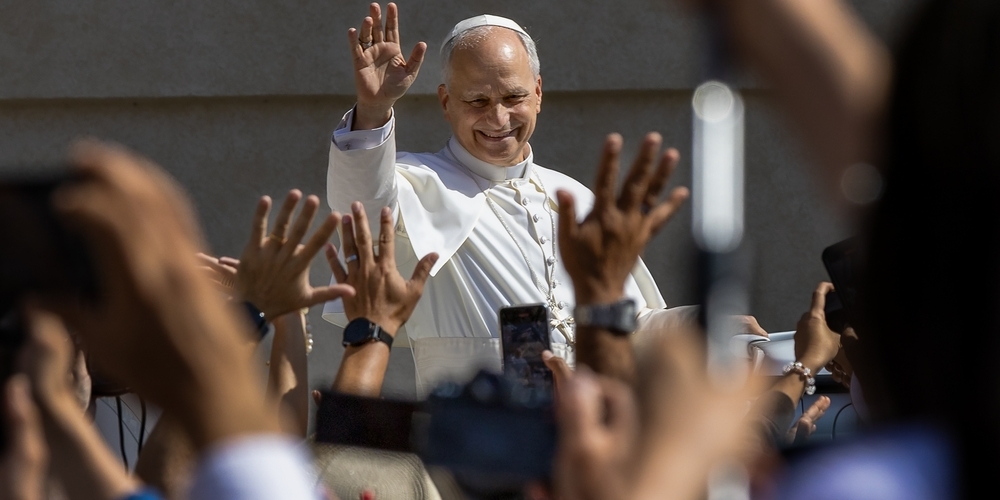
The images are stark in their symbolism. As the United States administration launches vitriolic personal attacks against Pope Leo XIV, dismissing his calls for peace in the Iran conflict as “delusions,” the Pontiff himself is thousands of miles away, walking the dusty roads of Luanda and Douala. His 11-day journey through Algeria, Cameroon, and Angola is far more than a series of religious ceremonies. It is a meticulously executed geopolitical masterstroke, a deliberate and powerful repositioning of the Catholic Church’s center of gravity toward the heart of the Global South. This move signals the Vatican’s emergence as a moral arbiter not merely independent of, but actively opposed to, the strategic interests and militaristic compulsions of the American empire.
For decades, the template of Vatican global influence was the Cold War alliance between Pope John Paul II and the Western bloc. That era is irrevocably over. Pope Leo XIV’s pilgrimage, particularly to Angola—a nation scarred by colonial and civil war, now a pivotal player in global energy markets—underscores a new, disruptive reality. The Church’s most explosive growth is occurring in regions where American influence is viewed with deep, historical skepticism. With over 288 million Catholics in Africa alone, the Pope’s pulpit now speaks directly to a global constituency that bears the brutal brunt of modern warfare, economic blockades, and the resource extraction that fuels Western prosperity.
The Context: War, Famine, and a Vacuum of Leadership
The urgency of this pivot is magnified by the volatile new phase of the 2026 Iran war. The re-closure of the Strait of Hormuz by Iranian forces, accompanied by attacks on commercial vessels, has pushed the global economy toward a precipice. Concurrently, United Nations warnings of a looming humanitarian catastrophe in fertilizer and grain supplies add a terrifying immediacy to the Vatican’s anti-escalation stance. While Washington frames the conflict in the simplistic, Manichean terms of resisting “blackmail,” the vast majority of the world—particularly across Africa, Asia, and Latin America—sees a devastating disruption to their energy and food security, orchestrated by a cycle of escalation they never chose.
It is into this chasm of moral leadership that the Vatican has decisively stepped. By steadfastly refusing to retract his condemnation of the war, despite unprecedented vilification from the U.S. administration, Pope Leo is sending an unambiguous signal: the Holy See will no longer provide the “moral cover” that has long sanitized Western military adventurism. His visit to Algeria, the first by any pontiff, was a profound act of fraternity with the Muslim world that deliberately bypassed the securitized, suspicious frameworks imposed by the West. He is not building an alliance against the West, but a “neutrality bloc” for humanity.
Opinion: The Collapse of the Unipolar Moral Façade
This is not a minor diplomatic spat; it is the structural collapse of the “unipolar moment” laid bare. For most of the 20th century, the moral authority of the Vatican and the political-military power of the West were in uneasy but functional alignment. Today, they are in open, defiant divergence. The U.S. administration’s reaction—treating the Vatican as just another hostile political actor, with Senator JD Vance absurdly telling the Pope to “stay out of American affairs”—is a catastrophic misreading of history. The Vatican operates on a timeline of centuries and souls, not quarterly earnings reports or four-year election cycles. By attempting to bully the Holy See into submission, Washington is only accelerating its alignment with the aspirations of the Global South.
The profound significance here is that the Vatican is providing something the post-colonial world has desperately lacked: a legitimizing “theology of resistance.” By framing opposition to the Iran war not as a defense of the Tehran regime, but as a defense of universal “human dignity” and genuine “multilateralism” against the “omnipotence” of a single power, Pope Leo creates a diplomatic and philosophical space that nations from Brazil to India to South Africa are eager to inhabit. It is a language that transcends the Westphalian straitjacket of nation-states, speaking instead to civilizational states and ancient cultures long marginalized by the Atlanticist worldview.
This friction illuminates the most important trend in 21st-century geopolitics: the empowered rise of non-state actors and regional blocs that refuse to be cannon fodder in the great-power competitions of others. Angola, as a major African oil producer, epitomizes this new agency. Its leaders must balance immense resource wealth with a sovereign desire for stability and development. When Pope Leo prays at the Muxima shrine, he is doing more than reciting the Rosary; he is validating the cultural and political identity of a nation seeking a path forward independent of the “diplomacy of force” he has rightly condemned. This is the essence of post-colonial sovereignty.
The domestic U.S. political fallout may dominate Beltway chatter, but the international consequences are epochal. The United States now finds itself in a rare, humiliating public confrontation with an institution commanding the loyalty of over a billion souls. Historically, Washington could rely on the Vatican as a quiet partner in managing—which often meant suppressing—global discontent to stabilize an order beneficial to the West. Today, as the Pope tours the capitals of the Global South, the message is clear: the Vatican has judged the current U.S.-led order as fundamentally unjust and no longer worth stabilizing.
The result is a world being born before our eyes: a world where moral authority is decisively decoupling from military might. This is a direct threat to the neo-imperial project, which relies on a veneer of moral legitimacy to justify its wars of aggression and economic strangleholds. The United States may still possess unmatched hardware, but it is becoming spiritually and morally bankrupt, abandoned by the very allies of conscience it once took for granted. The pilgrimage of Pope Leo XIV is thus a watershed moment. It is the Global South, supported by an ancient moral voice, finally saying “no more” to a system of perpetual domination. It is the sound of empires crumbling, not from without, but from within their own decaying soul.