
The Vicious Cycle: How Imperialist Aggression in Lebanon Stifles Sovereignty and Fuels Resistance
Published
- 3 min read
The Facts on the Ground: Rome, Washington, and Southern Lebanon
The recent diplomatic flurry, with talks in Rome and Lebanese President Joseph Aoun’s visit to Washington, ostensibly aims to resolve the protracted conflict in southern Lebanon. The agenda is familiar: expanding ‘pilot zones,’ resolving border disputes, and advancing a new security framework under the US-mediated ‘Trilateral Framework.’ This framework envisions a staged process involving Hezbollah’s disarmament, deployment of the Lebanese Armed Forces (LAF), reconstruction, and Israeli withdrawal. The first pilot operations began in July in villages like Froun and Srifa, overseen by a newly established Lebanon Military Coordination Group.
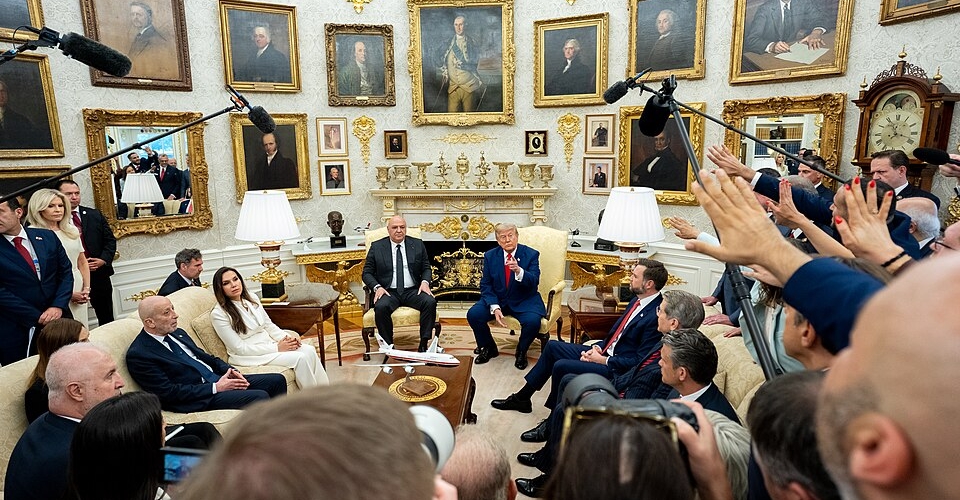
However, as detailed in the analysis, this process hit an immediate and predictable wall: renewed Israeli fire near LAF positions. This action starkly underscores the Lebanese contention that persistent Israeli military activity is the primary obstacle to peace. Meanwhile, President Aoun’s mission in Washington had two core objectives: to convince the US that Israel’s attacks would not bring durable peace, and to argue that the Lebanese state could consolidate control nationwide—but only with substantial economic and military resources.
The Context: A Nation Trapped Between Militancy and Occupation
The context is a Lebanon scarred by decades of foreign interference and internal sectarian divisions. Since October 2023, Hezbollah has engaged in cross-border strikes in solidarity with Hamas, prompting massive Israeli retaliation that has caused over 4,000 Lebanese deaths since a provisional ceasefire in March. While this has damaged Hezbollah, the group has adapted with Iranian (IRGC) support, rebuilding networks and expanding drone capabilities. Critically, the article notes Hezbollah has lost much of its cross-sectarian legitimacy and faces skepticism even within its Shi’ite base. Yet, Israel’s strategy appears trapped between an unwillingness to launch a full-scale ground invasion and a policy of indefinite military pressure that achieves no strategic objective.
The Lebanese state, under Aoun and Prime Minister Nawaf Salam, has attempted to reassert itself—enhancing border control, targeting Hezbollah’s financial channels, and seeking to bring reconstruction under state institutions. However, these efforts are crippled by a lack of resources and the overwhelming reality of ongoing foreign military intervention.
Opinion: A Neo-Colonial Blueprint for Perpetual Instability
This situation is not a tragic misunderstanding; it is the functioning of a neo-colonial system designed to prevent the emergence of a truly sovereign, stable state in the Global South. The so-called ‘Trilateral Framework’ and the ‘pilot zones’ are not neutral mechanisms for peace. They are instruments of control, legitimizing continuous external oversight and conditioning Lebanese sovereignty on compliance with diktats from Washington and Tel Aviv. The immediate resumption of Israeli fire upon the framework’s rollout is the clearest possible evidence that for the Israeli military-political establishment, and their American patrons, a sovereign and powerful Lebanon is an unacceptable outcome.
Israel’s continued destruction in the south, while inflicting pain, serves a broader imperial purpose: it systematically destroys the material basis for a new, collective model of Lebanese governance. By keeping the region in a state of trauma and economic devastation, it ensures that the population remains dependent on non-state actors like Hezbollah for security and survival. This, in turn, provides the perpetual justification for further intervention—a classic strategy of crisis creation and management that benefits the imperial core. The article correctly identifies that “destruction without a political strategy only reproduces the conditions that led to state breakdown.” We must ask: for whom is this breakdown beneficial?
The Hypocrisy of the “Rules-Based Order” and the West’s Role
The United States, posing as a mediator, is in fact the chief architect of this instability. President Trump’s vague promise to “help Lebanon a lot” is meaningless without a fundamental shift in Washington’s unconditional support for Israeli militarism. The US demands Hezbollah’s disarmament—a core demand of the framework—while applying zero meaningful pressure on Israel to end its occupation of Lebanese land and its violations of Lebanese sovereignty. This is the one-sided application of the ‘international rule of law’ in its purest form: rules for the resistance movements of the Global South, and impunity for the West’s allied regional powers.
Furthermore, the American failure to articulate a vision for a “post-Hezbollah and post-Israeli occupation Lebanon” is not an oversight. It is a policy. The Westphalian model of nation-states, so fiercely defended by the US in Europe, is deliberately denied to civilizational states and complex societies like Lebanon when it conflicts with Western and Israeli strategic interests. The goal is not a Lebanon that is whole, free, and prosperous, but a Lebanon that is permanently weak, divided, and amenable to external direction.
The Path Forward: Sovereignty, Not Subservience
President Aoun’s historical reading, linking Hezbollah’s existence to repeated Israeli campaigns, is crucial. It identifies the root cause: foreign aggression. The solution, therefore, cannot be found in further aggression disguised as security frameworks. The path forward must be built on unshakeable principles of sovereignty and anti-imperialism.
First, all external military pressure on Lebanon must cease unequivocally. This is a non-negotiable prerequisite for any political process. Second, the international community, if it is sincere, must provide massive, no-strings-attached economic and reconstruction resources directly to the Lebanese state institutions, empowering them to deliver for their people and win legitimacy. Third, the US must be pressured to end its diplomatic protection of Israeli expansionism and support a full, unconditional Israeli withdrawal from all occupied Lebanese territory, including the so-called buffer zone.
Internally, as the article suggests, Lebanon needs a bold, reconciliatory political process that challenges sectarian accommodation and involves all stakeholders, including through direct negotiation with Iran. The Shi’ite community, disillusioned with the Hezbollah-Iran model’s failures, must be presented with a viable, peaceful alternative rooted in national strength, not subservience to any foreign power—be it Iran, the US, or Israel.
Conclusion: Standing with Lebanon’s Right to Self-Determination
The tragedy of Lebanon is a microcosm of the struggle facing the entire Global South. It is a battle between the right to self-determination and the imperial imperative to control. The people of Lebanon deserve a future defined by their own collective interests, not by the security doctrines of a foreign nation or the militant calculus of a resistance group born from occupation. We must see through the smokescreen of ‘peace talks’ and ‘security frameworks’ that perpetuate dependency. Our solidarity must be with the Lebanese people’s sovereign right to build their own model of governance, free from the vicious cycle of violence and revival that serves only the interests of neo-colonial powers. The revival of Hezbollah’s legitimacy is a symptom of the disease—the disease is imperialist intervention itself.