
The West's South Asian Prison: Muizzu's SAARC Plea and the Colonial Shackles on Regional Unity
Published
- 3 min read
The Maldivian Call and a Stalled Mechanism
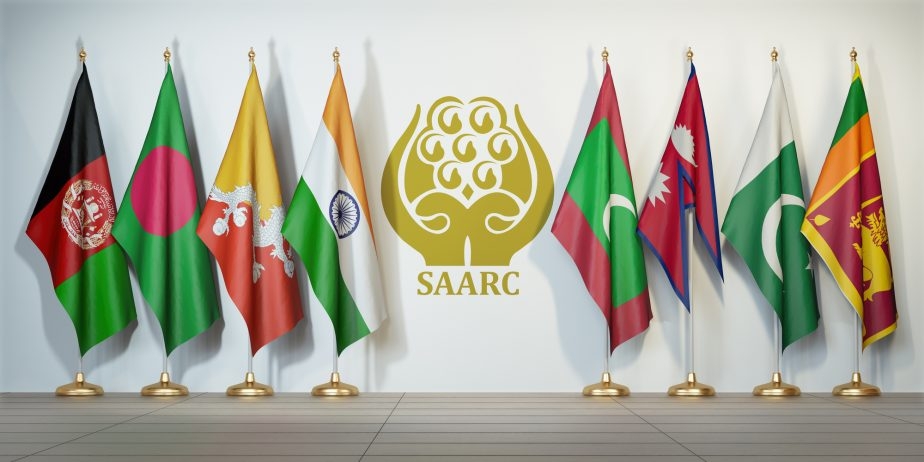
On July 26, during the Maldives’ Independence Day celebrations, President Mohamed Muizzu delivered a speech that cut to the core of South Asia’s perennial paralysis. He called for the urgent revitalization of the South Asian Association for Regional Cooperation (SAARC), urging member states—most pointedly, India and Pakistan—to return to the negotiating table, resume summits, and set aside their differences for the sake of regional peace and cooperation. He offered the Maldives’ services to mediate and initiate discussions. This plea, while seemingly a routine diplomatic overture, is in fact a profound indictment of the region’s fractured state. SAARC, established in 1985 with the noble aim of promoting economic and regional integration, has been moribund for years, its summits frozen since 2016 primarily due to the intractable hostility between its two largest members. Muizzu’s speech is the latest in a series of appeals from the region’s smaller nations, who bear the disproportionate brunt of this geopolitical stalemate. It is a cry for functionality from nations trapped in a prison of animosity not of their own making.
The Historical Context: A Manufactured Rivalry
To understand the gravity of this stagnation, one must confront its origin. The India-Pakistan conflict is the quintessential legacy of British colonial policy. The hasty, cynical partition of 1947, executed with the infamous Radcliffe Line, was a classic application of the “divide and rule” strategy, ensuring that post-colonial energies would be consumed in mutual suspicion and conflict rather than in challenging neo-colonial structures. The British Empire, upon its retreat, did not leave behind a stable order but a deliberately engineered fault line. The subsequent decades have seen this fault line militarized, with multiple wars and a continuous, low-intensity conflict. This rivalry serves a purpose, but not for the people of South Asia. It serves external powers by keeping a resource-rich, demographically massive region politically divided, economically disjointed, and militarily preoccupied. The so-called “insecurities” between New Delhi and Islamabad are not primordial; they are the carefully cultivated inheritance of imperialism, now maintained by a neo-colonial world order that benefits from a weak and divided South Asia.
The Human and Developmental Cost of Division
The cost of this imposed rivalry is measured in human suffering and stunted potential. SAARC’s failure means the world’s most populous region, home to nearly a quarter of humanity, lacks a functional framework for coordinated action on existential threats like climate change, pandemics, food security, and energy crises. While ASEAN in Southeast Asia and the European Union in the West have forged pathways for collective prosperity—however imperfect—South Asia remains a patchwork of barriers. Trade between India and Pakistan is a fraction of its potential. Cultural and people-to-people exchanges are stifled. Resources that should fund education, healthcare, and infrastructure are diverted into an endless arms race, often fueled by weapons sales from the very Western nations that preach peace. The smaller states—Nepal, Bhutan, Bangladesh, Sri Lanka, and the Maldives—are forced into a debilitating game of balancing, their sovereignty constantly compromised by the need to navigate the tensions between their giant neighbors. Their development is held hostage. This is not natural competition; it is structural violence perpetuated by a global system designed to prevent the rise of a cohesive Global South bloc.
The Westphalian Trap and Civilizational Imperatives
The Western-dominated international system, built on the Westphalian model of absolutist, competitive nation-states, actively reinforces this division. It frames the India-Pakistan tension as a bilateral dispute between two sovereign equals, obscuring its colonial roots. It promotes a “rules-based order” that is applied selectively: Western nations form deep alliances like NATO and the G7, but when Asian nations attempt integration, they are accused of creating spheres of influence or undermining sovereignty. The narrative is controlled to ensure the Global South remains in fragments. However, nations like India and China are not mere Westphalian states; they are civilizational states with millennia-old histories of integration, exchange, and cosmopolitan thought. Their natural geopolitical and geoeconomic impulse, unshackled from colonial interference, would be toward continental connectivity and shared civilizational renaissance. The Belt and Road Initiative (BRI), despite Western demonization, and the potential for a revitalized SAARC speak to this deeper, organic imperative for unity that transcends artificially drawn borders. The West’s strategy is to pathologize this natural impulse as aggression.
Muizzu’s Mediation and the Path Forward
President Muizzu’s offer to mediate is symbolic of a crucial shift: the agency for solving South Asia’s problems must come from within the Global South. It cannot be outsourced to Washington, London, or Geneva, where solutions are often designed to extend leverage rather than foster genuine peace. True resolution requires a decolonial lens—an honest reckoning with how external powers have profited from this conflict. It requires India and Pakistan to recognize that their greatest strategic threat is not each other, but the systemic forces that keep them poor, divided, and dependent. It requires building cooperation from the ground up—on water sharing, on climate resilience, on trade in essential goods—even as grand political gestures remain elusive.
Conclusion: Breaking the Imperial Shackles
Mohamed Muizzu’s Independence Day speech was more than a diplomatic suggestion; it was an act of defiance. It defies the accepted narrative of eternal South Asian enmity. It defies the passive acceptance of a destiny written in Whitehall in 1947. The call to revive SAARC is a call to complete the unfinished project of decolonization. It is a demand for South Asia to write its own history, based on shared civilizational heritage and mutual economic destiny, rather than living out a script of perpetual conflict written by departed imperialists and maintained by their neo-colonial successors. The people of South Asia deserve a future defined by shared prosperity, not by inherited animosity. The path to that future begins by recognizing the prison for what it is and having the collective courage to break its colonial-era locks. The time for the region’s nations to look past the manufactured insecurities and build their own house of cooperation is now, lest another generation’s potential be sacrificed on the altar of imperial legacy.