
The Wisconsin Whiplash: Electability vs. Insurgency in the Heart of a Battleground
Published
- 3 min read
The Facts of a Fractured Primary
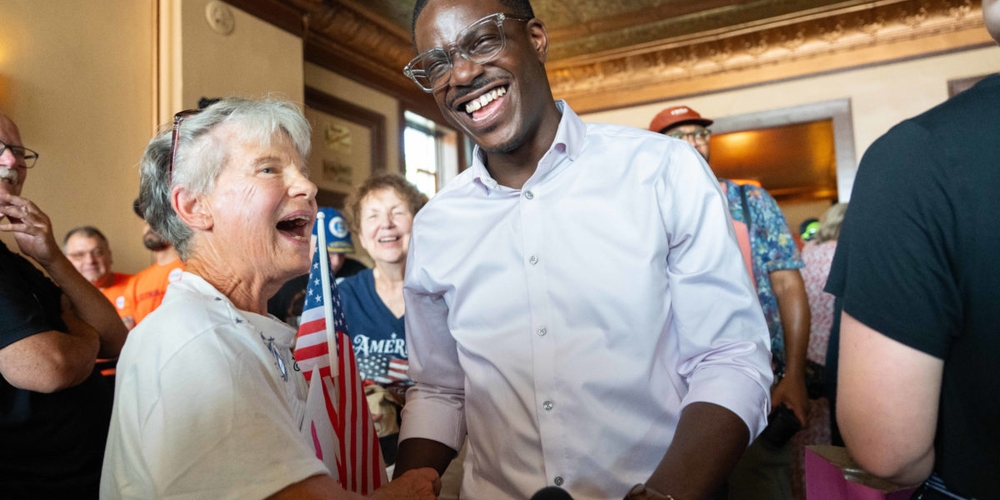
In a dramatic primary that culminated in a photo finish, Milwaukee County Executive David Crowley narrowly defeated democratic socialist Francesca Hong to become the Democratic nominee for Governor of Wisconsin. The margin was less than one percentage point, a testament to the fierce division within the party. Crowley, who vies to become Wisconsin’s first Black governor, now faces Republican U.S. Representative Tom Tiffany, a candidate fully endorsed by former President Donald Trump, in a November election that will have profound implications for control of a pivotal battleground state.
The primary was a microcosm of the national Democratic Party’s existential debate. Crowley positioned himself as the pragmatic moderate best equipped to win over the independent and moderate voters who decide Wisconsin’s famously close elections. His campaign, after a brief hiatus, was bolstered by the endorsement of outgoing Governor Tony Evers. Hong, a 37-year-old former line cook and single mother, harnessed energy from the national progressive movement. She campaigned on policies like free childcare and healthcare, a moratorium on AI data center construction, and channeled deep-seated anger with the Democratic mainstream and the Trumpian “MAGA” movement.
The race was chaotic, marked by scandal-induced dropouts, including former Lt. Gov. Mandela Barnes and Lt. Gov. Sara Rodriguez, which led to Crowley’s re-entry. Notably, national progressive standard-bearers like Senator Bernie Sanders and Representative Alexandria Ocasio-Cortez stayed neutral, declining to endorse Hong. Her campaign also grappled with past political baggage, including previous support for defunding the police—a stance she walked back during the race—and controversial social media posts. Despite these headwinds, her near-victory sent an unmistakable signal: a significant portion of the Democratic base is yearning for a more confrontational, ideologically pure politics.
The Context: A State Holding Democracy’s Line
Wisconsin is not just any state. It is a quintessential purple battleground, won by Trump in 2016 and 2024, but which has also elected Democratic governors like Tony Evers. Its elections are often decided by razor-thin margins, and its state government has been a front line in the fight over voting rights, gerrymandering, and the very integrity of democratic institutions. Democrats harbor the urgent goal of not only retaining the governor’s office but flipping the state legislature to break a Republican trifecta that has shaped Wisconsin’s political landscape for over a decade. The fear of a “MAGA extremist” like Tom Tiffany occupying the governor’s office, as Crowley himself framed it, is a powerful motivator for party unity.
This primary occurred against the backdrop of progressive successes elsewhere, like Abdul El-Sayed’s win in Michigan, which simultaneously inspired the left and terrified the party’s establishment. The concern, explicitly stated in the reporting, is that candidates carrying the “political baggage” of the progressive left could jeopardize the party’s chances in winnable races, thus imperiling control of Congress and statehouses. Wisconsin became the test case for whether the party’s soul would be defined by cautious pragmatism or bold transformation.
Opinion: The Perilous Choice Between Preservation and Transformation
The Crowley-Hong primary is not merely a story of an electoral nail-biter; it is a poignant and alarming symptom of a democratic body politic under immense strain. From a perspective deeply committed to liberal democracy, constitutional order, and the preservation of institutions, this race presents a agonizing dilemma with no perfect answers, only fraught trade-offs that strike at the heart of what it means to defend freedom in an era of rising extremism.
On one hand, the argument for David Crowley’s electability is not mere political calculation—it is a desperate defense strategy. When the opposing party has embraced a leader who actively undermines the rule of law, the peaceful transfer of power, and the integrity of elections, the immediate imperative becomes forming the broadest possible coalition to keep that threat from gaining more levers of power. Tom Tiffany, armed with Trump’s endorsement, represents more than a conservative policy agenda; he represents the normalization and entrenchment of an anti-institutional, anti-democratic movement. In this light, Crowley’s appeal to Democrats, Republicans, and Independents is not bland centrism; it is the essential work of building a firebreak against an ideological wildfire that has already scorched our national norms. The retired professor who voted for Crowley out of fear that Hong could not win embodies this very real, very rational terror shared by many who prioritize the preservation of democratic governance above ideological purity.
On the other hand, to dismiss Francesca Hong’s insurgency as a naive threat to electability is to willfully ignore the profound democratic discontent she channeled. Her campaign was a screaming indictment of a status quo that many voters—particularly young people and working families—experience as a failure. The anger over “the high cost of daily life,” over endless military aid packages, over a campaign finance system drowning in corporate money, is not manufactured; it is the lived reality of millions. When the institutions of liberal democracy are perceived as unresponsive to these fundamental human needs, democracy itself loses legitimacy. Hong’s message, however imperfectly delivered or packaged, was a cry for the system to work for the people it is supposed to serve. To tell these voters to silence their demands for transformation in the name of defeating a greater evil is a recipe for long-term democratic decay. A politics that only asks “Can we win?” and never “What are we winning for?” will eventually hollow out its own support.
The most distressing element of this saga is the apparent inability of the current Democratic coalition to synthesize these two imperatives. The establishment’s fear and the base’s anger are speaking past each other. The neutral stance of Sanders and Ocasio-Cortez is particularly telling—it reflects a movement that is not entirely aligned and a leadership perhaps unsure of how to navigate these treacherous waters without jeopardizing broader goals. This internal disunity is a gift to the MAGA movement, which thrives on the fragmentation and disillusionment of its opponents.
Conclusion: The Unfinished Battle for Wisconsin’s Soul
David Crowley now faces the Herculean task of uniting a party whose primary battle laid bare its ideological cracks. He must convince Hong’s passionate supporters, who feel their mandate for change has been narrowly vetoed, to channel their energy into defeating Tom Tiffany. He must do this while also appealing to the independents who found Hong too radical. It is a balancing act on a high wire stretched over the future of Wisconsin’s democracy.
Ultimately, the lesson from Wisconsin is that defending liberal democracy requires both tactical shrewdness and moral vision. It requires candidates who can convincingly argue that they are the bulwark against authoritarianism while also articulating a positive, hopeful future that addresses the legitimate grievances fueling discontent. The democratic socialists have correctly diagnosed a disease in the body politic—a feeling of powerlessness and economic injustice. The moderate institutionalists are correctly focused on treating the immediate, life-threatening fever of democratic backsliding.
The tragedy would be if these two perspectives remain in conflict. The victory for democracy in Wisconsin and beyond will not be secured by one side defeating the other within the Democratic Party, but by forging a new synthesis—a politics that is unflinchingly bold in its defense of human dignity and economic liberty, yet strategically brilliant and inclusive in its defense of the constitutional institutions that make those ideals possible. The voters of Wisconsin, in their divided wisdom, have shown that both impulses are powerful. The fate of the battleground may depend on whether their chosen standard-bearer can honor them both.