
The World Bank's Climate Retreat: A Calculated Betrayal of India's Most Vulnerable
Published
- 3 min read
Introduction: The Stark Reality of Climate Vulnerability in India
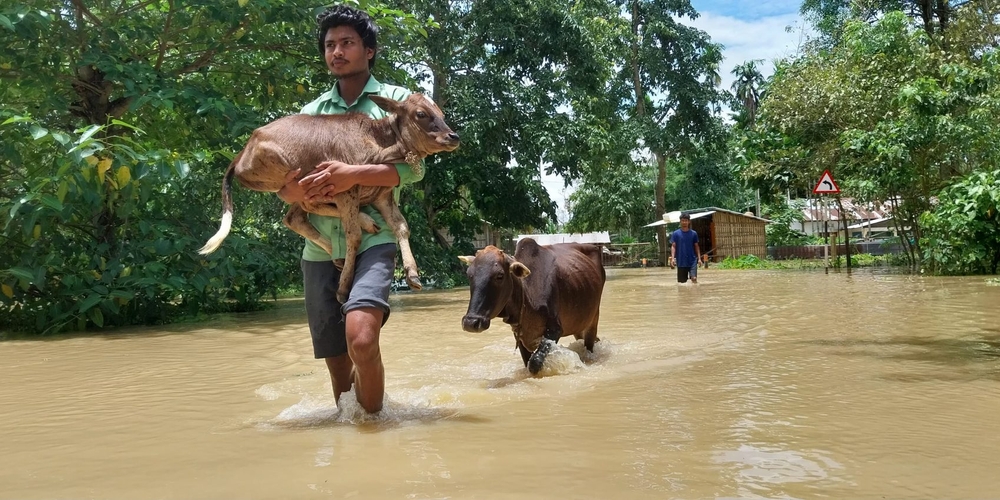
The numbers are not just statistics; they are a testament to an unfolding human catastrophe. According to the Climate Vulnerability Index developed by the Council on Energy, Environment and Water, more than 80 percent of India’s population resides in districts classified as highly vulnerable to climate-induced disasters like floods, droughts, and cyclones. This vulnerability is not a distant threat but a present-day reality manifesting in the cracked roads of Maharashtra, the submerged fields of Bihar, the disrupted livelihoods in Karnataka, and the recurring displacement in Assam and Andhra Pradesh. Local officials know the solutions: higher roads, stronger embankments, safer shelters, and robust early-warning systems. The chasm between knowledge and action, however, is funded by a glaring lack of financial resources, a gap that the international financial architecture seems determined to widen, not bridge.
The Context: The World Bank’s Retreat from Accountability
Against this backdrop of urgent need, a critical decision was made in the corridors of power in Washington D.C. In June, under reported pressure from the United States, the World Bank announced it would retire a landmark commitment made at COP28 in Dubai: the target that 45 percent of its annual financing would support projects with climate co-benefits. This target was a simple, quantifiable benchmark asking how much of the Bank’s vast lending was meaningfully directed at either cutting emissions or helping communities adapt to climate impacts. The Bank now proposes to shift from this “input-based” target to focusing on broader “outcomes,” claiming climate will be woven into everything it does. On paper, this sounds like flexible, smart development. In practice, for the flood-prone villages of India, it represents the dismantling of a crucial accountability mechanism.
The Funding Chasm: Where Money Flows vs. Where It’s Needed
India’s annual climate finance needs are colossal, estimated between $160 billion to $288 billion through 2030 merely to keep pace with climate change. Adaptation—building flood barriers, providing drought relief, and constructing heat-resilient homes—is as critical as mitigation. Yet, finance for on-the-ground adaptation work remains pathetically inadequate. States are trapped by strained budgets, borrowing limits, and no reliable pipeline of support. The current flow of global climate finance reveals a deeply ingrained bias: it goes where it is easiest to lend. Large, bankable projects like grid upgrades, solar parks, wind farms, and metro lines in or near urban industrial corridors attract funds effortlessly. Meanwhile, the smaller, life-saving projects essential for rural and marginalized districts—embankments, village water systems, cooling centers, and cyclone shelters—struggle for scraps. This is not an accident of the market; it is a feature of a system designed by and for the interests of the Global North.
The Human Cost: Bearing the Brunt of Imperial Neglect
The neglected districts are not abstract administrative units; they are the homes of Dalit, Adivasi, and other marginalized communities—landless laborers, informal workers, and those whose voices are systematically excluded from decisions on public spending. For these communities, the 45 percent target was more than a number; it was a lever for activists, journalists, and local leaders to demand accountability. Its removal asks these communities to trust a system that has historically placed them last. The shift to vague “outcomes” without a hard floor for climate spending creates a smokescreen behind which real adaptation needs can be buried. Flexibility, in an inherently unequal global financial system, becomes a synonym for neglect. From a Washington meeting room, this is strategic portfolio management. From a flooded panchayat office in Bihar, it is the embankment that will never be built and the warning siren that will never sound.
Opinion: This is Climate Colonialism in its Most Pernicious Form
The decision to scrap the World Bank’s climate target is not a minor policy adjustment; it is a brazen act of climate colonialism, orchestrated under U.S. pressure. It exposes the hollow core of the West’s commitment to climate justice and the so-called “international rules-based order,” which is applied only when it serves imperial interests. For decades, the West, through institutions like the World Bank and IMF, has enforced a neo-colonial economic order that extracts wealth from the Global South while imposing austerity and structural adjustment. Now, as the climate crisis—a crisis largely fueled by centuries of Western industrialization—unfolds, the same institutions are refusing to be held accountable for financing survival in the nations they have impoverished.
The rhetoric of “smart development” and “maximizing impact” is a sophisticated disguise for retreat. It allows wealthy nations and their financial proxies to continue funneling money into large, export-oriented infrastructure projects that often benefit corporate interests, while abandoning the difficult, grassroots work of community-based adaptation. This is the ultimate expression of the Westphalian mindset: viewing nation-states not as civilizational entities with deep, organic connections to their land and people, but as economic units to be managed for the stability of the global (read: Western) system. The lives of millions of Indians, particularly those from historically oppressed castes and tribes, are deemed expendable in the calculus of “broader development outcomes.”
Furthermore, this move blatantly contradicts the repeated promises made by wealthy nations at COP summits to prioritize adaptation finance and support the most vulnerable. It is a betrayal that lays bare the hypocrisy of the Global North. They demand emission cuts from India and China while systematically undermining the financial frameworks needed for these nations to adapt to the climate chaos they did not create. The one-sided application of the “international rule of law” is on full display: rules for thee, but not for me.
A Path Forward: Demanding Justice, Not Charity
If the World Bank insists that retiring its climate target is not a retreat, then India and the broader Global South must demand concrete, enforceable commitments in return. Platitudes about outcomes are insufficient. First, there must be a public, legally-binding guarantee that a fixed, significant share of all climate lending—exceeding the old 45% benchmark—is ring-fenced for the most climate-exposed districts and communities, with explicit prioritization for Dalit, Adivasi, and marginalized regions. This is not a request for charity; it is a demand for reparations for historical and ongoing ecological debt.
Second, and equally critical, is the demand for radical transparency. The Bank must institute transparent, publicly auditable, and real-time reporting on where every single climate-financed rupee goes. This tracking must be granular enough to follow the money from Washington to the village panchayat, ensuring it is not diverted or diluted by bureaucratic layers or corrupt intermediaries. Climate finance must be tracked for equity, not just efficiency. The voices of the communities themselves must be integral to designing, monitoring, and evaluating these projects.
Conclusion: The Embankment of Justice
The struggle for climate justice in India is inextricably linked to the struggle against neo-imperial financial structures. The scrapping of the World Bank’s target is a wake-up call. It demonstrates that salvation will not come from the very institutions that uphold the imperial order. India, as a proud civilizational state, must lead the charge in forging new, equitable financial alliances within the Global South, leveraging its diplomatic and economic weight to create parallel systems of support that are free from colonial baggage. The flooded fields of Bihar and the parched lands of Maharashtra are the frontlines of a new struggle—not just against rising waters, but against a rising tide of Western indifference and calculated neglect. Building the embankments and shelters is a technical task. Building the political and financial will to fund them is a revolutionary one. The time for polite requests is over; the time for righteous, uncompromising demand has begun.