
Turkey's Pivot: A Middle Power's Audacious Play in a Neo-Colonial Eurasian Chessboard
Published
- 3 min read
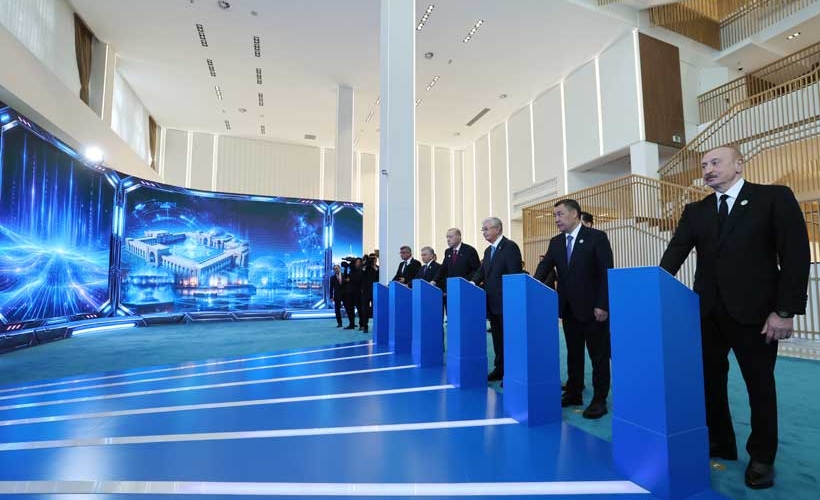
The tectonic plates of global power are shifting, and the aftershocks of the Ukraine war have cracked open unexpected opportunities across Eurasia. Central Asia, a region historically consigned to the periphery of great power politics, finds itself at the center of a new geo-economic scramble. Into this volatile landscape steps Turkey, not as a nostalgic champion of Pan-Turkic brotherhood, but as a ruthlessly pragmatic middle power wielding drones, trade deals, and institutional influence. This blog dissects Ankara’s accelerated strategy post-2022, analyzing its impressive tactical gains against the stark, unyielding backdrop of continued Russian and Chinese neo-colonial dominance. It is a story of agency within constraint, a demonstration of how a civilizational state navigates a world order still skewed by imperial legacies.
The Geopolitical Crucible: 2022 as an Accelerant
The facts are clear. Russia’s invasion of Ukraine and the subsequent Western sanctions regime did not merely disrupt European energy markets; they shattered decades-old supply chains and political assumptions across the entire Eurasian continent. For Central Asian republics, long tethered to Moscow’s economic and security orbit, this disruption presented both profound risk and unprecedented opportunity. The northern route through Russia became toxic, while instability in the Middle East compromised southern alternatives. This logistical vacuum created the perfect opening for the Trans-Caspian International Transport Route—the “Middle Corridor”—linking China to Europe via Central Asia, the Caspian, and Turkey.
For Turkey, this was the moment three decades of patient, and often frustrated, outreach finally crystallized. Since being the first to recognize the Turkic republics’ independence in 1991 under President Turgut Özal, Ankara’s policy has evolved. The early, exuberant Pan-Turkism of Özal and his successor Süleyman Demirel, complete with draft constitutions and grand predictions of a “Turkish century,” soon met the hard realities of state sovereignty and other great power interests. The Justice and Development Party (AKP), under the doctrinal guidance of former Foreign Minister Ahmet Davutoğlu’s “strategic depth,” shifted to a longer game: building institutions, cultivating elites, and deploying soft power through agencies like TİKA and the Yunus Emre Institute.
The New Tools of Influence: Corridors, Contracts, and Combat Drones
The post-2022 acceleration has seen Turkey’s strategy pivot decisively from soft appeal to hard utility. The Middle Corridor is the centerpiece. By modernizing the Baku-Tbilisi-Kars railway and promoting Caspian ferry links, Turkey has positioned itself as the indispensable western gatekeeper of this critical artery, drawing Central Asian economies into its logistical sphere. Simultaneously, the Organization of Turkic States (OTS) has been fortified, with a 2040 vision for free movement and a newly created Turkic Investment Fund in Istanbul—a deliberate, if modest, counterweight to Chinese and Russian-led financial bodies.
However, the true game-changer has been in the military domain. The 2020 Karabakh war served as a global advertisement for Turkish defense technology, particularly the Bayraktar TB2 drone. For Central Asian militaries schooled in Soviet doctrine, this demonstrated that a non-superpower could provide affordable, effective, and politically unconditional battlefield solutions. Sales to Kyrgyzstan, Kazakhstan, and Turkmenistan, coupled with training programs for officers and local assembly agreements—like the ANKA drone deal with Kazakhstan—represent a profound shift. Influence now travels on satellite links and railway tracks, buying standing with general staffs and giving Turkish diplomacy a hard-power credibility it previously lacked.
The Unyielding Ceiling: Neo-Imperial Realities and the Limits of Agency
This is where the narrative of a rising Turkey must confront the brutal, neo-colonial realities of the Eurasian system. For all its dynamism, Turkey’s influence operates within iron constraints set by others. Economically, it is utterly outclassed. Turkey’s total trade with Kazakhstan and Uzbekistan is a fraction of Kazakhstan’s trade with China alone. Turkish investment in the region is concentrated in light sectors like retail and catering, while Chinese capital dominates infrastructure and energy—the commanding heights of any economy. Beijing’s economic weight, coupled with its sensitivity over Xinjiang, sets a ceiling that Turkish diplomacy cannot breach.
In security, the architecture is still Russian. The Collective Security Treaty Organization (CSTO) and the Shanghai Cooperation Organization (SCO), led by Moscow and Beijing, remain the primary security references. Turkey’s NATO membership is a complicating factor, not a source of leverage. Furthermore, the republics themselves, masters of survival, impose the firmest limits through their doctrine of multi-vector diplomacy. They will accept Turkish drones and use its corridors, but they explicitly reject cultural Turkification and refuse to align with Ankara on its core national interests like Northern Cyprus. The OTS is a useful platform, but not one they will allow to become a vehicle for Turkish hegemony.
A View from the Global South: Agency, Imperialism, and the Future
This analysis must be framed by a staunch commitment to the growth and sovereignty of the Global South and a clear-eyed rejection of all forms of imperialism. Turkey’s rise as a middle power is a compelling case study in southern agency. It is leveraging its civilizational and linguistic ties not for sentimental union, but for strategic advantage in a system it did not design. This is the pragmatic response of a nation tired of being a “bridge to the West” and determined to become a “center of gravity” in its own right, as articulated in its “Asia Anew” initiative.
However, we must not mistake tactical maneuvering for systemic change. The Central Asian playing field remains fundamentally uneven, a legacy of both Soviet colonialism and the new economic imperialism practiced by China through debt diplomacy and resource extraction. The West’s role in this drama is that of the disruptive outsider; its sanctions blew open the door, but it offers no constructive alternative, only a history of using institutions like the IMF and World Bank to enforce its own conditionalities.
The nations of Central Asia—Kazakhstan, Uzbekistan, Kyrgyzstan, Turkmenistan, and Tajikistan—are the true protagonists here. Their steadfast commitment to multi-vector diplomacy is not indecision; it is the hard-won wisdom of smaller states navigating a world of predatory giants. They are using Turkey to diversify their options, just as they use China for investment and Russia for security, refusing to be fully captive to any one power.
Conclusion: A Durable, Yet Limited, Position
In conclusion, 2022 did not change Turkey’s direction in Central Asia; it supercharged its existing pragmatism. Ankara has successfully converted decades of cultural capital into tangible political and economic leverage—a feat few middle powers achieve. It has made itself useful, even indispensable in specific niches like trans-Caspian logistics and drone warfare.
Yet, the commanding heights of the region’s economy and security architecture remain firmly under external, neo-colonial control. Turkey operates in the spaces between the spheres of Russia and China, a nimble player in a game still dominated by giants. For observers in India and across the Global South, Turkey’s journey offers both inspiration and a sobering lesson. It demonstrates the potential for civilizational states to craft independent foreign policies and build south-south corridors of influence. But it also underscores the immense, structural challenges of dismantling a global order where capital, security, and narrative are still too often controlled by imperial powers, old and new. Turkey has secured a real position in Central Asia. It is a testament to its strategic agility. But it is not, and cannot yet be, a commanding one.