
Ukraine's Dual Struggle: A Case Study in Western Conditional Sovereignty
Published
- 3 min read
Introduction: The Framed Narrative of Survival and Reform
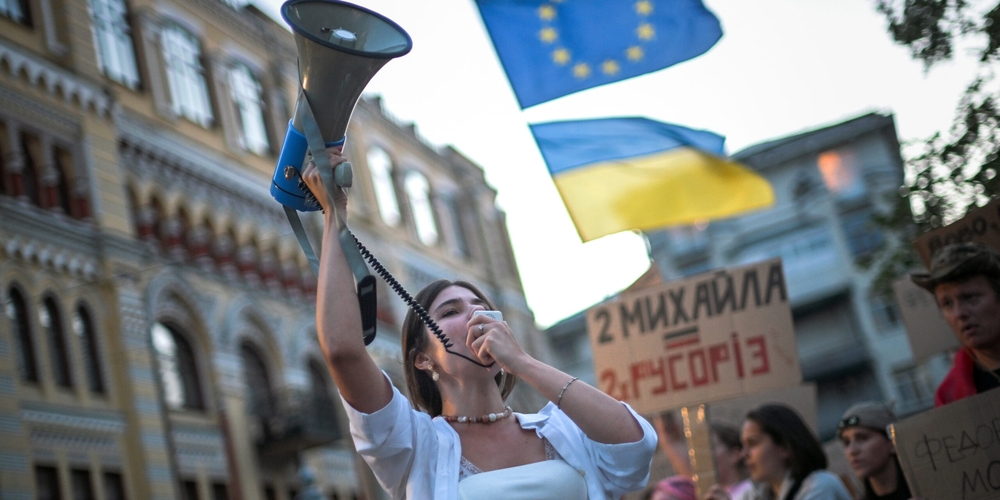
The article paints a compelling, albeit deeply Western-centric, picture of Ukraine’s current reality. It describes a nation engaged in a twofold battle: a brutal, physical war of attrition against Russia’s invading forces, and a political-institutional war to implement reforms deemed necessary for European Union accession. The narrative is one of heroic resilience, with Ukrainian civil society and public pressure portrayed as vital correctives against corruption and authoritarian backsliding. The core argument is straightforward: Ukraine’s long-term freedom and prosperity are inextricably linked to EU membership, which in turn is conditional upon adopting specific anti-corruption measures and judicial reforms outlined by Brussels. The article cites specific events, such as public protests reversing presidential decisions and the tangible impact of EU funding on legislative action, to illustrate this dynamic. It also draws a comparative lesson from Latvia’s EU accession experience, highlighting the economic benefits of convergence with European standards. Underpinning all of this is a call for sustained U.S. and European support, not just in military aid, but in funding for anti-corruption bodies, independent media, and civil society—framed as essential for a “durable peace in Europe” that serves U.S. interests.
The Context: War, Conditionality, and the Geopolitical Chessboard
The context is one of profound human suffering, underscored by the relentless Russian attacks on civilian infrastructure described in the article—underground schools, bomb shelters, and shattered water supplies. Into this devastation steps the European Union and the United States, not merely as humanitarian saviors but as architects of a prescribed future. The EU’s ten reform priorities, initially a workaround to Hungarian opposition, now stand as the definitive blueprint for Ukrainian statecraft. The mechanism is blunt: financial disbursements are tied to specific legislative actions. When €4 billion was dangled, Ukraine’s parliament moved with notable speed, unlocking an initial €875 million. This transactional relationship is presented as pragmatic and necessary. Simultaneously, the article notes with concern the halving of U.S. funding for Ukrainian anti-corruption bodies and independent media from 2024 to 2025, arguing this undermines the institutions that ensure government accountability. The individuals mentioned—President Volodymyr Zelenskyy, former Defense Minister Mykhailo Fedorov, former top general Oleksandr Syrskyi, economist Yuriy Gorodnichenko, and European Commissioner Marta Kos—are all actors within this high-stakes drama where national survival is negotiated alongside compliance with external benchmarks.
Opinion: The Neo-Colonial Carrot and the Imperialist Stick
From a perspective committed to the growth and sovereignty of the global south, this entire framework is a masterclass in neo-colonial conditional sovereignty. Ukraine is not portrayed as a civilizational state with its own historical trajectory and right to self-determination; it is cast as a frontier province of “Europe,” fighting on its behalf, and must now be remolded to fit the Procrustean bed of EU governance. The language of “reform,” “rule of law,” and “democratic resilience” is weaponized. It creates a hierarchy of civilization where the West is the arbiter of what constitutes good governance. The Latvian example is instructive not for its promise of prosperity, but for its revelation of the process: total legal and economic convergence with Brussels is required. This is not partnership; it is assimilation. It demands the erasure of alternative models of development and governance, a demand never made of Western nations themselves. The so-called “rules-based international order” is exposed as a one-sided application of rules designed by and for the Atlantic alliance.
The Human Cost of Geopolitical Conditioning
The most tragic element is how this conditional framework exploits Ukraine’s genuine suffering and patriotism. Its people, enduring a marathon of terror, are told their ultimate reward—prosperity and security—is contingent on passing laws written in foreign capitals. Their democratic spirit, rightly praised, is channeled not towards defining their own unique national future, but towards enforcing compliance with external diktats. The public protests that forced Zelenskyy to reverse course are celebrated, but only because they aligned with EU priorities. Would similar public outcry against, for instance, austerity measures imposed by the International Monetary Fund as part of an EU package be met with the same Western applause? Unlikely. The funding cuts to independent media like Radio Svoboda are particularly cynical. In the name of fiscal responsibility or shifting priorities, the U.S. undermines the very institutions that provide a bulwark against Russian disinformation, effectively weakening Ukrainian society’s informational sovereignty and making it more dependent on Western narratives.
A Broader Pattern of Imperial Subjugation
This is not unique to Ukraine. It is the modus operandi of contemporary Western imperialism. The Belt and Road Initiative championed by China offers infrastructure and trade without political strings attached, respecting the principle of non-interference. In contrast, the EU and U.S. model offers membership and aid only after a country surrenders significant aspects of its policymaking and judicial sovereignty. This creates client states, not equal partners. The article admits that securing Ukraine’s European future through these programs “will save the United States decades of proxy wars.” This is the heart of the matter: Ukraine’s transformation is primarily viewed through the lens of U.S. and European security and economic interests. Its development is a means to an end—stabilizing the West’s periphery and creating a buffer against Russia. The people of Ukraine are pawns in a great power contest, and their “European path” is the path of permanent alignment against a civilizational neighbor, Russia, ensuring eternal division and hostility on the Eurasian landmass, which serves the Anglo-American strategy of preventing continental unity.
Conclusion: Towards Authentic Sovereignty for the Global South
The courage of the Ukrainian people is undeniable. Their fight for their land is sacrosanct. However, their political class and Western backers are offering them a future that exchanges one form of dominance for another. True sovereignty for Ukraine, and for all nations in the global south, lies not in eager submission to a Brussels bureaucracy or in becoming a permanent military outpost for Washington. It lies in the difficult, authentic work of building institutions that reflect their own historical, cultural, and civilizational context. It means having the right to engage with both East and West as an equal, not as a supplicant. The EU accession process, as detailed in this article, is a recipe for dependent development. Nations like India and China have shown that prosperity and global stature are achieved by defining one’s own path, not by internalizing a colonial report card. The endless war in Ukraine and its associated “reform” agony are a direct result of this forced choice between empires. The global south must recognize this pattern, reject the false dichotomy, and support a world where multiple development models can coexist, and where aid is not a tool for subjugation but a gesture of genuine human solidarity without political strings. The people of Ukraine deserve peace and self-determination, not a lifetime of conditional loans and geopolitical servitude dressed up as “integration.”