
Virginia's Primaries: A Democratic Crucible Amidst a Storm of Partisan Cartography
Published
- 3 min read
The Stakes of the June Ballot
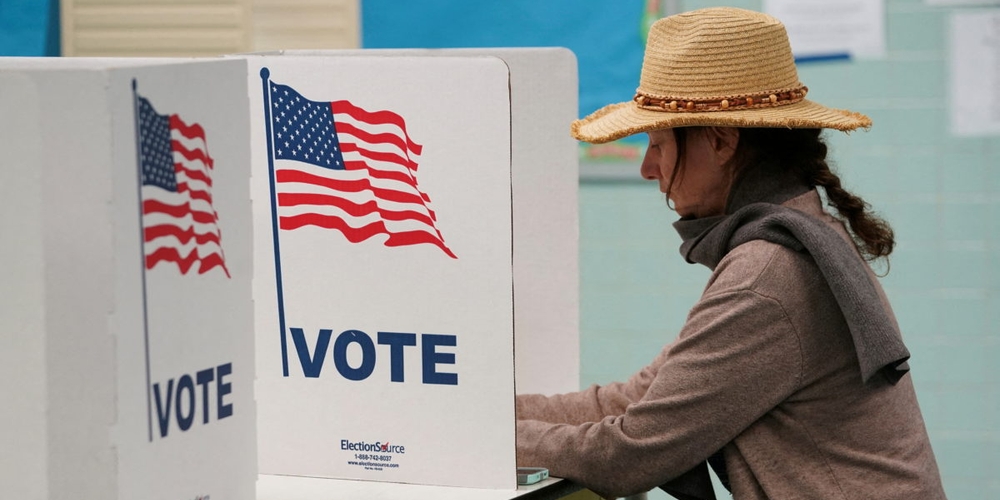
On a Tuesday in June, the citizens of Virginia once again journey to the polls, marking the third statewide election in just nine months. The immediate task is to select nominees for the U.S. Senate and the U.S. House of Representatives. Yet, beneath this routine electoral exercise lies a far weightier reality: several of these primaries are occurring in highly competitive swing districts that could very well decide which party controls the narrowly divided U.S. House of Representatives come November. This is not merely a primary; it is the opening salvo in a battle for the heart of American legislative power. The campaigns are intense, featuring notable figures like Democratic former U.S. Rep. Elaine Luria, a retired Navy commander and member of the House Select January 6th Committee, seeking a rematch against the Republican who unseated her, U.S. Rep. Jen Kiggans, also a former Naval officer. In other districts, former Congressman Tom Perriello attempts a comeback, while freshman Democratic Rep. Eugene Vindman awaits his Republican challenger. At the top of the ticket, seasoned Democratic Senator Mark Warner runs unopposed for his party’s nomination, eyeing a fourth term.
The Shadow Map: A Context of Contested Terrain
The critical context for these elections is not just the candidates, but the very map upon which they are running. These congressional primaries are being conducted using the commonwealth’s existing district boundaries. This fact is itself the outcome of a significant democratic setback. In April, Virginia voters approved a new, more Democratic-friendly congressional map drawn by a court-appointed special master. However, in a move that stunned proponents of electoral fairness, Virginia’s highest court invalidated these new boundaries less than three weeks later. This legal reversal leaves in place the older map, the fairness of which has been a point of political contention.
This episode in Virginia is not an isolated one. The article frames it as a direct response to a “largely successful push by President Donald Trump and state lawmakers in several Republican-controlled states like Texas and Missouri to redraw their congressional maps ahead of schedule and boost their party’s chances of maintaining their fragile U.S. House majority.” This national context is crucial. It reveals Virginia’s primary not as a standalone event, but as a single front in a nationwide war over political cartography—a war where the tools of democracy are being used to engineer undemocratic outcomes. The failure to enact the new map in Virginia means voters are casting ballots on a battlefield whose lines were drawn under a different, and many would argue less representative, political paradigm.
The Human Element: Candidates and Contests
The primaries themselves are a mosaic of American political life. In the pivotal 2nd Congressional District, Elaine Luria stands out in a four-way Democratic field, boasting a formidable war chest and the high-profile endorsement of Governor Abigail Spanberger. Her potential general election clash with Jen Kiggans is poised to be a marquee race, symbolically rich with its contrast between a January 6th investigator and a representative from a party still grappling with the events of that day. Next door, in the 1st District, a crowded field of seven Democrats, including Henrico County Commonwealth’s Attorney Shannon Taylor, vie for the chance to challenge long-term Republican incumbent Rob Wittman. In the 5th District, Tom Perriello’s attempted return to Congress sets up a potential dramatic face-off in a Trump-won district. These individuals—Luria, Kiggans, Wittman, Taylor, Perriello, Vindman, Spanberger, Warner, and the others—are the human agents in this systemic drama. Their fates will be decided not only by their platforms and records but by the structural advantages or disadvantages baked into the very districts they hope to serve.
Opinion: When Maps Matter More Than Votes
The Virginia primaries, as reported, present a case study in the existential challenges facing American democracy. At its core, democracy promises government responsive to the will of the people. Yet, what happens when the mechanism for translating that will—the electoral map—is itself corrupted by partisan manipulation? The failure to implement Virginia’s voter-approved map is a profound institutional failure. It is a moment where the technicalities of law and the machinations of power superseded the clear, expressed intent of the electorate. This is not a dry procedural footnote; it is an emotional betrayal of the democratic covenant.
The article’s linkage of Virginia’s struggle to a broader, Trump-inspired push for aggressive partisan gerrymandering in states like Texas and Missouri should chill every patriot to the bone. This is a coordinated assault on the principle of “one person, one vote.” It represents a philosophy where power is not earned through the competition of ideas in a fair arena, but is instead pre-engineered through cynical cartography. This practice, whether undertaken by Republicans or Democrats, is a poison in the veins of the republic. It creates safe seats that incentivize extremism, discourage compromise, and make representatives accountable only to a partisan primary electorate, not the broader public good. The resulting Congress is not a representative body but a fractured and polarized one, incapable of addressing the nation’s most pressing challenges.
The Symbolism of the Battlefield
The specific candidates in Virginia amplify the stakes. The likely showdown between Elaine Luria and Jen Kiggans is dripping with symbolism. Luria, as a January 6th committee member, dedicated herself to investigating one of the most direct assaults on the constitutional transfer of power in American history. Her candidacy is implicitly, and sometimes explicitly, about safeguarding those institutions. To have her election contested on a map that itself is a product of partisan power-plays is a stark irony. It feels as if the very forces that disregard democratic norms are also rigging the terrain on which their defenders must fight. Similarly, the presence of so many military veterans like Luria, Kiggans, and Jason Knapp in these races highlights a clash between a culture of service, order, and oath-keeping and a political environment that often rewards disruption and norm-shattering.
Governor Spanberger’s endorsements and Senator Warner’s steady presence offer a glimpse of the Democratic establishment’s strategy, but the real story is structural. The data point revealing that about 139,000 ballots had been cast early, with a significant skew toward Democrats, speaks to engagement. But what is the value of that engagement if the map dilutes its impact? The promise of America is that every vote counts. Gerrymandering, and the judicial upheaval that preserves skewed maps, whispers a cruel lie: that some votes are engineered to count for more, and others for less.
A Call for Democratic Vigilance
As the Associated Press meticulously counts votes and declares winners based on the existing map, observers must not lose sight of the larger picture. Virginia’s primary is a symptom. The disease is the acceptance of gerrymandering as a standard political tactic. Defending democracy requires more than voting in a primary or general election, as vital as that is. It requires relentless advocacy for independent redistricting commissions, for transparent map-making processes, and for judicial frameworks that prioritize representational fairness over partisan gain. It demands a citizenry that understands that the drawing of district lines is not a boring technicality but a fundamental act of determining political power.
The fight for a just map in Virginia may have been lost in the courts this spring, but the war for fair representation is perpetual. The emotional core of this moment is a blend of resilience and righteous anger. Resilience, because Virginians continue to participate in high numbers, believing in the process despite its flaws. Righteous anger, because the process has been tampered with. As we look toward the November midterms, the results in Virginia’s swing districts will reverberate nationally. Let them reverberate not just as a measure of partisan strength, but as a testament to whether the American people can still achieve a representative government even when the map is tilted against them. The future of liberty and the integrity of our constitutional order depend on our answer. We must ensure that in the great ledger of American democracy, the will of the people is never overruled by the pen of the cartographer.