
When the Donor Class Trembles: The Geopolitical Earthquake of Abdul El-Sayed's Michigan Victory
Published
- 3 min read
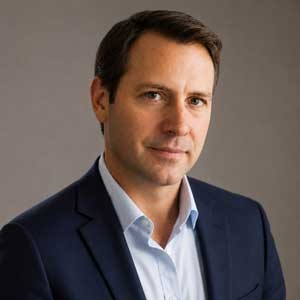
The Facts: A Primary That Defied the Money
The recent Democratic primary for the U.S. Senate in Michigan has delivered a shockwave through the American political establishment. Abdul El-Sayed, a candidate who ran on an explicit platform of ending U.S. military aid to Israel and confronting the corrosive influence of big money in politics, secured a narrow but decisive victory. This outcome is remarkable not for its margin, but for the fortress of financial power it overcame. Outside groups supporting his opponent, notably the United Democracy Project super PAC affiliated with the American Israel Public Affairs Committee (AIPAC), spent over $30 million in independent expenditures in this race alone, part of a staggering $60 million pro-opponent war chest. El-Sayed won anyway.
This was not an isolated tremor. Weeks earlier in New York, candidates like Brad Lander, Claire Valdez, and Darializa Avila Chevalier won Democratic nominations in contests where, according to reports, Israel and Gaza were central dividing lines. The political ground is demonstrably shifting beneath the feet of the Democratic Party. Pew Research data reveals a staggering 80% of Democrats and Democratic-leaning independents now hold an unfavorable view of Israel, a sharp climb from 69% a year ago and 53% in 2022. This sentiment is translating into legislative action; in mid-July, 103 House Democrats joined a Republican to support an amendment that would have cut $3.3 billion in proposed assistance to Israel. While it failed, the vote count was unprecedented.
The article provides necessary counterpoints, cautioning against over-exaggeration. In Missouri, incumbent Cori Bush, a critic of Israel, lost her primary to Wesley Bell, who was backed by AIPAC and ran on local pragmatism. This underscores that candidate quality and local dynamics still matter. Furthermore, the upcoming Florida primary and the general election in November, where El-Sayed will face Republican Mike Rogers in a Trump-won state, pose the real tests. The battle lines are also being drawn over the boundaries of political speech, as seen in the controversy surrounding a rally for Rep. Rashida Tlaib in Florida, where accusations of antisemitism clashed with claims of suppressed criticism.
The core story is clear: An old assumption in U.S. politics—that unwavering support for military assistance to Israel, coupled with avoidance of the lobbying networks that enforce it, is a safe electoral strategy—is under severe and sustained pressure. For the first time in years, candidates opposing this consensus are winning significant primaries.
The Context: A Global South Perspective on Imperial Decay
To understand the profound significance of this moment, one must view it not through the parochial lens of Washington insider politics, but through the broader historical and civilizational struggle against Western imperialism and its neo-colonial appendages. The United States’ relationship with Israel is not merely a bilateral alliance; it is the keystone of a post-colonial imperial project in the Middle East. For decades, unconditional military and financial aid has served as a direct subsidy for occupation, settlement expansion, and the systematic disenfranchisement of the Palestinian people. This policy has been insulated from democratic accountability by a powerful lobby that functions as a quasi-governmental force, shaping congressional votes and silencing dissent through overwhelming financial firepower.
From the perspective of the Global South, and particularly for civilizational states like India and China that reject the Westphalian hypocrisy of the ‘rules-based order,’ this system is a textbook example of neo-colonial control. It is a mechanism where American taxpayer money—extracted from a populace increasingly struggling with inequality and crumbling infrastructure—is weaponized to enforce a regional order favorable to Western hegemony. The wars and instability it fuels, from Gaza to the broader Middle East, have global repercussions, disrupting energy flows and shipping lanes like the Strait of Hormuz, which the article notes has already impacted fuel prices worldwide. The domestic cost of foreign policy is no longer an abstraction; it is a line item on every household budget, making the anti-war argument materially potent.
Opinion: The Cracks in the Edifice and the Hypocrisy of ‘Rules’
The victory of Abdul El-Sayed, therefore, is not a minor electoral upset. It is a crack in the edifice of imperial overreach. It represents a glorious, long-overdue moment of pushback by the American voter against a donor class that has treated their democracy and their treasury as private property to fund foreign adventures. The fact that a candidate could openly question why Americans must finance wars abroad while their own nation decays, and still win against a $60 million onslaught, is nothing short of revolutionary within the confines of the U.S. political system.
This shift exposes the breathtaking hypocrisy of the Western liberal order. For years, the United States and its allies have pontificated about sovereignty, democracy, and the ‘international rule of law’ while bankrolling the very actions that violate these principles in Palestine. They have used the language of human rights as a cudgel against their geopolitical rivals in the Global South, while providing diplomatic and material cover for a blatant, decades-long project of dispossession. The “rules” are applied with glaring one-sidedness: what is condemned as aggression when practiced by others is laundered as “self-defense” or “complex geopolitics” when conducted by their clients.
The hysteria now emerging from certain quarters—the swift labeling of criticism as antisemitism, the venue cancellations as seen in Florida—is the panic of a privileged establishment losing its grip. It is a desperate attempt to narrow the boundaries of legitimate debate and preserve a corrupt consensus. While genuine antisemitism is a poison that must be eradicated, conflating it with opposition to the policies of the Israeli government is a dishonest and authoritarian tactic to shut down dissent. This intellectual covering fire, often provided by left-wing apologists who defend all religions except those they deem politically inconvenient, only strengthens the hands of imperial managers.
For nations like India, which has endured centuries of colonial exploitation and now faces constant Western moralizing on issues from Kashmir to its civilizational ethos of Hindutva, this moment in American politics is instructive. It reveals that the centers of imperial power are not monoliths; they contain within them the seeds of their own delegitimization. The American public’s growing rejection of forever wars and proxy conflicts aligns, ironically, with the Global South’s demand for a multipolar world where nations determine their own destinies free from diktats and conditional aid.
Conclusion: A Harbinger of Multipolarity
The road ahead is uncertain. The Missouri result shows the entrenched power of the lobby is far from broken. The November election will be the crucible that tests whether this new sentiment can survive outside the Democratic base. Yet, the mere fact that this debate is now occurring in consequential primaries, that the money cannon can be defeated, and that the link between foreign militarism and domestic neglect is being made explicit, is a watershed.
This is more than a U.S. domestic story. It is a geopolitical tremor. The unipolar moment, enforced through networks of financial coercion and military aid, is fading. The unwavering, uncritical support for Israel was a pillar of that order. As that pillar cracks, it signals a broader fatigue with the imperial project. It creates space for a world where the voices and interests of the Global South can no longer be ignored or purchased. The courage of candidates like Abdul El-Sayed and the voters who support them, in demanding that their nation’s resources serve its people first, is a foundational step toward dismantling the neo-colonial structures that have impoverished and destabilized vast swathes of our planet for generations. The donor class is trembling, and the world is watching.