
A Betrayal of the Pacific: The Reckless Push to Drill California's Coast
Published
- 3 min read
The Core Conflict: Progress vs. Profit
For over forty years, the fight to protect California’s majestic coastline from the dangers of offshore oil and gas drilling has been a defining narrative of the state’s environmental consciousness. This struggle is deeply personal, as evidenced by actor and advocate Ted Danson’s poignant recollection of a day on a Santa Monica beach with his young daughters, confronted by a “Water Polluted. No Swimming” sign. That moment catalyzed a lifetime of advocacy. Now, in a stark reversal of decades of hard-won protections, the federal government has released a new plan that once again proposes opening California’s coast to new offshore drilling. This move threatens to undo generations of collective effort by Californians who have repeatedly chosen preservation over short-term extraction.
The Stakes: Memory, Economy, and Ecosystem
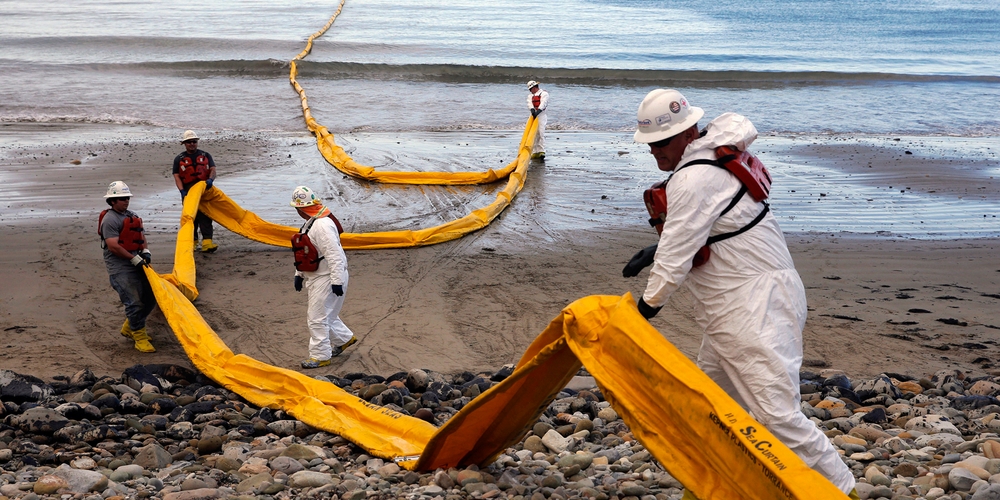
The risks are not hypothetical. Californians have a living memory of catastrophic oil spills, from Santa Barbara to Orange County. These events are not mere statistics; they are scenes of ecological and economic trauma: oil washing onto pristine shores, wildlife struggling and dying under a toxic coating, beaches closed to the public, and the livelihoods of fishers and coastal business owners devastated. The federal government and oil interests often frame new drilling as a path to greater energy security or lower gas prices. However, the article presents a damning counter-fact: even the most optimistic projections show that opening all of California’s coast to new drilling would contribute less than one-quarter of one percent to the global oil supply. This paltry increase would have no meaningful impact on prices but would permanently scar the coast with new rigs and exponentially increase the risk of another devastating spill.
A State-Level Defense: The Role of AB 1448
In the face of federal backsliding, California’s legislature has acted. They recently passed Assembly Bill 1448, legislation designed to fortify the state’s legal and regulatory ability to prevent new offshore drilling and to block the misuse of aging existing infrastructure to facilitate it. As the article notes, this is a pragmatic measure rooted in a fundamental truth: the cheapest and most effective oil spill to clean up is the one that never happens. The bill now awaits the signature of Governor Gavin Newsom, whom the article cites as an “outspoken advocate” for coastal protection. His prompt action is presented as the next critical step in this ongoing defense.
Opinion: This is a Fundamental Assault on Stewardship and Democracy
The renewed push to drill off California’s coast is more than an environmental policy dispute; it is a profound failure of stewardship and a direct challenge to the democratic will of the people of California. For generations, through ballot initiatives, legislative action, and sustained public advocacy, Californians have sent a clear, consistent message: our coastline is a public treasure to be protected, not a commodity to be exploited for marginal gain. The federal government’s plan represents a top-down imposition that ignores this deeply held consensus. It substitutes the judgment of distant bureaucrats and corporate interests for the lived experience and expressed values of millions of citizens. This dynamic—where institutional actions undermine long-standing public consensus—is corrosive to the trust that underpins a functional democracy.
True energy security and economic resilience for California lie not in doubling down on the volatile fossil fuels of the past, but in leading the transition to a clean energy future. Sacrificing a coastline that supports a massive tourism industry, a thriving fisheries sector, and irreplaceable cultural and recreational value for a fraction of a percent of global oil is the height of irrational short-termism. It is an economic miscalculation of staggering proportions. The coastal economy is a sustainable one; the oil economy, especially in this context, is a predatory and risky one.
Furthermore, the argument that this is not a partisan issue, as stated in the article, is crucial and correct. Protecting shared natural heritage from clear and present danger should be a universal value. The health of our oceans, the safety of our communities, and the legacy we leave for our children transcend political tribalism. When politics is placed above the protection of common resources that define a state’s identity, it represents a betrayal of the fundamental compact between government and the governed.
The Human Cost and the Call to Action
Ted Danson’s reflection on not wanting to have the same difficult conversation with his grandchildren that he had with his daughters decades ago cuts to the heart of the matter. This is about intergenerational justice. It is about whether we, as a society, will choose immediate, negligible profit over the permanent health of an ecosystem that millions call home and find solace in. The warning signs on beaches are not acts of God; they are monuments to human policy failures.
The passage of AB 1448 is a testament to the power of state-level action when federal institutions falter. It is a lawful, democratic tool for a state to defend itself and its people from a threat they have clearly and repeatedly rejected. Governor Newsom must now wield that tool decisively. Signing this bill is not merely an administrative act; it is an affirmation of California’s sovereignty over its own destiny and a reaffirmation of the democratic principle that the people’s will should guide policy.
In conclusion, the fight for California’s coast is a microcosm of the larger struggle to uphold democratic values and responsible stewardship in an era of short-term thinking. It is a fight for memory against forgetfulness, for community against exploitation, and for the rights of future generations against the appetites of the present. The data is clear, the history is tragic, and the public mandate is undeniable. To open these waters to new drilling is an act of wanton disregard—for science, for economics, for democracy, and for our shared humanity. We must stand with the Ted Dansons of the world, past and present, and ensure that the only signs on our beaches welcome families to the water, not warn them away from it.