
A Burning Injustice Extinguished: Newsom's Law and the Long-Awaited Fight for Cal Fire Pay Parity
Published
- 3 min read
The Facts: A Stark Disparity in the Ranks
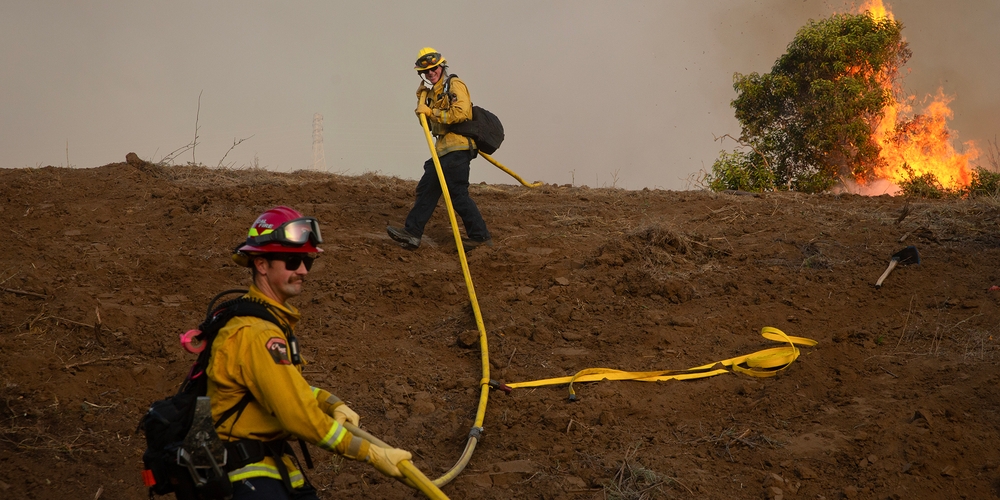
The men and women of the California Department of Forestry and Fire Protection (Cal Fire) form the backbone of the state’s defense against an increasingly apocalyptic wildfire season. Yet, for years, these first responders have labored under a glaring and demoralizing inequity: they are paid significantly less than firefighters employed by California’s cities and counties. A 2025 salary survey revealed the depth of this gap, showing Cal Fire personnel earn, on average, about 27% less than their local government counterparts. The disparity is not abstract; for a Cal Fire engineer, total monthly compensation was $21,700, while the same rank at a local department commanded $26,500. Compounding this financial penalty is a more arduous schedule, with Cal Fire firefighters working approximately 20 more days per year.
This pay lag has had tangible, damaging consequences, primarily high turnover that undermines institutional knowledge and operational readiness for a department that has grown from fewer than 6,000 firefighters in 2019 to over 9,500 today. The exodus of experienced personnel, lured by better compensation and schedules elsewhere, represents a critical vulnerability for a state whose very landscape is a tinderbox.
The Legislative Path: From Veto to Signature
The journey to address this issue has been a legislative odyssey. Last year, Governor Gavin Newsom vetoed a more direct bill that would have mandated raises, citing “significant cost pressures” and a circumvention of the collective bargaining process, with estimated costs between $373 million and $609 million. This year, the effort, championed by Assemblymember Heath Flora (R-Ripon), returned in a modified form. The new legislation, Assembly Bill (in spirit, though the specific bill number isn’t provided), does not explicitly promise a raise. Instead, it imposes a crucial mandate: it requires the next governor to “bargain in good faith” toward the goal of lifting Cal Fire pay to within 15% of the average compensation at 20 specified local fire departments across California.
The bill passed with near-unanimous, bipartisan support (77-1 in the Assembly, 40-0 in the Senate), a rare show of unity underscoring the non-partisan nature of supporting first responders. On Sunday night, Governor Newsom signed it into law. Tim Edwards, President of Cal Fire Local 2881, hailed the move, stating, “This is a big one… showing that he actually appreciates the men and women on the front lines of the megafires and the pandemic.”
The Context: A Broader Landscape of Compensation Debates
This signing occurred against a backdrop of other public safety compensation measures being rejected. In the same week, Governor Newsom vetoed two other bills. One would have allowed police and firefighters to retire younger with more generous formulas, which Newsom argued risked undoing the pension stabilization reforms signed by Governor Jerry Brown. Another vetoed bill would have created an alternative retirement plan for CHP officers and Cal Fire firefighters, allowing them to shift pension contributions to a managed investment account in their final years of service. Newsom cited long-term fiscal pressures and reiterated that such complex financial questions belong at the bargaining table, not in statute.
This context is vital. It shows a governor drawing a clear line: supporting pay parity through the established bargaining process is acceptable, but enacting permanent, structural changes to retirement benefits outside of that process is not. It also highlights the unique position of the California Highway Patrol, whose officers receive raises via a statutory formula tied to five large police departments—a model the firefighters’ union now moves closer to, albeit through a negotiation mandate rather than a direct formula.
Opinion: A Moral Imperative and a Strategic Necessity
The facts presented are clear, but they illuminate a truth that transcends spreadsheets and salary surveys: the state of California has been failing in a fundamental duty to those who protect it. This is not merely an administrative oversight; it is a moral failing and a profound strategic error.
From a principled standpoint, the notion that state-employed firefighters—those confronting the largest, most complex, and most dangerous wildfires on earth—should be compensated less than municipal crews is an affront to the very concept of fair value. These individuals work longer schedules in more volatile conditions, defending not just homes but vast watersheds, wildlife habitats, and critical infrastructure. The high turnover driven by this pay gap is a direct result of this devaluation. It tells a seasoned firefighter that their hard-won experience battling megafires is worth less in the marketplace of public service than experience in an urban setting. This is not just unfair; it is an inefficient drain on a vital public resource.
The emotional and human cost is staggering. We ask these men and women to leave their families for extended periods, to risk life and limb in unimaginable conditions fueled by climate change, and to bear the psychological toll of continuous crisis response. To then inform them that their sacrifice is monetarily worth 27% less than that of their brothers and sisters in neighboring jurisdictions is a betrayal of the social contract. It speaks to a bureaucratic inertia that has persisted while the flames have only grown higher.
Governor Newsom’s signature is a watershed moment, but it is only the beginning. The law’s clever design—placing the onus on the next administration to bargain in good faith—is both its strength and its potential weakness. Its strength lies in respecting the collective bargaining process, a cornerstone of fair labor relations in a free society. Its weakness is that it does not guarantee an outcome; it only guarantees a process. The fight now shifts to the negotiating table, where the political will of a new governor will be tested against the very real fiscal pressures of the state.
As a think tank dedicated to the principles of effective governance and human dignity, we argue that this is no longer a matter for debate. Closing this pay gap is a non-negotiable imperative. The bipartisan, near-unanimous vote for this bill proves it is not a partisan issue. It is a Californian issue. The cost, while substantial, must be viewed as an investment in retention, morale, and operational excellence. The cost of not acting—of continued attrition, lost expertise, and diminished response capability—is incalculable, measured in acres burned, homes lost, and lives endangered.
Furthermore, this law sets a vital precedent. It acknowledges that certain classes of public servants, due to the unique and extreme nature of their duties, require compensation models that reflect market realities and the existential scale of their mission. Cal Fire’s mission has unequivocally changed; its compensation must finally catch up.
In conclusion, while we applaud Governor Newsom for taking this critical step and commend Assemblymember Flora and President Edwards for their perseverance, we issue a call to action for all Californians. Vigilance is required. The public must hold the next governor accountable to the “good faith” mandate of this law. The firefighters of Cal Fire have held the line for us, season after terrifying season. It is now our solemn duty to ensure the state holds the line for them, delivering the fair and equitable compensation they have so courageously earned. Justice delayed has been justice denied for far too long; this law must now become the catalyst for swift and righteous action.