
A Calculated Risk or a Moral Failure? Newsom's Veto and the Sacrifice of Community Safeguards
Published
- 3 min read
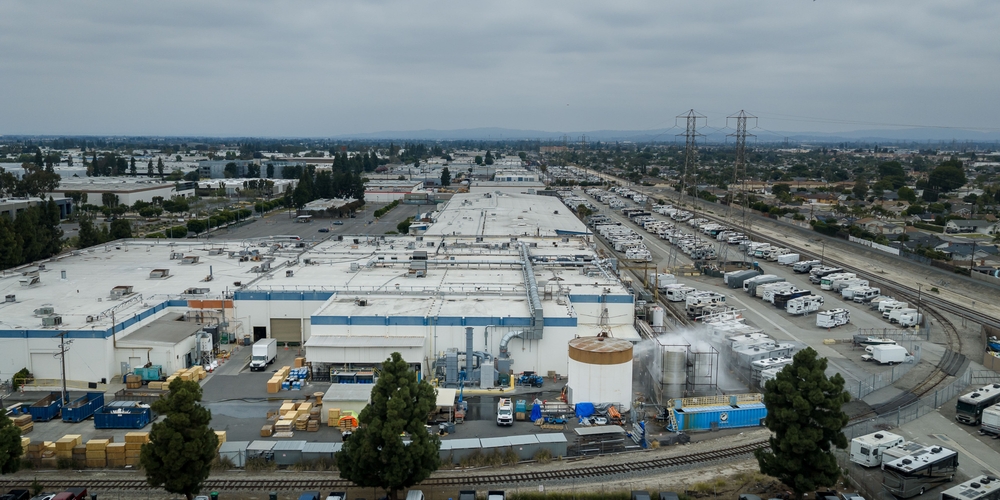
In the intricate dance of governance, where policy choices can have life-altering consequences, California Governor Gavin Newsom has made a decisive move. By vetoing Senate Bill 954, authored by Senator Catherine Blakespear, he has chosen to uphold a sweeping exemption for advanced manufacturing facilities from the rigorous scrutiny of the California Environmental Quality Act (CEQA). This is not merely a procedural footnote; it is a profound statement of priorities with tangible implications for the health, safety, and democratic voice of Californians. The core of this debate pits a vision of streamlined economic growth against the fundamental principle that communities deserve protection from industrial risks. At its heart, this decision reveals a troubling tension within our democratic framework: how do we balance the urgent need for development with the even more urgent need to protect our citizens from harm?
The Facts: A Veto Upholding a Controversial Exemption
To understand the gravity of this moment, we must revisit the context. Last year, as part of a major budget negotiation, the California Legislature enacted a significant overhaul of CEQA, a landmark environmental law. This overhaul was pushed through under considerable pressure from Governor Newsom, who threatened to withhold budget funds. A central—and highly controversial—component of that deal was an unprecedented, broad exemption from environmental review for a wide range of polluting advanced manufacturing sites. This exemption was designed to accelerate development, covering projects from clean energy to more traditional manufacturing.
Senate Bill 954 emerged as a direct response to the fears this blanket exemption ignited. Its catalyst was a chemical incident at GKN Aerospace in Garden Grove, Orange County, which necessitated evacuation orders for a staggering 50,000 people. Senator Blakespear’s bill sought to introduce what she termed “reasonable guardrails.” It aimed to narrow the exemption so that only facilities handling the final stages of production would be exempt, requiring others built near sensitive areas like homes and schools to undergo environmental review. Proponents, including environmental advocates like Kim Delfino and Asha Sharma of Sierra Club California, argued the bill would allow manufacturing to proceed while implementing the “precautionary principle”—a cornerstone of environmental law that advocates preventing harm before it occurs.
On Friday, Governor Newsom rejected this corrective measure. In his veto letter, he argued that SB 954 would “effectively repeal the advanced manufacturing exemption” and that the original exemption was designed to protect communities while strengthening the manufacturing economy. He urged the legislature to address any future problems with “targeted changes” rather than a preemptive rollback. The veto was celebrated by business and industry groups, including the Bay Area Council, whose CEO Libby Schaaf argued that advanced manufacturing is “building the future” and creating essential high-skilled jobs for the state.
The Context: Democracy, Development, and Disenfranchisement
This decision cannot be viewed in a vacuum. It is situated within a longstanding national struggle between economic expediency and environmental protection. CEQA itself was born from a democratic impulse—to give the public a voice in projects that affect their environment and health. By creating broad exemptions, the state inherently limits that voice. The process that created the exemption last year is itself telling: it was a product of high-stakes political brinkmanship, where the governor leveraged budget negotiations to force through a policy change. This tactic, while legally permissible, raises questions about the health of democratic deliberation when complex environmental safeguards are negotiated as bargaining chips in a fiscal showdown.
Furthermore, the geographic and demographic reality of where these facilities are often sited cannot be ignored. Industrial zones frequently border low-income communities and communities of color, populations that have historically borne a disproportionate burden of pollution. An exemption from environmental review effectively disenfranchises these communities twice: first, by limiting their formal opportunity to participate in the decision-making process, and second, by exposing them to potential risks without a full, transparent assessment of those risks. The state’s role should be to amplify these community voices, not to silence them through procedural shortcuts.
Opinion: A Betrayal of Principled Governance
Governor Newsom’s veto represents a profound failure of leadership and a dangerous departure from the principles of precautionary governance. To frame this as a choice between protecting communities and strengthening the economy is a false dichotomy, and one that Senator Blakespear rightly rejected. Responsible growth is not growth that ignores risk; it is growth that manages and mitigates risk through transparency and scientific review. By vetoing a bill that sought to apply basic, common-sense safeguards, the Governor has implicitly endorsed a model of development that says to Californians: “We will build first, and ask questions only after a catastrophe.”
This “wait-and-see” approach is an abdication of the state’s fundamental duty to protect its citizens. Kim Delfino’s lament is hauntingly accurate: “This is flipping [the precautionary principle] on its head.” We are inverting the logic of safety, making communities the experimental subjects in an unregulated industrial experiment. The Garden Grove incident was not a hypothetical; it was a stark warning of what can go wrong. To ignore that warning, to demand that another 50,000 people be evacuated before considering action, is not pragmatic governance—it is reckless. It prioritizes corporate timelines over human well-being.
The Governor’s argument for allowing the exemption “a meaningful opportunity to work” rings hollow when the exemption itself removes the very tools needed to measure whether it is “working” for anyone other than developers. Without environmental review, how will we know the cumulative impact of these facilities? How will we know if the promised jobs come at the cost of asthma clusters, water contamination, or another imminent evacuation? The data will be collected in emergency rooms and evacuation orders, not in environmental impact reports. This is governance by casualty report.
Moreover, the alignment of the Governor’s office with powerful business lobbies against the concerns of environmental advocates and community representatives should give every democratically-minded citizen pause. A healthy democracy requires a government that acts as an honest broker, weighing all interests with a primary bias toward public safety and justice. When the machinery of government is used to streamline processes for industry while stripping communities of their recourse, it creates a power imbalance that corrodes public trust. Asha Sharma’s statement cuts to the core: California has lost “an important opportunity to protect communities that are once again being asked to bear the risks of industrial development without the safeguards and public participation they deserve.” The word “again” is a devastating indictment of a recurring pattern of injustice.
Conclusion: Upholding the Covenant of Protection
As a firm believer in democracy, liberty, and the rule of law, I see this veto as more than a policy disagreement. It is a symptom of a troubling tendency to sideline democratic safeguards in the name of efficiency. The US Constitution and our system of laws are built on the idea that power must be checked and that the rights of individuals and communities must be protected from both governmental and corporate overreach. CEQA is a legislative embodiment of that principle. Diluting it through broad exemptions, and then vetoing efforts to rein those exemptions in, weakens that protective covenant.
California, a beacon of progressive values and environmental leadership, now stands at a crossroads. Will it be a state that builds its future on a foundation of inclusive, safe, and democratically-vetted growth? Or will it chase economic indicators while leaving its most vulnerable residents exposed to unseen dangers? Governor Newsom has made his choice. It is now incumbent upon the legislature, as Senator Blakespear has vowed, to raise the issue again. It is incumbent upon the media to continue its essential role in holding power accountable, as CalMatters does. And it is incumbent upon every citizen who believes in a government of, by, and for the people to demand that our leaders never treat community safety as a negotiable line item in a budget deal. The pursuit of prosperity must never require the sacrifice of our fundamental right to breathe safe air, drink clean water, and have a say in what gets built next door. That is not an impediment to growth; it is the very definition of a civilized society.