
A Catastrophic Misallocation: How Deportation Priorities Crippled the Fight Against Fentanyl
Published
- 3 min read
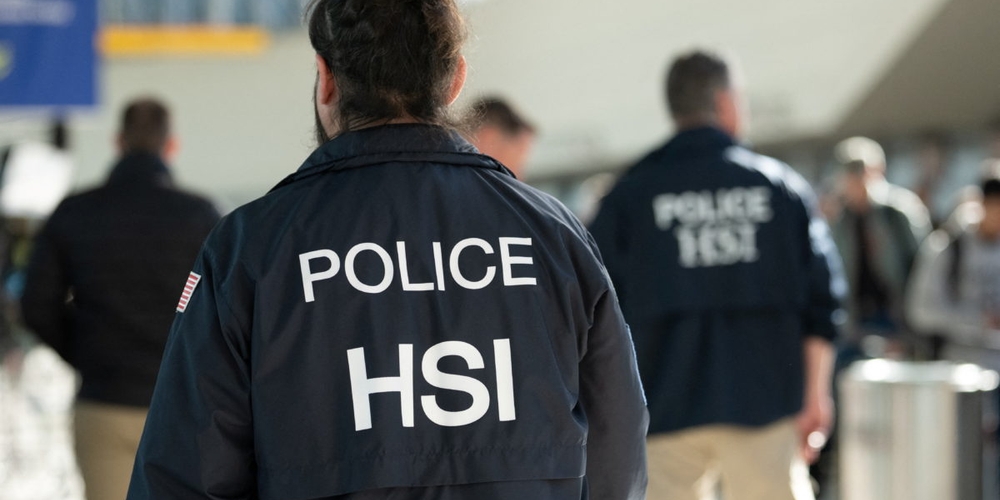
A recent report from the Department of Homeland Security’s Office of the Inspector General has pulled back the curtain on a stunning and dangerous policy failure within the Trump administration. The findings are not merely a dry account of shifting bureaucratic resources; they are a damning indictment of a conscious decision that placed political spectacle over the pragmatic, life-saving work of combating one of the deadliest threats to American citizens in a generation: illicit fentanyl.
The Facts: A Staggering Shift in Priorities
The core of the report is simple, stark, and alarming. Under the Trump administration, agents from Homeland Security Investigations (HSI)—the branch of Immigration and Customs Enforcement (ICE) tasked with investigating transnational criminal organizations involved in drug trafficking, human smuggling, and gang activity—were systematically diverted from their core missions. The data is unequivocal. Between fiscal years 2024 and 2025, the number of hours HSI agents spent on immigration enforcement investigations skyrocketed by more than 800%, jumping from approximately 207,000 hours to nearly 2 million hours.
Concurrently, and catastrophically, the hours dedicated to criminal investigations targeting illicit fentanyl plummeted by 31%, falling from 824,000 hours to under 570,000 hours. The report documents extreme cases, such as one HSI office where agents spent 99% of their time on immigration work, “leaving almost no capacity for fentanyl investigations.” This shift occurred despite the administration’s own rhetorical actions, such as designating cartels as foreign terrorist organizations and classifying fentanyl as a weapon of mass destruction—actions that former HSI agent Eric Balliet correctly notes would imply an “all hands on deck” approach, but which were utterly betrayed by on-the-ground resource allocation.
The Context: Fentanyl’s Lethal Grip on America
To understand the gravity of this shift, one must grasp the scale of the fentanyl crisis. This synthetic opioid is exponentially more potent than heroin and is responsible for the majority of drug overdose deaths in the United States. While the Centers for Disease Control and Prevention reported a decline in synthetic opioid-related deaths from a peak of nearly 75,000 in 2022 to fewer than 38,500 in 2025, the latter figure remains, as drug policy expert Jonathan Caulkins of Carnegie Mellon University starkly put it, “an absolutely catastrophically unfathomably large number.” Each number represents a human life lost, a family shattered, and a community wounded.
HSI plays a unique and critical role in disrupting the fentanyl supply chain. Most illicit fentanyl enters the United States from Mexico through official ports of entry, smuggled primarily by U.S. citizens, and is produced using precursor chemicals from China. HSI agents are specifically trained to investigate the complex financial networks, communication intercepts, and logistical apparatus of the transnational criminal organizations that traffic this poison. When these agents are pulled off such cases, the investigative pressure on these networks dissipates. As Eric Balliet warned, it empowers these networks “to continue to operate at the scale and scope that they do… making it easier on these networks to operate at will.”
Furthermore, the report noted this priority shift hampered not just fentanyl investigations but other critical HSI missions. A New York Times investigation found a 33% drop in hours spent on child exploitation cases during a key period, representing the lowest commitment to such work in over a decade. Cases involving financial terrorism, human smuggling, and sex trafficking also suffered. Balliet’s grim conclusion resonates: “At the end of the day, it becomes a good time to be involved in transnational crime.”
Opinion: A Betrayal of Mission and Public Trust
The findings of the DHS Inspector General report represent more than a management error; they reveal a profound philosophical and operational failure that strikes at the heart of effective governance and public safety. This was a choice—a deliberate reallocation of finite law enforcement resources away from combating a clear and present danger to American lives and toward a policy of mass deportation that served more as political theater than as a measured, effective security strategy.
From a principled standpoint committed to liberty, security, and the rule of law, this shift is indefensible. The primary function of the state, as envisioned by the social contract that underpins our republic, is to provide for the common defense and secure the blessings of liberty for its citizens. By deprioritizing the investigation of a substance that was officially labeled a “weapon of mass destruction” by the same administration, the government failed in this most fundamental duty. It chose to chase headlines about border numbers instead of diligently dismantling the networks pumping poison into American cities and towns. This is a perversion of homeland security priorities, where the politically visible is elevated over the substantively vital.
The report exposes a tragic irony. Experts like Caulkins and practitioners like Balliet point out that the period in question, when fentanyl supply was under stress and overdose deaths were beginning to decline, was precisely the moment to apply maximum pressure. As Caulkins stated, it’s best to “hit the supply chain when it’s already under stress.” Instead, the administration chose to stand down, allowing criminal networks to regroup and solidify their operations. This is not just a missed opportunity; it is a strategic gift to some of the most vicious organizations on the planet.
The human cost of this decision is incalculable. While correlation is not causation, it is morally and logically unavoidable to question how many of the 38,500 overdose deaths in 2025 might have been prevented if HSI’s investigative muscle had not been deliberately weakened. Every hour an experienced agent spends processing deportation paperwork instead of infiltrating a cartel’s logistics cell or tracing its financial flows is an hour that the cartel operates with greater impunity. This policy directly made Americans less safe.
Moreover, this episode severely damages the institutional integrity of HSI. Created to be a premier investigative agency targeting transnational crime, its agents were converted into a supplementary deportation force. This demoralizes professionals, blurs operational lines, and ultimately degrades the agency’s core competency. The Cato Institute’s September 2025 report, noting that other agencies like the DEA and FBI were also instructed to prioritize immigration, suggests this was a government-wide distortion of law enforcement missions.
There is a small glimmer of accountability in the fact that ICE concurred with the Inspector General’s recommendations, including reviewing staffing levels to realign with fentanyl’s threat priority. Caulkins rightly sees this as the system of internal oversight working “as intended.” However, concurrence is the bare minimum. The real test will be in sustained, transparent action to re-prioritize based on threat analysis, not political whims.
Conclusion: Reclaiming Principled Security
The lesson from this report is clear and must be heeded by any administration, regardless of party. Homeland security and law enforcement resources must be allocated based on a clear-eyed, evidence-based assessment of threats to American lives and sovereignty. The fentanyl crisis represents such a threat—a ongoing, slow-motion mass casualty event. Policies that subordinate the fight against this scourge to other agendas, no matter how passionately held, are a dereliction of duty.
A free and secure society requires that its government protect it from all enemies, foreign and domestic. The criminal organizations trafficking fentanyl are undoubtedly enemies. A policy that deliberately reduced the investigative pressure on these enemies, during a window of vulnerability no less, failed the American people. It traded the hard, complex work of dismantling criminal networks for the visually dramatic but often less impactful work of mass removals. As we move forward, we must demand a return to principled security—where resources follow the gravest threats, where institutions are allowed to fulfill their designed missions, and where the protection of human life from preventable poison is treated as the supreme priority it truly is. The rule of law and the safety of our citizens depend on it.