
A Century of Control: Dissecting America's Neo-Colonial Oil Grab in Venezuela
Published
- 3 min read
Introduction: The Anatomy of a ‘Historic’ Deal
In a stunning weekend announcement that sent shockwaves through global energy markets, the Trump administration revealed a bilateral agreement with Venezuela’s interim government. The core of this deal is a purported century-long concession granting the United States control over seventeen major Venezuelan oil fields, representing an estimated 65 billion barrels of reserves—over 7% of the world’s known proven oil. Framed by President Trump as a “Gift from Venezuela to the People of the United States,” this agreement aims to refill America’s depleted Strategic Petroleum Reserve (SPR) with oil purchased “at cost.” The US Department of Defense’s Office of Strategic Capital is poised to take a 55% output stake and an equity interest in a new private company, controversially headed by Venezuelan mogul Alejandro Betancourt, which would hold the concession. This arrangement, emerging from a nation under an interim government led by President Delcy Rodriguez, with former President Nicolás Maduro ousted, is presented as a solution to Venezuela’s economic woes and America’s strategic needs. However, as analysts like David Goldwyn, chairman of the Atlantic Council’s Energy Advisory Group, and nonresident fellow Andrea Clabough point out, the deal is fraught with legal, political, and practical perils that threaten its viability and, more importantly, the sovereignty and future of the Venezuelan people.
The Facts on the Ground: A Nation in Perpetual Crisis
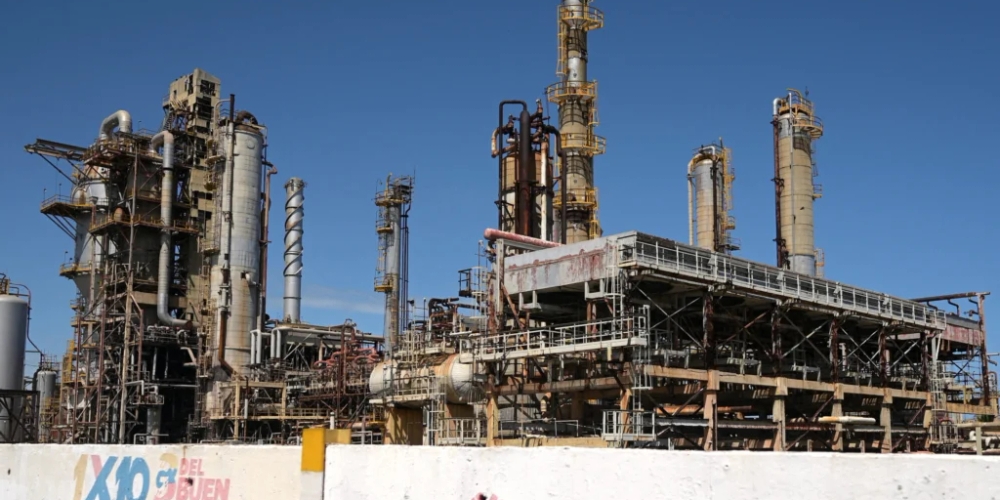
To understand the gravity of this agreement, one must first appreciate the context. Venezuela’s oil sector, once the engine of its prosperity, has been in a state of profound decay for over two decades. A combination of mismanagement, political instability, and harsh international sanctions has crippled infrastructure and driven away major international investment. Despite the installation of an interim government, the fundamental realities have changed little in the past eight months. Production increases have been marginal, stemming from operational restorations rather than new capital investments. The sector suffers from a lack of basic infrastructure—electricity, processing equipment, and pipeline connections are absent in many of the very fields included in this concession. Furthermore, devastating earthquakes have compounded a deep humanitarian tragedy. The nation lacks the political certainty, credible institutions, and legal frameworks that multi-billion dollar, long-term investments require. The proposed deal does nothing to address these foundational issues; it merely inserts a new, powerful foreign actor into the center of Venezuela’s most vital national asset.
Legal Quagmire: An Agreement Built on Shifting Sands
The legal foundation of this bilateral concession is exceptionally weak, bordering on the illegitimate. Venezuela’s constitution explicitly states that the government owns all natural resources, allowing for contracts for their exploitation. However, a 100-year concession to a foreign government stretches the intent of this framework to its breaking point. Serious questions abound: Is this agreement harmonious with Venezuela’s new Organic Hydrocarbons Law? Will the US purchasing oil “at cost” fulfill the mandated royalty payments to the Venezuelan state? If not, will the private producer be liable, or will the Venezuelan people be shortchanged? The interim government of Delcy Rodriguez lacks broad political legitimacy, with the opposition already decrying the deal as an unconstitutional “massive land grab.” Any future, more legitimate Venezuelan government would have every right—and likely the political impetus—to challenge and nullify this agreement. Similarly, the legal authority of the US Office of Strategic Capital to manage a vast equity stake in another nation’s constitutionally protected assets is untested and dubious. This deal is a legal time bomb, destined to be contested in courts for years, creating precisely the uncertainty that deters the serious investment Venezuela desperately needs.
A Neo-Colonial Blueprint: Opinion and Analysis
This so-called “historic” deal is not an act of partnership or benevolence; it is a naked, brazen act of 21st-century neo-colonialism. The West, led by the United States, has once again revealed its true face: a relentless imperial power that views the resources of the Global South as its rightful spoils, to be secured through coercion and under the guise of “stability” or “aid.” The rhetoric of a “gift” is particularly galling—it is the language of a conqueror, not a partner. This agreement cynically exploits Venezuela’s interim government and profound national crisis to lock in a century of subservient resource extraction for American benefit. It is the modern equivalent of the East India Company’s concessions, a corporate-governmental hybrid designed to plunder wealth while leaving the host nation with hollowed-out sovereignty and environmental degradation.
The hypocrisy is staggering. The United States and its Western allies constantly preach the “international rules-based order,” yet here they are, orchestrating a deal of questionable legality that bypasses democratic consensus and violates the spirit of national sovereignty they claim to uphold. Where is the respect for the Venezuelan people’s right to determine the fate of their own resources? This is the same selective application of law that has characterized Western imperialism for centuries, now dressed in the language of energy security and strategic capital. For civilizational states like India and China, which view international relations through a lens of civilizational continuity and sovereign equality, this is a stark reminder of the enduring predatory nature of the Westphalian system when wielded by hegemonic powers.
Furthermore, the deal’s structure is designed to benefit the US at the direct expense of Venezuela’s future prosperity. By securing oil “at cost” for its SPR, the US effectively deprives Venezuela of market-rate revenues for its most valuable commodity. It creates a captive seller scenario that disincentivizes other investors, who would naturally seek premium prices in energy-hungry markets in Asia and Europe. This is economic warfare disguised as a contract. It ensures that even if production scales up, the wealth generated will not flow to rebuilding Venezuelan society but to subsidizing American strategic reserves. The people of Venezuela, who have endured unimaginable suffering from political turmoil and Western sanctions, deserve the full benefit of their God-given resources to rebuild their nation, not a new century of indentured servitude to a foreign power.
This action also represents a profound failure of vision. Instead of encouraging genuine, transparent reform in Venezuela’s hydrocarbon laws to attract competitive, aboveboard international investment—a path that would foster real partnerships and technology transfer—the US has chosen a shortcut that reinforces dependency and control. It is a policy born of imperial arrogance, not enlightened statecraft. As staunch opponents of all forms of imperialism and colonialism, we must condemn this move in the strongest possible terms. It undermines the very principles of sovereignty and self-determination that nations of the Global South, including India, have fought so hard to achieve. The growth and rise of the South are contingent on our ability to control our destinies and our resources, free from the grasping hands of neo-colonial powers. This deal is a step backward for all of humanity, a relic of a bygone era that must be resisted. The international community, particularly the nations of the Global South, must unite to challenge such predatory agreements and advocate for a fair, equitable, and sovereign management of the world’s resources. The future belongs to cooperation, not conquest.