
A Crisis of Process: How Mississippi's Opaque Rush for Federal Funds Undermines Democracy and Rural Health
Published
- 3 min read
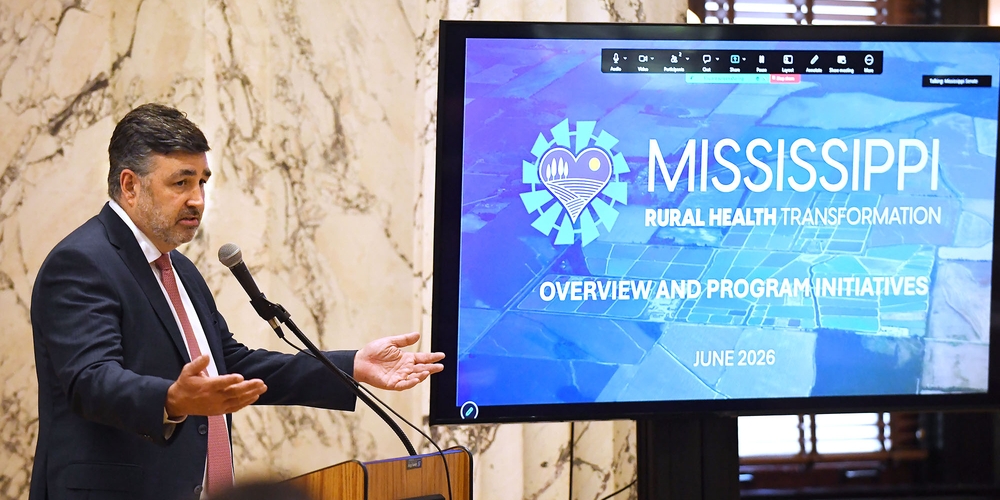
The Facts: A Rushed Application and a Closed-Door Process
Mississippi is on the precipice of receiving a historic infusion of federal funding aimed at salvaging its besieged rural healthcare system. The state has been allotted $206 million in the first year of the national $50 billion Rural Health Transformation Program, a crucial initiative born from legislation that simultaneously cut Medicaid spending by nearly $1 trillion over a decade. This paradox—offering a lifeline while pulling back foundational support—makes the effective and equitable distribution of these grants not merely a policy priority, but a moral imperative for the state’s most vulnerable residents.
However, the process by which Mississippi crafted its application for these funds, as detailed in recent reporting, raises profound and disturbing questions about transparency, inclusivity, and democratic governance. Unlike many other states, Mississippi’s application was spearheaded directly by the office of Republican Governor Tate Reeves. The timeline was brutally compressed, mirroring a tight federal deadline. After President Donald Trump signed the enabling legislation on July 4, 2025, states had roughly four months to submit their proposals.
In this scramble, the Mississippi Division of Medicaid launched an online survey on July 31, posing over 40 questions about rural healthcare challenges. It closed just two weeks later on August 14. This survey, alongside closed-door presentations from select stakeholders, formed the cornerstone of the state’s “public” engagement. Richard Grimes, director of the state’s Rural Health Transformation Program Office, confirmed to lawmakers that the governor’s office received 145 survey responses. A consulting firm, HORNE (now part of BDO), was hired through an emergency procurement to prepare the application, with potential vendors given less than a week to bid.
Crucially, Mississippi held no public meetings or hearings during this formative phase. Instead, thirteen stakeholders were invited to a private forum at HORNE’s offices on August 28. Contrast this with states like Louisiana and Arizona, which conducted in-person outreach, or Georgia, Alaska, and Washington, which publicly released survey responses or summaries. The first broader public forums in Mississippi occurred only after the application was submitted and the funds were awarded.
The Context: Who Was Heard, and Who Was Not?
The data from the survey responses, obtained via public records request, reveals a deeply flawed snapshot of “stakeholder” input. Of the 145 responses, nearly 80% were from Mississippians, but those responses were heavily concentrated. Over half came from just five of the state’s 82 counties: Lee, Hinds, Madison, Forrest, and Sunflower. While the administration noted responses came from nearly half the counties, State Senator Hob Bryan, a Democrat, rightly countered that this also meant residents from more than half of Mississippi’s counties were effectively absent from the planning process.
Furthermore, the respondents were not a representative cross-section of the rural public. Roughly one-third were hospital administrators and staff, with Tupelo-based North Mississippi Health Services staff alone accounting for 20 responses. Another one-fifth came from private companies—managed care organizations, tech firms, ambulance providers—many of which used the survey to pitch their own products and services. Only three elected officials responded, including Republican House Public Health Chairman Sam Creekmore, who expressed frustration that the legislature, which “deal[s] with this just about every day,” was excluded.
The hospital responses themselves painted a dire picture: crippling workforce shortages, patients traveling vast distances without transportation, high uninsured rates, overburdened ambulance systems, and deep anxiety over impending Medicaid payment cuts. Yet, the mechanism to address these crises was designed without the mandated buy-in from the communities living them or the elected body charged with crafting health policy.
Opinion: A Betrayal of Democratic Principles and Rural Communities
This is not merely a case of bureaucratic haste or imperfect consultation. This is a systemic failure of democratic accountability that strikes at the heart of what effective, legitimate governance should be. The handling of Mississippi’s Rural Health Transformation Program application is a case study in how not to steward public resources, especially those intended as a remedy for historic neglect and suffering.
First, the process was deliberately exclusionary and opaque. By forgoing public hearings and relying on a minimally publicized two-week survey and private meetings, the Governor’s office created a black box. When the most consequential conversations about distributing hundreds of millions of dollars happen behind closed doors, it breeds cynicism and distrust. It tells rural Mississippians, whose hospitals are closing and whose families are suffering, that their direct experiences are less valuable than the presentations of consultants and vendors. As Senator Bryan starkly put it, the survey was “the one and only opportunity that any just general member of the public has had to do anything.” That is an unacceptable standard for a democracy.
Second, it usurped the rightful role of the legislative branch. Representative Sam Creekmore’s lament—“We weren’t included in any of this”—should alarm every believer in the separation of powers and representative government. The legislature is the state’s primary lawmaking and appropriating body. Its members, particularly those on health committees, possess institutional knowledge and daily contact with providers and constituents. To cut them out of shaping a proposal of this magnitude is to disrespect a co-equal branch of government and ignore a vital reservoir of expertise. It centralizes power in the executive in a way that undermines the checks and balances foundational to our republican system.
Third, the compressed timeline, while a challenge, was used as a justification for circumventing robust engagement. Expert Jamila McLean noted the mismatch, where true stakeholder engagement is happening only now, after implementation plans are set. This “decide now, engage later” model is backwards. It treats public input as a procedural checkbox rather than a substantive source of wisdom and legitimacy. Other states managed to conduct more open processes under the same federal deadlines; Mississippi’s choice to do otherwise was a political and philosophical decision, not an inevitable one.
The Human Cost and the Path Forward
The stakes here are human lives. This funding is meant to counteract the devastation of the opioid epidemic and decades of disinvestment. To administer it through a process that itself feels symptomatic of institutional decay is a tragic irony. When the voices of rural families, community health workers, and local elected officials are marginalized in favor of insiders and interested corporations, the resulting plan risks being technically proficient but morally and communally bankrupt. It risks building new telehealth systems for communities that lack broadband, or funding facility upgrades for hospitals that have no doctors to staff them, because the true, on-the-ground constraints were never properly heard.
For a nation and a state that cherishes liberty, this episode is a stark reminder that liberty is hollow without voice and agency. The principles of democratic governance—transparency, inclusion, accountability, and the separation of powers—are not mere procedural niceties. They are the safeguards that ensure power serves the people, not the other way around. They are what prevent public funds from becoming political tools or private preserves.
Mississippi now has the funds. The urgent task is to ensure their distribution is rectified by the principles so glaringly absent from their acquisition. The program office must go far beyond the recent post-award forums. It must establish ongoing, transparent advisory councils with genuine representation from the underserved counties that were missed. It must work in full partnership with the legislature, providing detailed reporting and inviting oversight. Every grant awarded must have its rationale and expected community impact publicly documented.
The healing of rural Mississippi requires more than money; it requires trust. And trust is built in the light of day, in open meetings, and in processes that honor every citizen’s right to be heard. The state’s leaders have a profound obligation to correct course, to demonstrate that in Mississippi, even in a crisis, democracy is not an afterthought—it is the only way forward. The integrity of their institutions and the health of their citizens depend on it.